
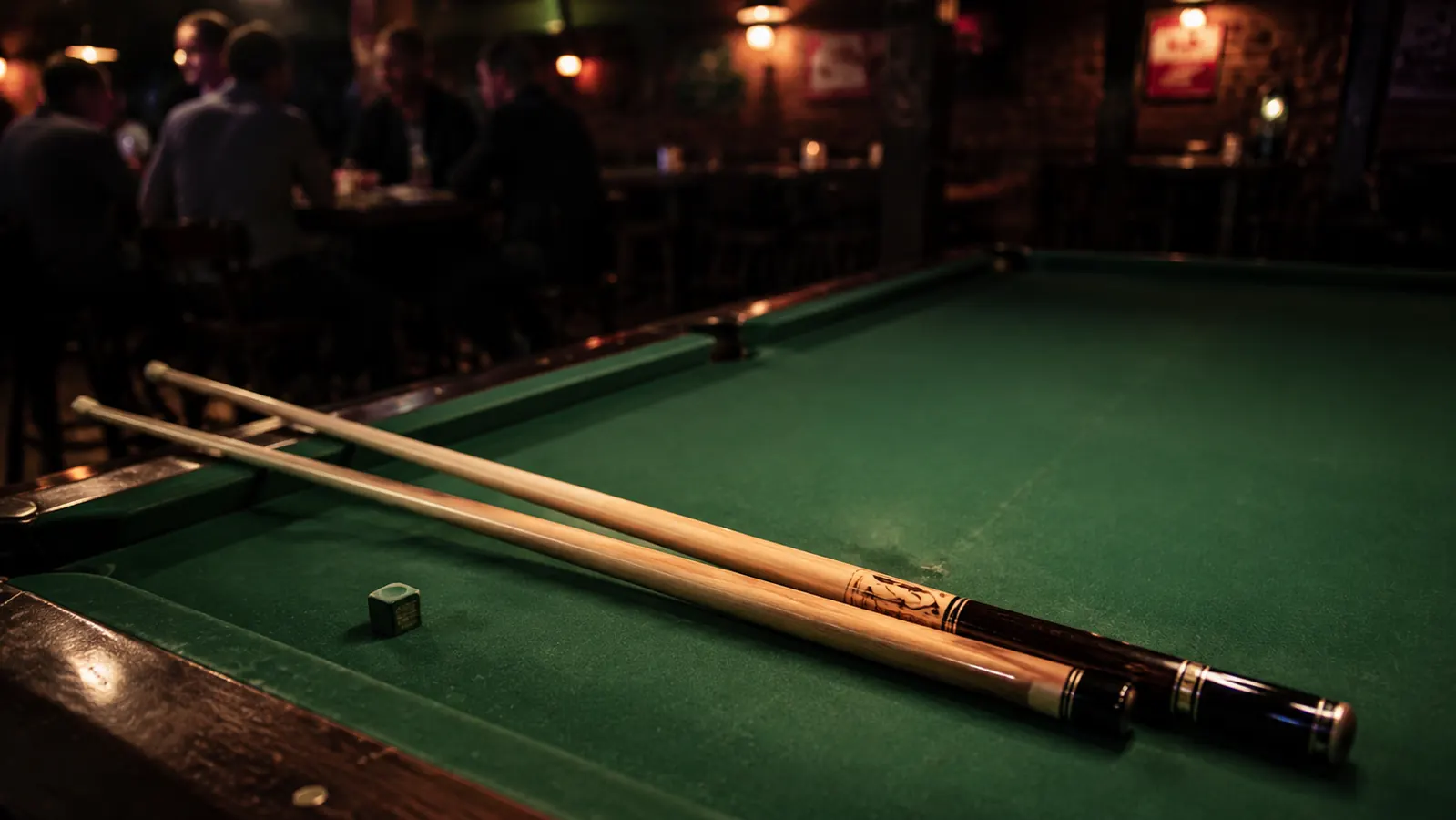
I picked up the CUESOUL Rockin Series back in September on a Tuesday night after my usual practice partner showed up with one and ran four straight racks on me. That was enough. I ordered it the same night, and for the next eight months it became my primary playing cue for APA 8-ball on Wednesdays and BCA 9-ball on Thursdays. What follows is not a first-impression take. It is an account of what actually happens to this cue when you put real weekly use on it.
My previous stick was a mid-grade Players C-960, which I shot with for about three years. I know that reference point matters, because the jump from a house stick to any personal cue looks dramatic, and the jump from Players to CUESOUL is a much more honest apples-to-apples comparison. The Rockin Series lands around $50, which puts it below Lucasi and well below McDermott territory, but above the Iszy and Mizerak tier you find in big-box sporting goods stores.
The Quick Verdict
Solid maple shaft, usable tip, honest weight consistency. A real upgrade from a house stick that earns its price if you play league 2-3 nights per week.
Amazon Check Today's Price →Still shooting with the bar's house cue every league night? The Rockin Series is where most players make their first real upgrade.
4.6 stars across more than 4,300 reviews. The CUESOUL Rockin Series ships as a complete kit with a cue case and bridge stick. Check the current price before it changes.
Amazon Check Today's Price on Amazon →How I've Used It
Eight months, two nights per week, roughly 25 racks per session. That comes out to somewhere around 300 sessions and close to 7,500 individual shots. I also brought this cue to three local APA tournaments and two BCA handicap events. So when I say I know how this cue handles pressure situations, I am not extrapolating from a few practice runs.
I weighed the cue out of the box at 19.1 ounces on a postal scale. CUESOUL advertises the Rockin as available in 18, 19, and 21 oz options, and my 19 oz came in just barely over spec, which is normal for maple construction. After eight months of use I weighed it again: still 19.0 oz. The weight plug held and the butt sleeve never came loose, which is more than I can say for a couple of Players cues I have owned.
The shaft is a 13mm tip diameter on a maple blank, and the taper is what I would call a European pro taper, meaning it stays consistent for about the first ten inches before starting to widen toward the joint. That is a little different from the conical taper you get on a standard Players or Mizerak, and it takes maybe two or three sessions to feel natural in the bridge if you are coming from a cue with a sharper conical profile.
Shaft Feel and Tip Performance
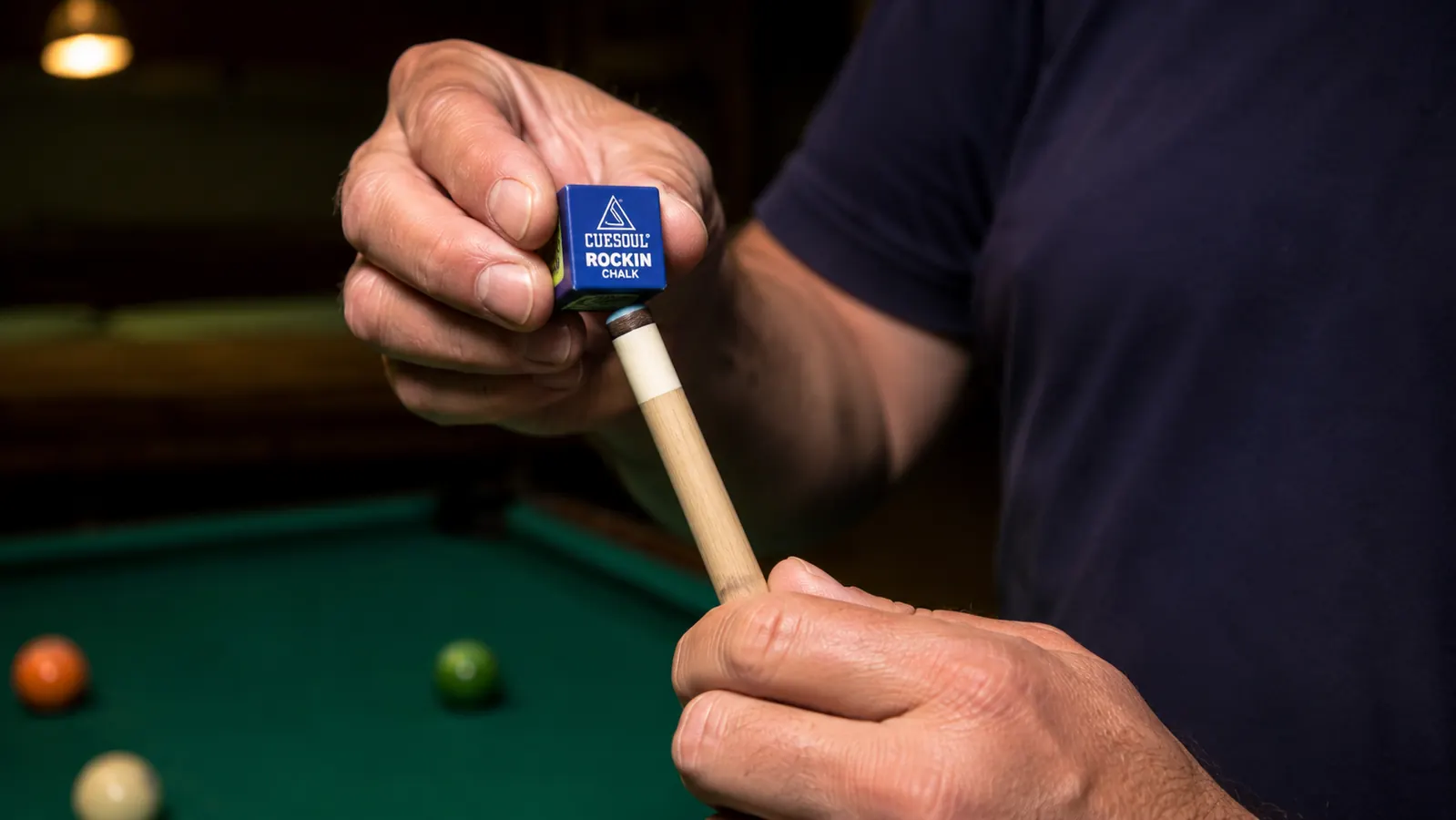
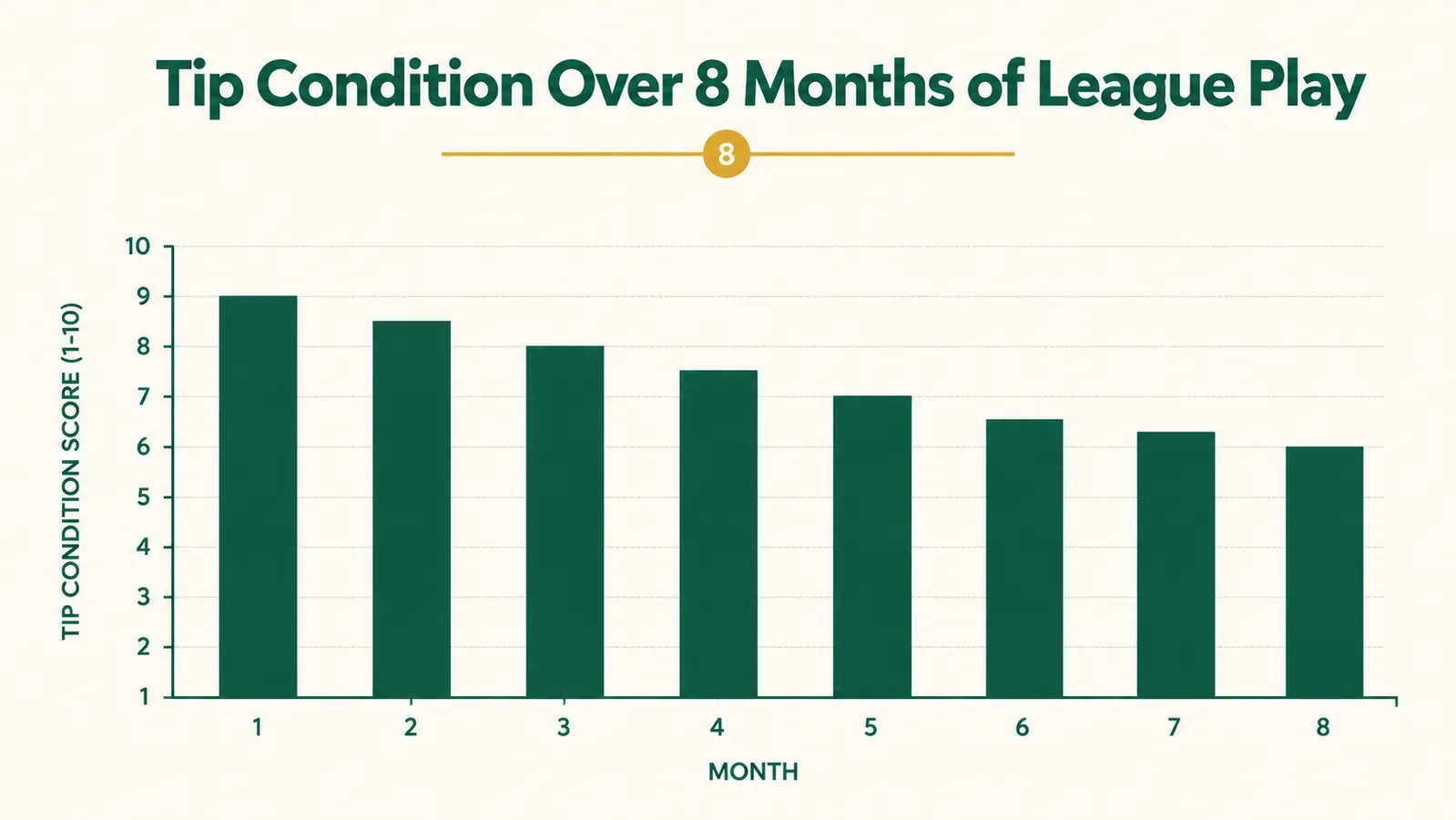
The tip that ships with the Rockin Series is a layered leather tip, medium hardness out of the box. I tested it with a tip tester in the first week: it read between a Moori Medium and a Triangle hard, which is a reasonable starting point. By month three, it had softened to something closer to a Triangle medium. By month six, I was getting occasional mushrooming on the edges and had to trim it twice. At the eight-month mark I replaced the tip with a Kamui Black medium, which cost about $14 and took maybe twenty minutes with a tip clamp.
Tip replacement is the expected maintenance on any cue in this price range. Viking Valhalla and McDermott Lucky both ship with similar layered leather tips that follow roughly the same wear arc. I mention this not as a knock on the CUESOUL but as a calibration point: if you are expecting a tip that holds its shape for two years of league play without any attention, you are expecting more than this price point delivers from any brand.
Shaft deflection is moderate. I play a lot of inside English on position shots, and the Rockin does deflect more than a Predator Revo or OB Pro shaft. I learned to compensate within about a month of consistent play, which is honest. If you are coming from a low-deflection carbon shaft, the Rockin will feel like it squirts on outside-spin cuts. If you are coming from a house stick or a basic Meucci, you will not notice the deflection because it is better than what you are used to.
Wrap, Joint, and Construction Quality
The Rockin Series comes with an Irish linen wrap on the butt. After eight months of playing in bars on humid nights, including a tournament at a bar with no air conditioning in July, the wrap has held up well. No peeling at the edges, no fraying near the joint, and the grip still has enough texture to stay in my bridge hand during a long follow-through. For comparison, the rubber grip on a couple of entry-level Cuetec cues I have handled tends to degrade in humid conditions faster than Irish linen does.
The joint is a stainless steel pin connecting to a flat-face joint on both ends. It feels solid. I have screwed and unscrewed this cue hundreds of times now and the threads still seat cleanly with no wobble. Joint wobble is one of the first failure points I watch for on budget cues, and the Rockin Series has not developed any. I put a small chalk mark on the joint to verify alignment each session for the first three months. It was consistent every single time.
The butt graphics hold up well too. CUESOUL uses a painted design protected under a clear coat, and after eight months of being in and out of a case, being set on bar tables, and absorbing the occasional accidental drop, the finish still looks clean. There is one small chip at the very bottom of the butt from a moment I would rather not describe, but the rest of the finish is intact.
The joint seated cleanly every single time I checked it. On budget cues, joint wobble is one of the first things to go. Eight months in, this one has not budged.
How It Performs in Actual League Matches
APA 8-ball is a handicap system, and I play at a 5 in the local division. That is not pro-level, but it is competitive enough that equipment consistency matters. The CUESOUL Rockin kept pace with what I was doing on a Players C-960, and in some areas, specifically on long straight-in shots where the shaft consistency matters, I felt more confident in the cue ball control than I did with my old stick.
Where I noticed the limits of this cue was on draw shots at distance. When I need to pull the cue ball back more than two diamonds from impact, the Rockin's medium-hard tip does not bite as cleanly as I would like. This is partly a tip issue and partly a shaft stiffness issue. The shaft is not as lively as an OB-1 or a Predator 314 in that regard. After I replaced the tip with the Kamui Black, the draw improved noticeably, so some of that limitation is tip-dependent.
On break shots, I do not use the Rockin. I have a dedicated break cue for that, which is the right call regardless of what playing cue you own. Using your playing cue to break hammers the tip and stresses the joint in ways that accelerate wear. If you are using any playing cue for your break right now, that is a separate problem worth solving.
What the Rockin Series Compares To
The Rockin Series sits in a competitive band. At a similar price, you are also looking at the Viper Underground, the Players C-series, and the low end of the Lucasi Hybrid line. I have shot with all of them at various points. My read: the CUESOUL Rockin has a more consistent shaft blank than the Viper Underground, which can vary noticeably from unit to unit. The Players C-960 has a slightly more forgiving ferrule for off-center hits. The Lucasi Hybrid, even at the entry level, has better low-deflection performance if you play a lot of spin.
If you want a more detailed head-to-head, I put together a full breakdown in the CUESOUL Rockin vs Viper Underground comparison where I cover shaft feel, tip hardness, wrap durability, and long-term value side by side. The short version: the CUESOUL is the better choice if consistency and build quality matter more to you than shaft deflection performance.
What I Liked
- Shaft weight is consistent out of box and stays consistent over time
- Irish linen wrap handles sweat and humidity better than rubber grips
- Joint threads seat cleanly after hundreds of break-downs with no wobble
- 13mm tip diameter works for most bridge-hand styles without adaptation
- Kit includes a cue case and bridge stick, which adds real value at this price
- 4.6-star average across 4,300-plus real reviews points to reliable unit-to-unit consistency
Where It Falls Short
- Stock tip mushrooms by month three to six under regular use and needs trimming or replacement
- Shaft deflection is higher than low-deflection options from OB or Predator
- European pro taper takes adjustment time if you are coming from a conical-taper cue
- Draw shots at distance are limited by shaft stiffness compared to higher-end maple shafts
Who This Is For
The CUESOUL Rockin Series is the right cue for a player who has been borrowing the bar's house sticks or using a budget big-box cue and wants a real upgrade without spending $150 or more. It is also a good pick for a new league player who wants a reliable stick to develop their stroke on, before they are ready to invest in a Viking, McDermott, or Predator. The kit format, with the case and bridge included, makes it a complete starter package at a price that is hard to argue with.
I would also recommend it for anyone who plays casually two to three nights per week and does not want to think too hard about cue maintenance. The construction holds up, the wrap stays intact, and the joint stays solid. You will eventually need a tip replacement, but that is true of every cue at every price point.

Who Should Skip It
If you are already playing at an APA 6 or BCA 7 and above, the CUESOUL Rockin Series will start to show its ceiling. At that skill level, shaft deflection matters, tip feedback matters, and you are probably ready for a cue that gives you more control on spin shots and long-distance position play. The Viking Valhalla 100, the lower-end McDermott Lucky series, or the Players HXT series all sit in the next tier and give you a more refined shaft experience for players who are ready for it.
Also skip it if you already own a cue with a good shaft and you are just frustrated with your game. No cue upgrade fixes a stroke that needs work. I have played alongside people using $800 Vikings who lost regularly to players on $60 sticks because the problem was between the ears, not in the shaft. If you are considering an upgrade, check out the 10 reasons the CUESOUL Rockin improves your game to see whether the specific improvements it delivers actually match the gaps in your current game.
If you play league pool two nights a week and you are still on a house stick or a big-box cue, the Rockin Series is the upgrade that makes sense right now.
The CUESOUL Rockin Series kit includes the 58-inch two-piece maple cue, a hard cue case, and a bridge stick. Ships from Amazon. 4.6 stars from 4,300-plus buyers.
Amazon Check Today's Price on Amazon →