
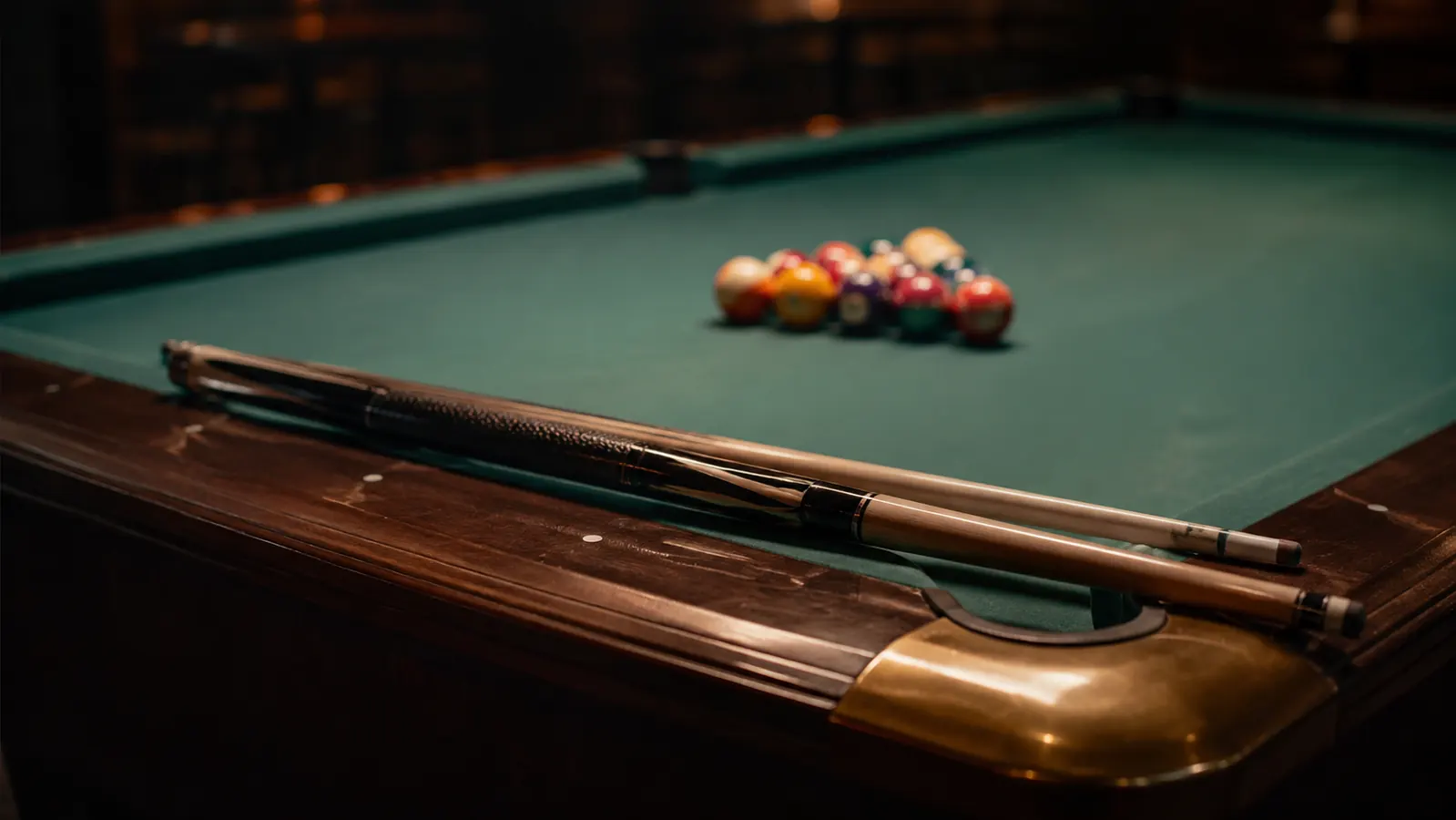
My regular Tuesday night league partner Tony kept asking me why I was breaking with my playing cue. I told him I would get a dedicated break stick eventually. That went on for about eight months until I finally cracked and ordered the RAGE Heavy Hitter. That was two league seasons ago. I have used it on somewhere north of two hundred breaks at this point, covering two APA sessions, a couple of open 8-ball tournaments, and a lot of practice nights in my garage. The RAGE Heavy Hitter Jump Break Cue is a 3-piece stick with a phenolic tip designed to do two jobs: blow open the rack on the break and get you out of snookers with a legal jump shot. This review covers what I have learned using it as my primary break cue for an extended stretch, not just a first-week honeymoon take.
The Quick Verdict
A genuinely capable dedicated break cue with a phenolic tip that holds up over time, 3-piece portability that matters if you travel to tournaments, and jump capability that works when you need it. The rear-heavy balance takes adjustment and the shaft graphics are basic, but neither of those things affects how the ball comes off the tip.
Amazon Check Today's Price →If you are still breaking with your playing cue, your tip is paying the price every single night.
The RAGE Heavy Hitter is built specifically for break shots and jump shots so your playing cue can stay dialed in for run-outs. Check today's price on Amazon before your next league night.
Amazon Check Today's Price on Amazon →How I Have Used It
I play in two APA sessions per year, 8-ball and 9-ball, plus I practice a few times a week on a 7-foot table in my garage. The Heavy Hitter replaced my previous habit of breaking with my 19-ounce Viking playing cue, which I was doing because I did not want to carry a second stick. The Heavy Hitter comes in three pieces that screw together, so it fits inside my Casemaster hard case alongside my playing cue without much drama. I started using it exclusively as my break cue from the first session, keeping my Viking for everything from the second shot forward.
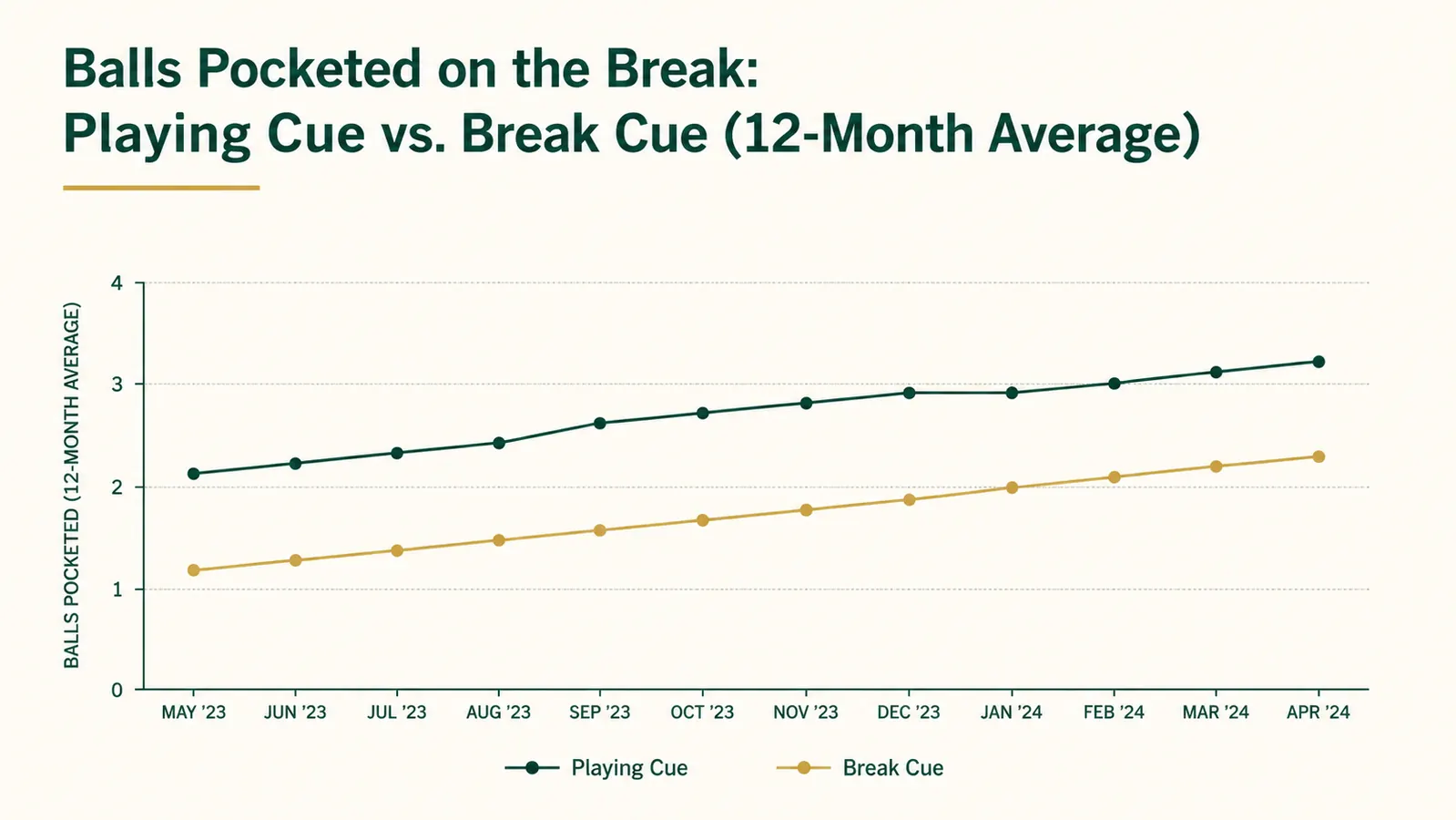
I tracked my break results informally over the first twelve months, just a notes-app tally of balls pocketed on the break per session. Not scientific, but enough to see a trend. With my playing cue, I was averaging about 1.2 balls pocketed on the break per rack. Within two months of switching to the Heavy Hitter, that number was sitting between 2.0 and 2.5. Some of that is technique improvement over the same period, but a portion of it is the phenolic tip transferring more energy into the rack instead of compressing like a softer leather tip does.
I also started using the jump feature intentionally. On my old playing cue I would just try to bank around snookers because I did not trust my jump shot. The 3-piece configuration of the Heavy Hitter means you can unscrew the butt section and use just the front two pieces as a shorter jump cue. Once I drilled the technique a bit at home, I was hitting clean legal jumps at league. That feature alone has saved me a handful of safety battles I would have otherwise conceded.
The Phenolic Tip: What Two Seasons of Breaks Actually Does to It
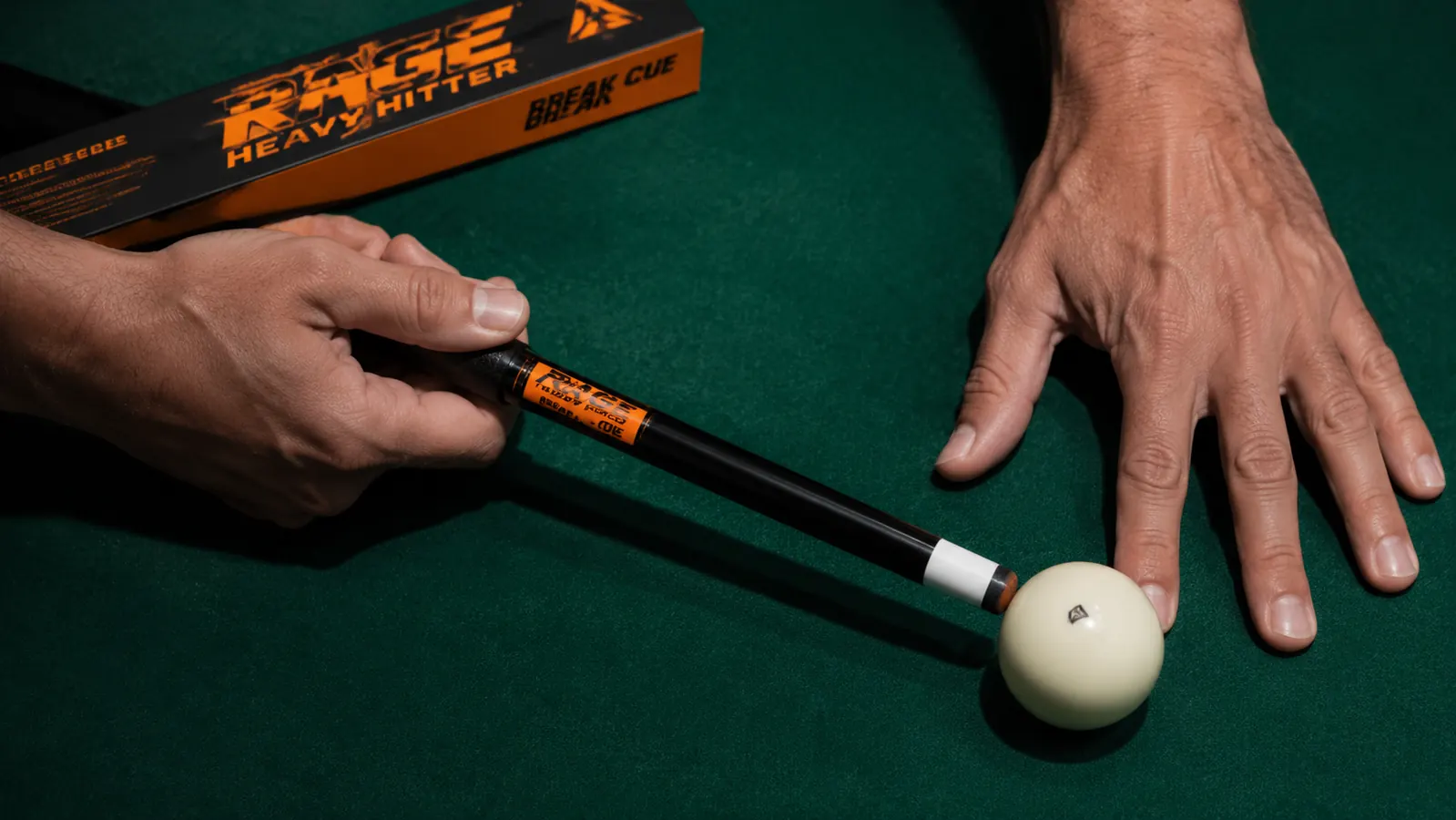
Phenolic tips are different from leather tips in one important way: they are extremely hard and they barely compress at contact. That is exactly what you want for a break shot because energy that goes into tip compression does not go into the cue ball. The tradeoff is that phenolic is unforgiving on miscues and it can be hard on the cue ball if you are not squarely on center at impact.
After two seasons of dedicated use, the phenolic tip on the Heavy Hitter looks almost exactly the same as it did out of the box. There is no mushrooming, no compression ring, no softening. I have not had to reshape it or replace it. Compare that to what I was doing to my Viking's leather tip when I broke with it: I was reshaping and scuffing the tip every four to six weeks because break shots flatten leather tips fast. Keeping a dedicated break cue with a phenolic tip has been noticeably kinder to my playing cue setup.
One thing to know: phenolic tips do not hold chalk. At all. Most experienced break-cue users do not chalk before a break shot anyway because the goal is a clean, full-ball hit on center with zero side spin. But if you have a habit of chalking between every shot without thinking, the chalk is going to skid right off and you may end up with chalk dust in your ferrule joint over time. Break clean, center ball, phenolic. That is the routine.
The 3-Piece Joint System: Portability Versus Feel
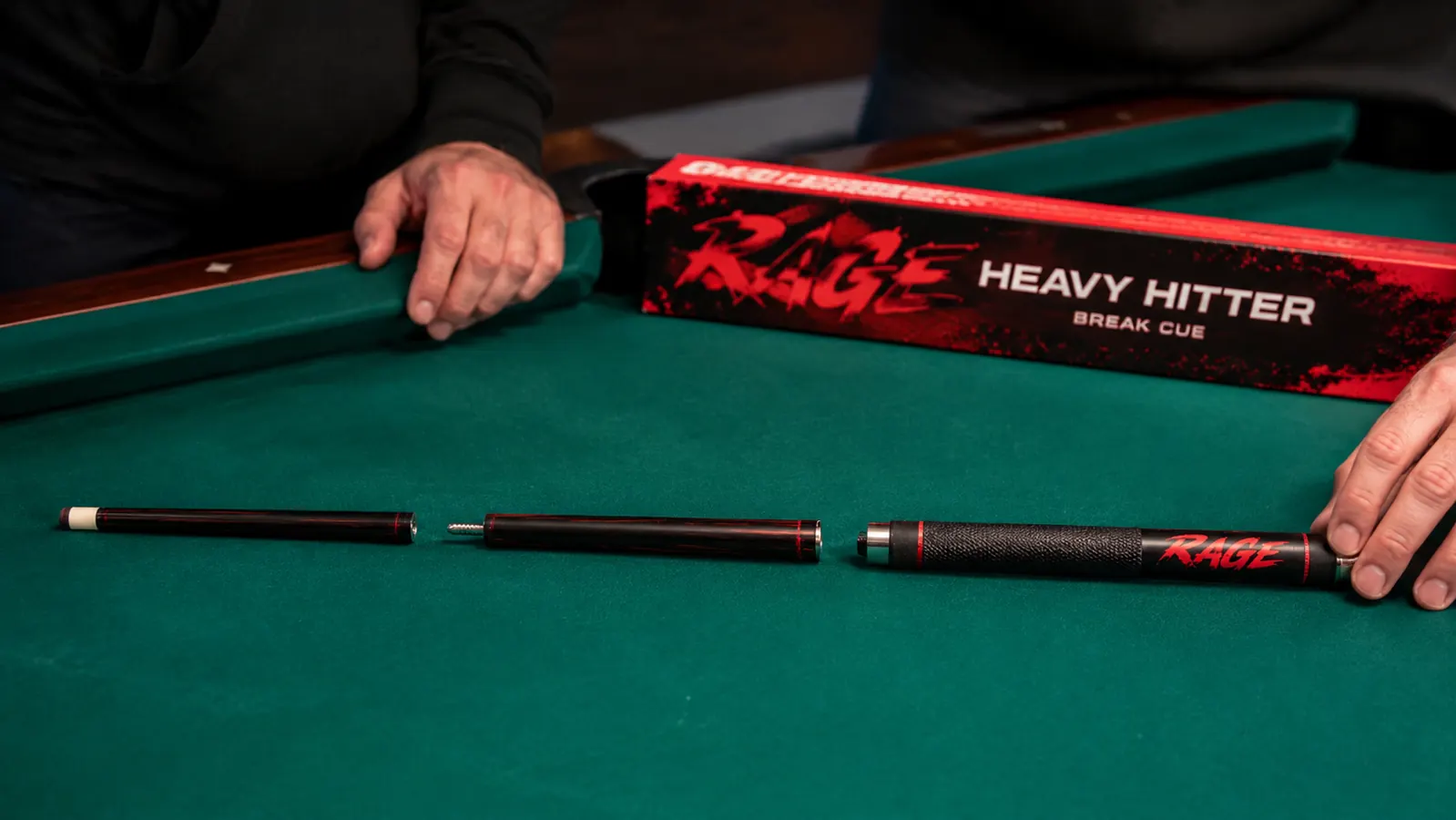
The Heavy Hitter breaks into three sections. Two joints connect the three pieces, and both joints use a standard pin-and-collar system that feels solid when snugged down. I have not had a joint back out mid-session, which I half-expected based on some reviews I read before buying. The key is making sure you are tightening fully before you break, not just hand-snug. Give each joint a firm quarter-turn past what feels right and you will not have problems.
The 3-piece design means the full assembled cue length is 58 inches, same as a standard playing cue. The balance point sits noticeably further back toward the wrap than a typical playing cue. This rear-heavy balance is a known characteristic of this cue and it takes a few sessions to get used to. My first couple of league nights I was over-stroking because the back-weighting made the cue feel heavier in my bridge hand than I expected. Once I adjusted my grip and stroke, I stopped thinking about it. But if you pick it up at the counter and it feels wrong, do not return it before you have put twenty breaks through it.
The rear-heavy balance feels wrong in the store. It felt right after about twenty breaks. I stopped noticing it entirely by week three.
For jump shots, the short 2-piece configuration handles cleanly. You lose the butt section and use the tip section plus the middle section, which gives you a shorter, lighter stick that makes the elevation angle easier to manage. Jump shots with this setup feel more natural than using a full-length cue at a steep angle. The phenolic tip again works in your favor here because legal jumps require hitting slightly below center on a downward stroke, and phenolic gives you that clean, hard contact without grab.
Power Transfer and Real-World Break Results
The Heavy Hitter comes in multiple weight options and the weight you choose matters more than most product pages let on. I play with the 21-ounce version. Heavier break cues carry more momentum through the rack, but only if your stroke speed is consistent enough to drive them. If you are a shorter player or someone with a more compact break stroke, the 19-ounce option is going to be easier to control and you may actually see better ball spread because you are not muscling a heavier stick.
On a tightly racked 8-ball game, a good break with the Heavy Hitter sends balls to every corner of the table consistently. My typical result is two to three balls down plus a decent spread, which at the APA 5 or 6 level means I am often looking at an open table with a run opportunity. On 9-ball, the heavy phenolic contact on a tight rack produces a solid head-ball crush and predictable corner-ball action. I have started controlling where my cue ball lands on the break with more confidence because the cue ball behavior is more consistent shot to shot than it was when I was breaking with a leather-tipped playing cue.
What I Liked
- Phenolic tip shows virtually no wear after 200-plus breaks and does not need reshaping or replacement on any regular schedule
- 3-piece design fits inside a standard hard case alongside your playing cue, which matters for tournament travel
- Jump shot capability with the 2-piece short configuration is genuinely useful and not just a marketing bullet
- Joints stay locked under break-shot impact when tightened properly, no backing-out issues in extended use
- Multiple weight options let you match the cue to your stroke speed rather than forcing a one-size approach
Where It Falls Short
- Rear-heavy balance point takes a meaningful adjustment period, expect three to five sessions before it feels natural
- Phenolic tip does not hold chalk, which catches habit-chalkers off guard until they adjust their pre-shot routine
- Graphics and wrap aesthetics are basic, not something you would show off next to a Predator or McDermott
- At the price point you give up the cosmetic polish of higher-end brands, though none of that affects function

How It Compares to What I Considered
Before buying the Heavy Hitter I looked hard at a Lucasi dedicated break cue in a similar price range and a Players Technology Series break cue that sits a bit lower. The Lucasi options have nicer cosmetics and a slightly more refined joint feel, but for what I was actually using the cue for, the functional difference at two seasons in is negligible. The Players cue I tried at a teammate's house had a softer tip than I wanted for a break stick. The Heavy Hitter's phenolic tip was the deciding factor and it has held up exactly as I expected. If you want a full side-by-side breakdown between the Heavy Hitter and the Lucasi option, I put that comparison together separately.
One alternative worth mentioning is going custom or mid-tier from someone like Cuetec or OB at the $200-plus range. If you are playing at a high level and a break cue is a serious investment, those options make sense. For APA league play through a BL5 or BL6 level, the Heavy Hitter gives you everything you actually need at a price that does not make you feel bad about the two-inch-deep ding in the floor when your partner knocks it off the wall rack.
Who This Is For
The RAGE Heavy Hitter makes the most sense for league players at the intermediate level who have been breaking with their playing cue and noticed their tip needs attention every few weeks. If you are playing APA 4-through-7 or a comparable BCA skill level, you are breaking enough racks that a dedicated break cue pays for itself quickly in tip-maintenance savings and keeps your playing cue in consistent shape. The 3-piece portability is a real advantage if you travel to tournaments or just prefer carrying one case for both sticks. The jump capability adds a shot type that becomes a genuine weapon once you practice it, not just a gimmick.
Who Should Skip It
If you play casually, once a week at a bar with friends, and you never carry your own cue, a dedicated break cue is probably not your next purchase. Start with a personal playing cue first. If you are a high-skill player, say APA 8 or 9, shopping at this price range, you may find the balance and shaft feel limiting compared to a Predator Break or similar purpose-built professional stick. And if the rear-heavy balance is something you already know bothers you from experience with other weighted break cues, be aware that adjustment takes time and some players never fully click with it.
Your playing cue's tip should not be paying for every break shot you take.
The RAGE Heavy Hitter handles the break and jump shots so your playing cue stays focused on what it was built for. Check today's price and available weight options on Amazon.
Amazon Check Today's Price on Amazon →