
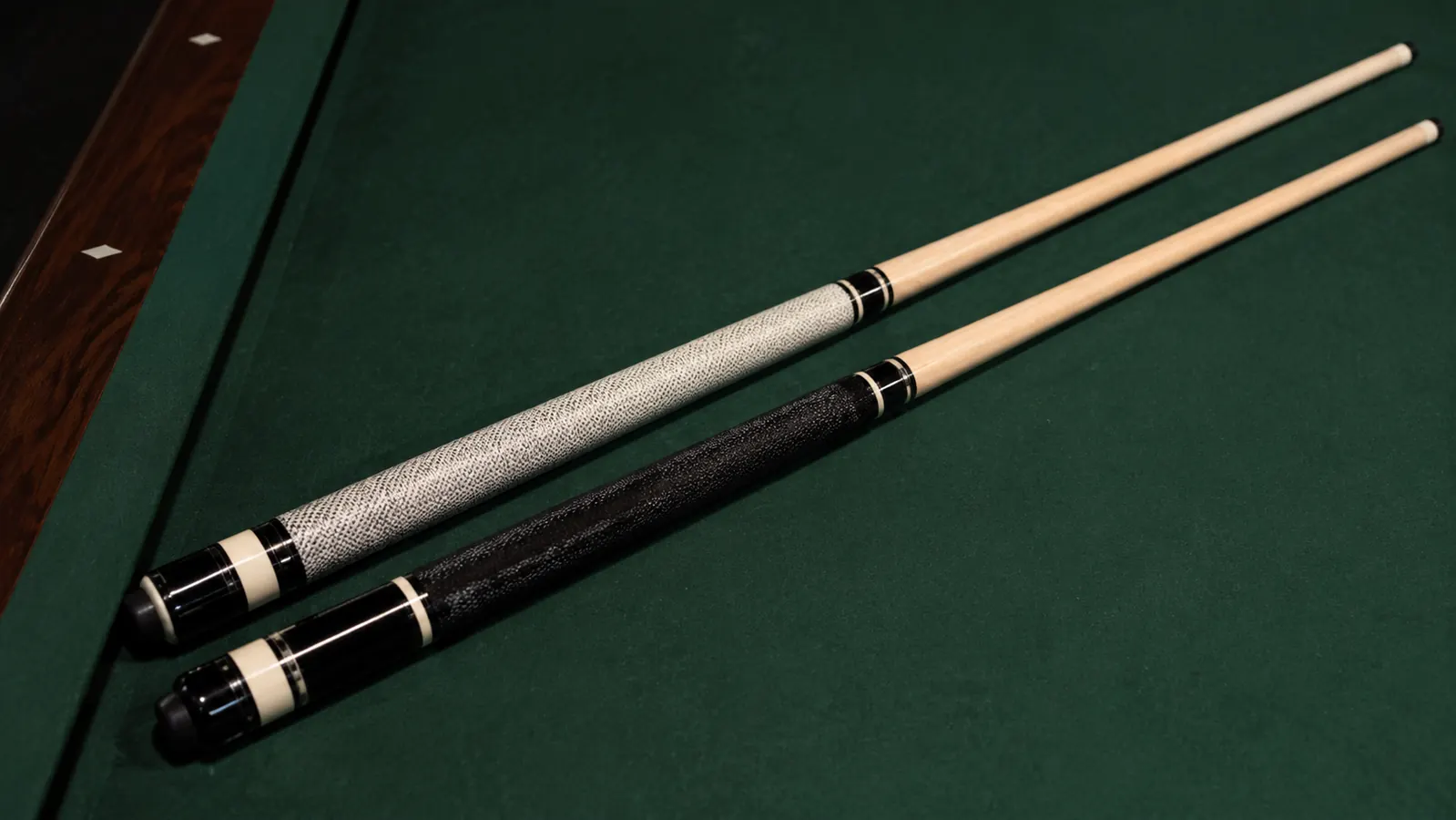
If you are shopping for your first personal cue or replacing a worn-out stick under $60, two names come up constantly in league circles: the CUESOUL Rockin Series and the Viper Underground. Both are Canadian maple shafts. Both ship with a cue ball and a carrying case. Both sit at nearly identical price points. And both carry well over a thousand Amazon reviews with 4.5-star averages, so the ratings alone will not help you decide. I have shot with both over the past two seasons in APA league play. Here is the actual difference.
The short answer: the CUESOUL Rockin wins for players who want a cue they can actually develop with. The Viper Underground is a serviceable starter stick, but its tip comes out of the box noticeably softer, its taper flares faster near the joint, and the rubber wrap gets slick with sweat in a way the Rockin's Irish linen does not. For recreational league play where you are running position and working on your speed control, those details add up over a season.
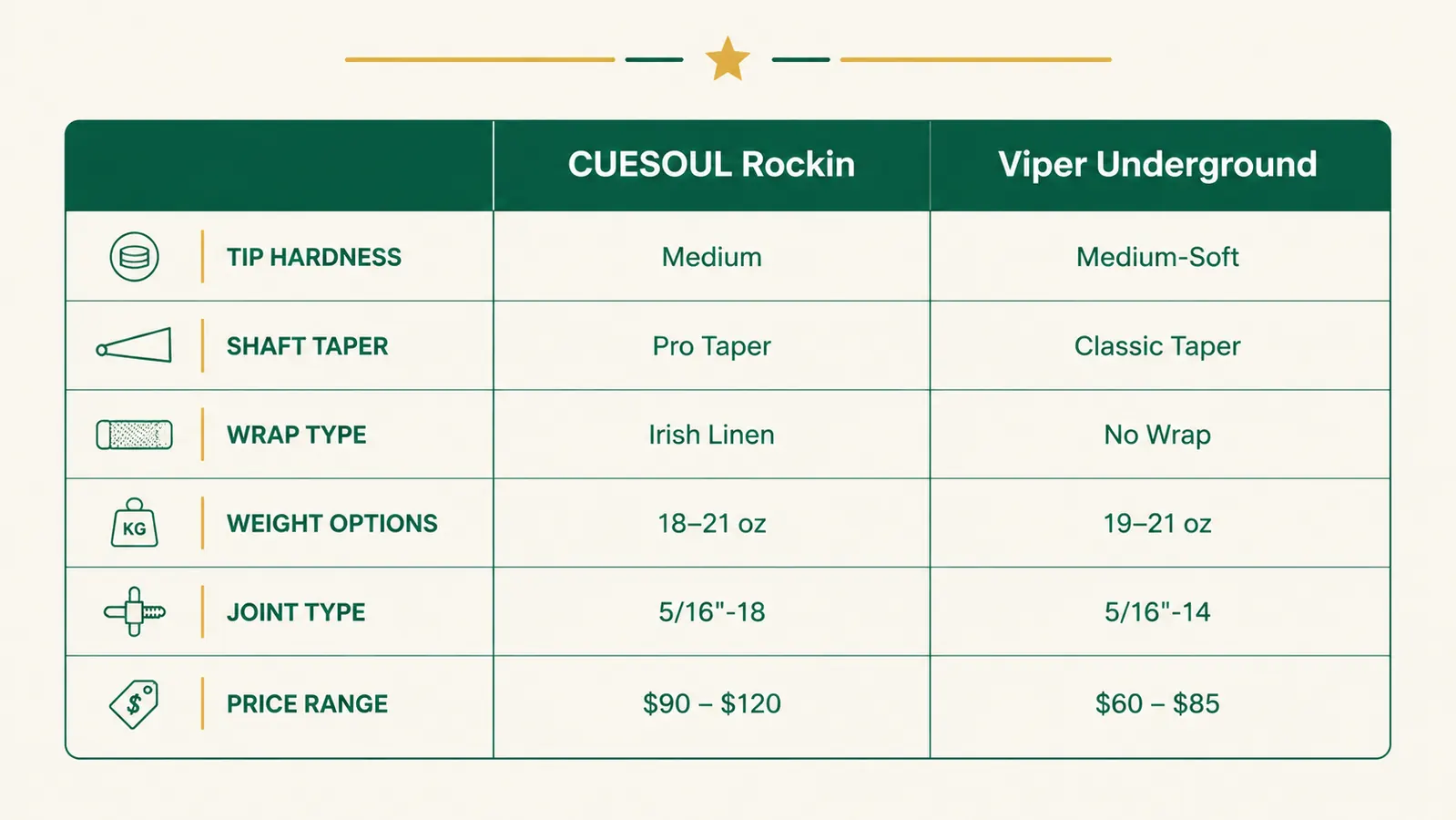
| Spec | Cuesoul Rockin | Viper Underground |
|---|---|---|
| Price (current) | ~$49 | ~$45-$55 |
| Shaft Material | Canadian maple | Canadian maple |
| Shaft Diameter | 13 mm tip | 13 mm tip |
| Tip Material | Medium layered leather | Soft single-layer leather |
| Ferrule Material | White phenolic | White ABS plastic |
| Wrap Type | Irish linen | Rubber grip wrap |
| Weight Options | 19 oz, 20 oz, 21 oz | 19 oz, 20 oz, 21 oz |
| Joint Type | 5/16 x 18 steel | 5/16 x 18 steel |
| Cue Length | 58 inches | 58 inches |
| Taper Style | Pro taper | Slight conical taper |
| Includes Carrying Case | Yes | Yes |
| Includes Cue Ball | Yes | Yes |
Where the CUESOUL Rockin Wins
The first place you feel the difference is in the tip. The Rockin ships with a medium-hardness layered leather tip that holds chalk better than the Viper's single-layer soft tip. On cut shots with outside English, the Viper tip has a tendency to slip on contact if you have not chalked within the last two or three shots. The Rockin's tip gave me more consistent cue-to-ball contact through a full rack without rechalking between every other shot. For players who are working on adding side spin or learning to play position with running English, this matters a lot more than it sounds.
The Irish linen wrap on the Rockin is the other clear advantage. I play in a bar league on nights when the room gets warm by the second round of matches, and linen grips absorb enough moisture to stay tacky. The Viper's rubber grip is fine in cooler conditions, but once your bridge hand is even mildly damp, the grip becomes slick in a way that changes your feel for the stroke. I found myself gripping tighter without realizing it, which is exactly how you develop unwanted tension in your stroke mechanics. The Rockin's linen never gave me that problem across eight months of use.
The pro taper on the Rockin's shaft also contributes to a more consistent feel for shots at varying distances from the cue ball. A pro taper stays thin farther down the shaft before flaring near the joint, which means your bridge hand feels the same diameter whether you are stretched out on a long shot or shooting with a short bridge. The Viper's taper is closer to a conical style that flares earlier, which some players find comfortable but which makes the shaft feel thicker when your bridge is within six inches of the cue ball.
Done debating? Check the Rockin's current price on Amazon.
The CUESOUL Rockin Series is the right choice for most league players at this price point. Thousands of buyers agree. Click through to see today's price and available weight options.
Amazon Check Today's Price on Amazon →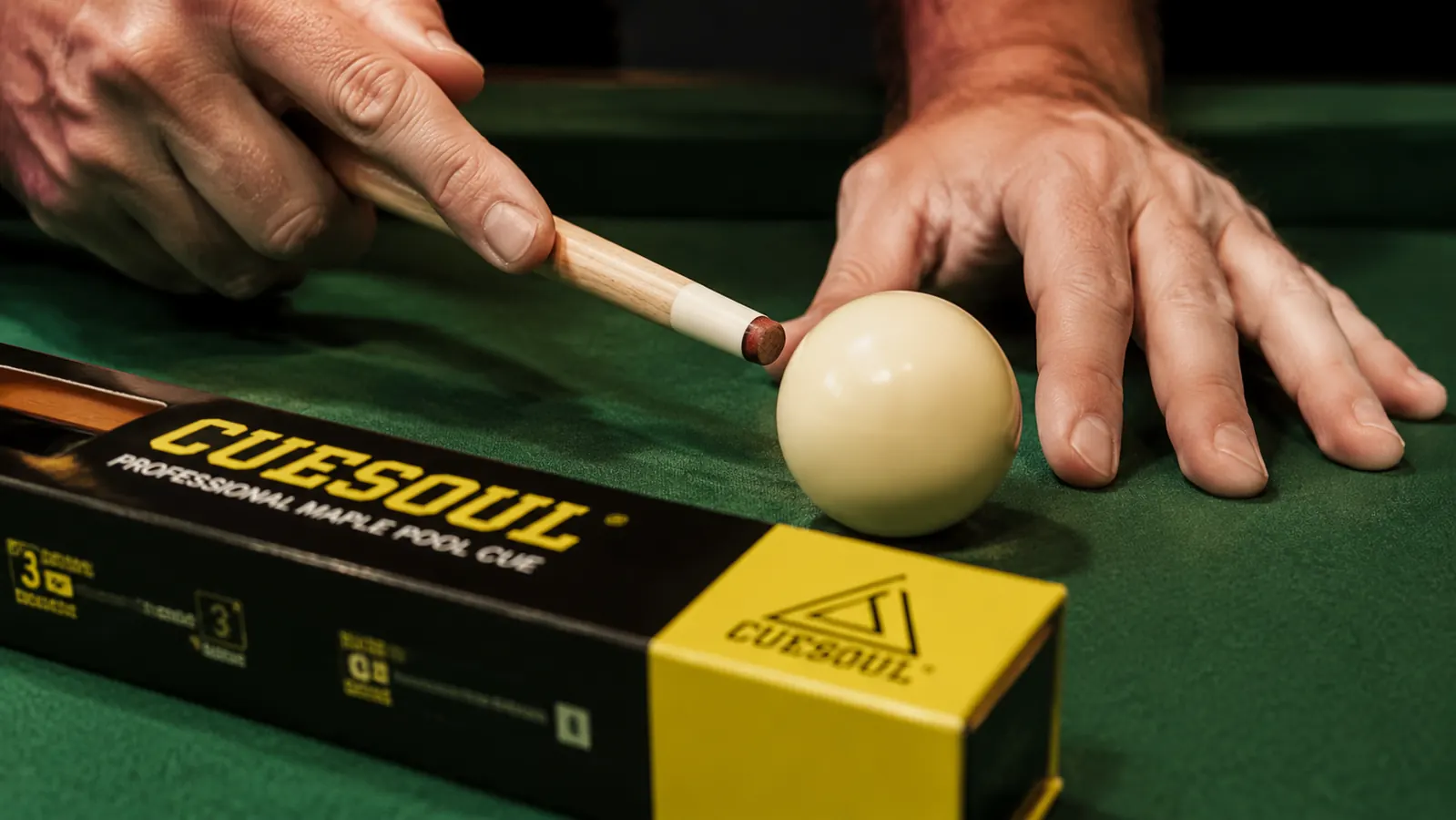
Where the Viper Underground Wins
The Viper Underground is not a bad cue. Its main advantage is grip preference. A meaningful number of players, especially those coming from house cues, find the rubber wrap more comfortable out of the gate because it requires less break-in time. Irish linen can feel slightly stiff when brand new, and it takes a few sessions of play before the wrap settles and your hand gets used to the texture. If you are buying a cue as a gift or for a brand-new player who has never played on a personal stick, the Viper's grip is immediately comfortable without any adjustment period.
The Viper Underground also has a slight edge in cosmetics for players who prefer a darker, more understated look. The graphics on the Rockin Series lean toward a sport/modern aesthetic that some players find busy. The Underground's design is simpler and lower-key, which matters for players who care about how their cue looks leaning against the table between shots. Neither cue is going to turn heads in a room full of McDermotts and Predators, but if clean and simple matters to you aesthetically, the Viper Underground fits that preference.
The Rockin's linen wrap and layered tip give you a cue you can actually develop skills with. The Viper is fine for casual play, but those small differences compound over a full league season.
Tip Performance Over Time
Tip degradation is where most budget cues lose players after three to six months. Both tips will eventually mushroom and need reshaping, but the Rockin's layered leather tip holds its dome shape noticeably longer than the Viper's single-layer tip. In my experience, the Viper tip needed its first shaping within six weeks of regular play, two to three nights a week. The Rockin went about ten weeks before the edges started to roll enough to affect chalk retention. That does not sound like a big deal, but if you are still learning the maintenance side of cue ownership, buying yourself more time before your first trip to the shop is genuinely useful.
It is worth noting that both tips are replaceable. If you end up with either cue and you want to upgrade the tip, any billiard shop can install a Kamui or a Triangle tip for around $15-20 in labor. The Rockin's phenolic ferrule holds a replacement tip better than the Viper's ABS plastic ferrule does. On the ABS ferrule, the glue bond can be slightly less secure on tip replacements, especially if the shop uses heat to seat the tip. Not a dealbreaker, but worth knowing if you plan to upgrade the tip down the road.
Joint Feel and Cue Ball Control
Both cues use the 5/16 x 18 standard joint, which is good for serviceability. Replacement shafts are easy to find in that spec. The joint on the Rockin feels tight off the factory floor and stayed tight through eight months of regular assembly and disassembly. I never got the click-rattle that some budget joints develop after a few months. The Viper joint was also tight initially, but I noticed a slight looseness developing in the joint on a friend's Viper Underground around the four-month mark. To be fair, a single data point is not conclusive, and joint wear depends heavily on how carefully you thread the joint each time.
For cue ball control specifically, the Rockin's combination of pro taper, medium tip, and phenolic ferrule gives you a slightly crisper, more defined hit. The Viper's softer tip produces a slightly longer dwell time on the cue ball, which some players prefer for masse attempts or for a very soft, rolling draw. If you are primarily a position player who relies on precise speed control rather than spin shots, the Rockin's crisper hit is going to suit you better. If you like to feel the cue ball on the tip for a long moment through stroke-heavy shots, the Viper's softer contact can work in your favor.
Who Should Buy the CUESOUL Rockin
Buy the CUESOUL Rockin if you are a league player at APA skill level 3 or above who is working on position play and starting to add English to your shot-making. The medium layered tip, pro taper, and Irish linen wrap give you a platform that will not hold you back as your skills improve. It is also the right call if you play in a warm bar environment where sweat is a real factor, or if you want a cue whose tip is going to last a full season before needing its first reshape. At this price point, the Rockin is genuinely good equipment, not just a compromise.
It is also worth mentioning that the CUESOUL Rockin comes in three weights: 19 oz, 20 oz, and 21 oz. If you already know your preferred weight from playing on house cues, you can match it exactly. Most APA league players land between 19 and 21 ounces. If you are not sure, start at 19 or 20. It is easier to add weight to your stroke than to compensate for a cue that already feels heavy.
Who Should Buy the Viper Underground
The Viper Underground makes sense in two specific situations. First, if you are buying a cue as a gift for someone who has never played with a personal stick, the rubber grip's immediate comfort and the simpler aesthetic may make it a better gift experience than the Rockin. Second, if you genuinely prefer the feel of a softer tip and a rubber wrap based on past experience with other cues, the Viper Underground delivers that preference at roughly the same price point. Do not buy it because you think you are getting a better deal. Both cues sit at very similar price levels, and the Rockin's specifications edge it out clearly on the factors that matter for ongoing skill development.
The CUESOUL Rockin is the right cue for most league players at this price.
Better tip retention, a pro taper shaft, Irish linen wrap, and a phenolic ferrule. For under $50, that is a strong spec sheet. See today's price and available weights on Amazon.
Amazon Check Today's Price on Amazon →