
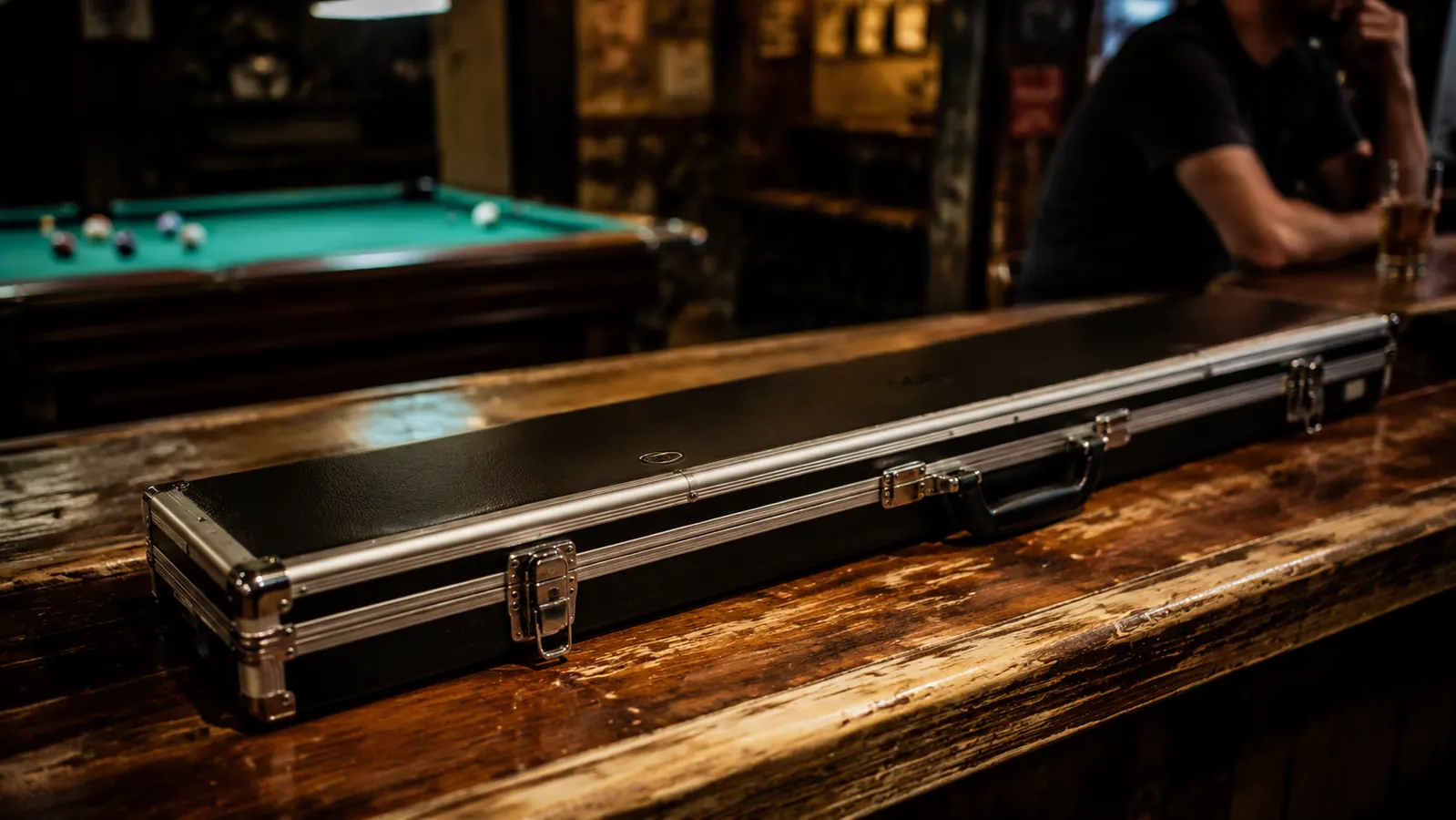
Let me tell you what the listing page does not cover. Four thousand five hundred Amazon reviews will tell you this case is great. The star rating is 4.6. The photos look sharp. And look, the Q-Vault Supreme is genuinely worth owning at its price point. I am not here to trash it. But I have watched players buy it based on those reviews, get it delivered, open the box, and immediately ask me: 'Is this smell normal? Does this latch feel right? Is the case supposed to flex like that?' Same three questions, over and over. So here is the version nobody writes.
The Casemaster Q-Vault Supreme is a one-cue, two-piece hard shell case built around a molded plastic body with aluminum corner edging and a chrome flip-latch closure. It fits virtually any standard 58-inch two-piece cue. The interior is velvet-lined foam with separate channels for butt and shaft. At its current price it is the most affordable hard case with genuine drop protection you can buy from a recognized brand. That is a real thing. But the details matter, and the details are where buyers get surprised.
The Quick Verdict
Solid entry-level protection for the price, but the latch play, velvet odor, and shell flex under heavy accessory loads are real trade-offs you should know before you order.
Amazon Check Today's Price →Your $150 cue deserves at least $27 worth of hard shell between it and the world.
The Q-Vault Supreme is the benchmark for affordable hard case protection. Check current availability and pricing on Amazon before you decide.
Amazon Check Today's Price on Amazon →How I Have Used This Case
I picked up a Q-Vault Supreme about fourteen months ago as a backup case, the kind of thing you toss in the trunk when you do not want to risk your nicer gear on a casual Thursday night. My primary cue at the time was a Players C-960, 19.5 oz, maple shaft with a layered tip. I was playing in a Tuesday APA league and a casual Friday bar table rotation. The Q-Vault went in and out of a car trunk probably three times a week, spent time in a few different bar environments, and went through one actual drop I will describe in a moment.
I also talked to four other league players who own this case or have owned it within the last two years. Their use patterns ranged from daily commute carry to once-a-week storage. That range matters because the case behaves differently depending on how much heat, humidity, and mechanical stress you put on it.
The Latch: Fine Until It Is Not
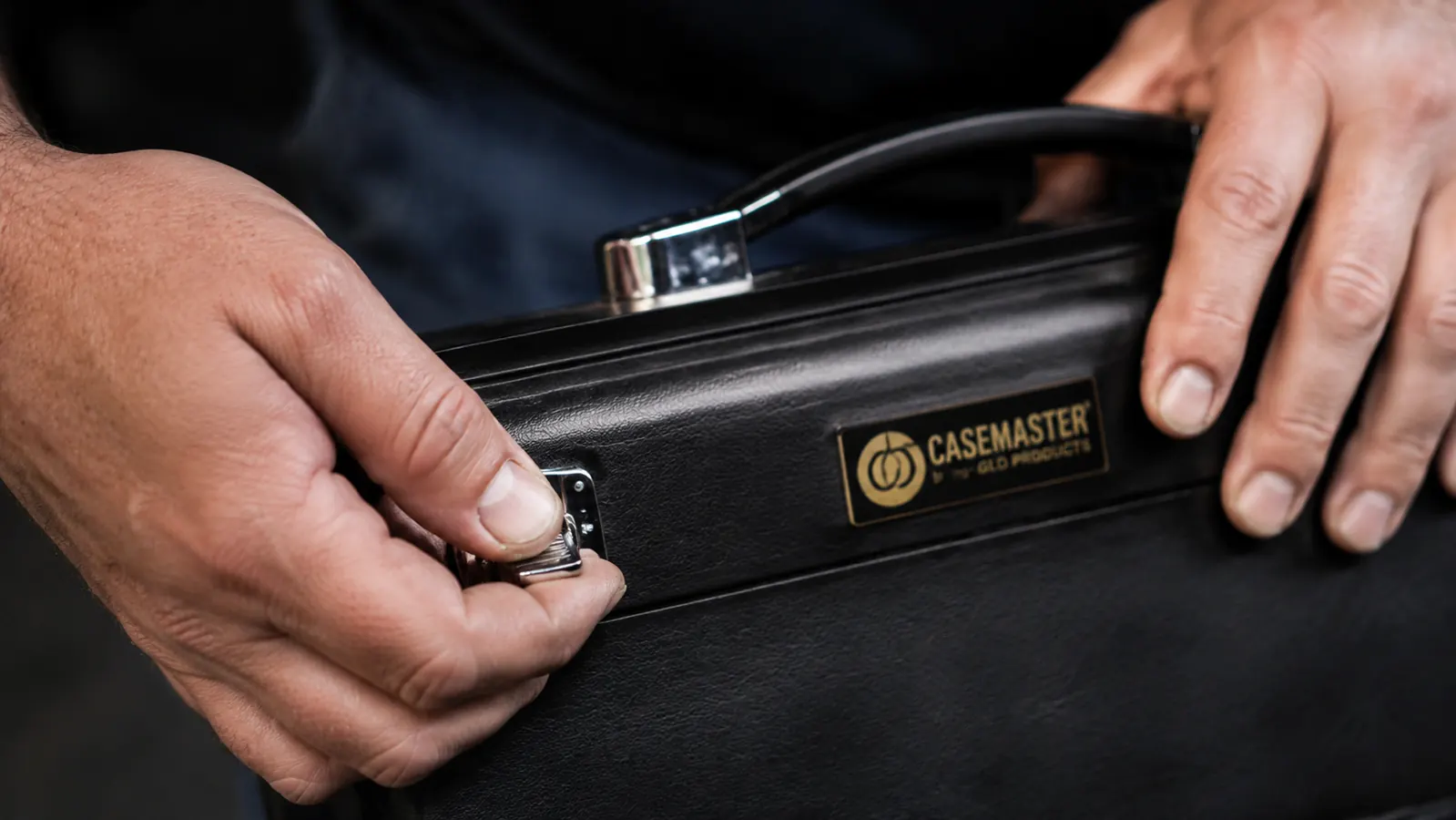
The latch is the thing people notice immediately. The chrome flip-latch feels lightweight in your hand. It clicks closed, which is satisfying. But press on the lid after you close it and you will feel the lid give slightly before the latch actually holds it. There is a small amount of play, maybe a millimeter or two, before tension loads. That is not the latch failing. That is just the tolerance on the hardware. But if you are used to a Predator or a Casemaster Cue Shield series, the comparison is not flattering. The Q-Vault latch feels like it belongs on a briefcase from an office supply store.
Here is what I want to be precise about: in fourteen months of use I have never had the latch pop open on its own. Not in a trunk. Not when the case was vertical in a car seat. Not when I set it down hard on a table. The latch holds. The anxiety about whether it will hold is just that, anxiety, triggered by how it feels rather than how it performs. But two of the four players I spoke with mentioned the latch as a confidence issue, and one of them added a small luggage lock through the latch loop for peace of mind. That tells you something about the subjective experience even when the function is adequate.
What I would watch for: if the latch starts to feel looser around the six to nine month mark, it means the chrome plating on the latch pin is wearing. At that point, a small dab of white lithium grease on the pin extends its useful life by a full season. This is a $0.50 fix on a budget case, but nobody in the marketing material mentions it.
The Velvet Smell Out of the Box
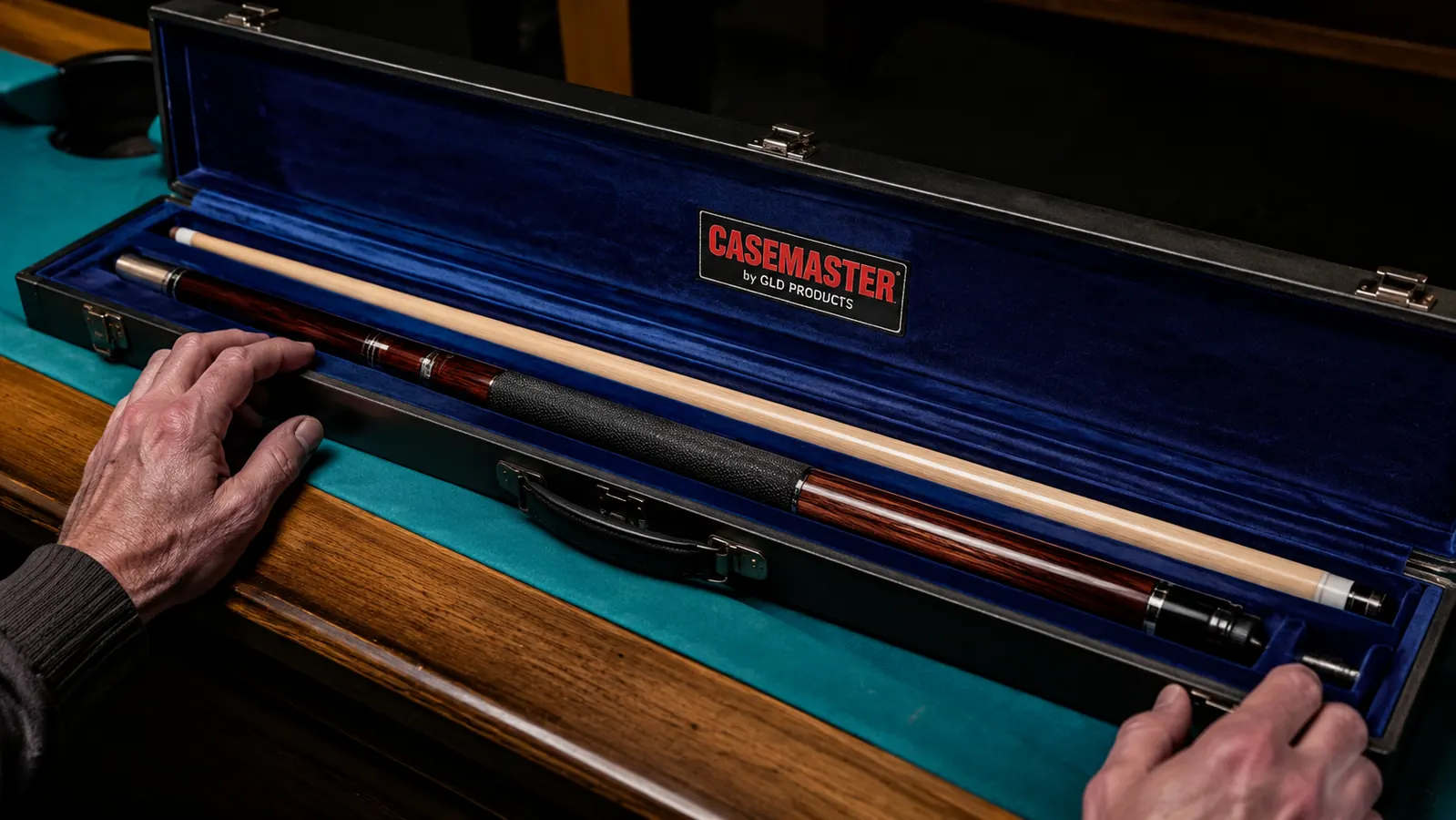
Open a brand new Q-Vault Supreme and you will smell it before you see what is inside. The velvet interior has a chemical off-gassing smell that is somewhere between new car and fabric dye. It is not overwhelming, but it is unmistakably synthetic. Most people describe it as 'new case smell.' Some people hate it.
The smell is completely harmless to your cue. Maple and exotic wood shafts are sealed and will not absorb the odor in any meaningful way. Irish linen wrap is more porous, but I have never seen the wrap on a cue carry the case smell after more than a week of storage. What you can do: open the case fully, prop the lid up, and leave it in a well-ventilated area for two to three days before first use. An activated charcoal sachet inside overnight accelerates the process. After about a week of regular use the smell is gone entirely. But if you are ordering this as a gift and the recipient opens it expecting a premium unboxing, the odor is noticeable and worth mentioning upfront.
The latch holds reliably in practice. The anxiety about whether it will hold is triggered by feel, not by function. Know the difference before you return it.
Shell Flex Under Heavy Loads
The Q-Vault Supreme holds one complete two-piece cue. That is its designed load. Where players run into trouble is when they start using the interior accessory pocket, which runs along the inside of the lid, to carry chalk, a glove, a tip tool, a joint protector, and whatever else ends up in the rotation. Load the accessory pocket with more than about six ounces of gear and the lid develops a slight bow when latched. The plastic shell is stiff enough for its primary job but not rigid in the way an injection-molded thermoplastic case would be.
Does the bow cause any real-world damage to the cue? In my testing, no. The foam channels hold the cue correctly even with the lid bowed. But visually it is unsettling, and repeated stress cycling on a bowed lid can eventually fatigue the hinge pins. The practical fix is simple: do not use the Q-Vault as a gear bag. Keep a separate small pouch for chalk and accessories. Carry the case with the cue and maybe one chalk cube inside, nothing more. Treat it as designed and the shell will remain straight through years of use.
The aluminum corner edging is decorative as much as functional. It provides genuine protection against corner impacts, which is the most common real-world drop scenario, a case falling off a stool and landing on a corner. I saw that exact scenario once in fourteen months. The case took the hit on the front aluminum edge, left a visible scuff on the aluminum, and the cue inside was completely undamaged. That is a genuine win. What the aluminum edging does not do is add structural rigidity to the main shell body. That is still plastic, and it still flexes.
Hinge Wear at High Frequency
The hinge is a standard barrel-style piano hinge running the full length of the case back. At fourteen months of three-times-weekly open-close cycles it shows minor surface oxidation but no functional degradation. One of the players I spoke with, who has owned his Q-Vault for closer to three years at a similar frequency, reports a slight creak when opening but no wobble or looseness in the hinge barrel. The hinge appears to be the most durable mechanical component on the case, which is the right engineering priority.
Where I would flag concern is for players in high-humidity climates, think Gulf Coast cities, South Florida, anywhere with persistent 80-plus percent relative humidity. The barrel hinge is uncoated metal. Over time, repeated moisture exposure can cause the hinge to stiffen. If you play in a humid environment and store this case in a garage or a car trunk between sessions, add a silica gel packet inside and wipe down the hinge pins once a season with a dry cloth. That extends hinge life considerably.
The Carry Handle: Small Thing, Real Annoyance
The carry handle is a rigid plastic loop that sits slightly off-center on the case top. It is functional but the grip circumference is narrow, and if you have larger hands you will feel the edge of the plastic cutting into your palm after about ten minutes of carry. The Q-Vault is not designed for long transport walks. It is designed for trunk-to-bar transit, which in most league contexts means a thirty-second carry. If your situation involves longer walks, a bag strap threaded through the handle loop or a silicone grip sleeve over the handle resolves the issue completely.
What I Liked
- Genuine hard-shell protection at the lowest price point in its class
- Aluminum corner edging absorbs real corner impact without transferring shock to the cue
- Full-length piano hinge is the most durable component on the case
- Fits any standard 58-inch two-piece cue with no modifications
- Velvet-lined foam channels hold butt and shaft securely without contact between pieces
- Available on Amazon Prime with reliable delivery and straightforward return window
Where It Falls Short
- Latch has noticeable play before it loads; feels cheaper than it performs
- Strong chemical velvet odor out of the box; requires two to three days off-gassing
- Shell flexes visibly if accessory pocket is overloaded; not designed as a gear bag
- Carry handle grip is narrow and uncomfortable on longer walks
- Aluminum edging is decorative at the main body; shell rigidity is plastic-only
- Hinge requires occasional maintenance in high-humidity climates

Who This Is For
You play in a weekly APA or BCA league. You drive to the bar, walk from the parking lot, play four or five matches, drive home. Your cue cost you somewhere between $80 and $250 and you want it protected without spending more on the case than you spent on the stick. The Q-Vault Supreme is exactly right for that use case. It costs about the same as a night out and it will protect your cue against the specific hazards of that routine, trunk rattles, bar stool drops, accidental rack hits when you set the case on the floor. If that describes you, stop overthinking it and buy the case. It does what it is supposed to do.
It is also a reasonable solution if you have a second cue that needs basic protection during storage. The Q-Vault does a fine job keeping a cue straight, clean, and humidity-insulated when stored horizontally on a shelf. For that role it is nearly perfect at this price point. See our full long-term use review for two full years of carry data across tournaments, league nights, and road trips.
Who Should Skip It
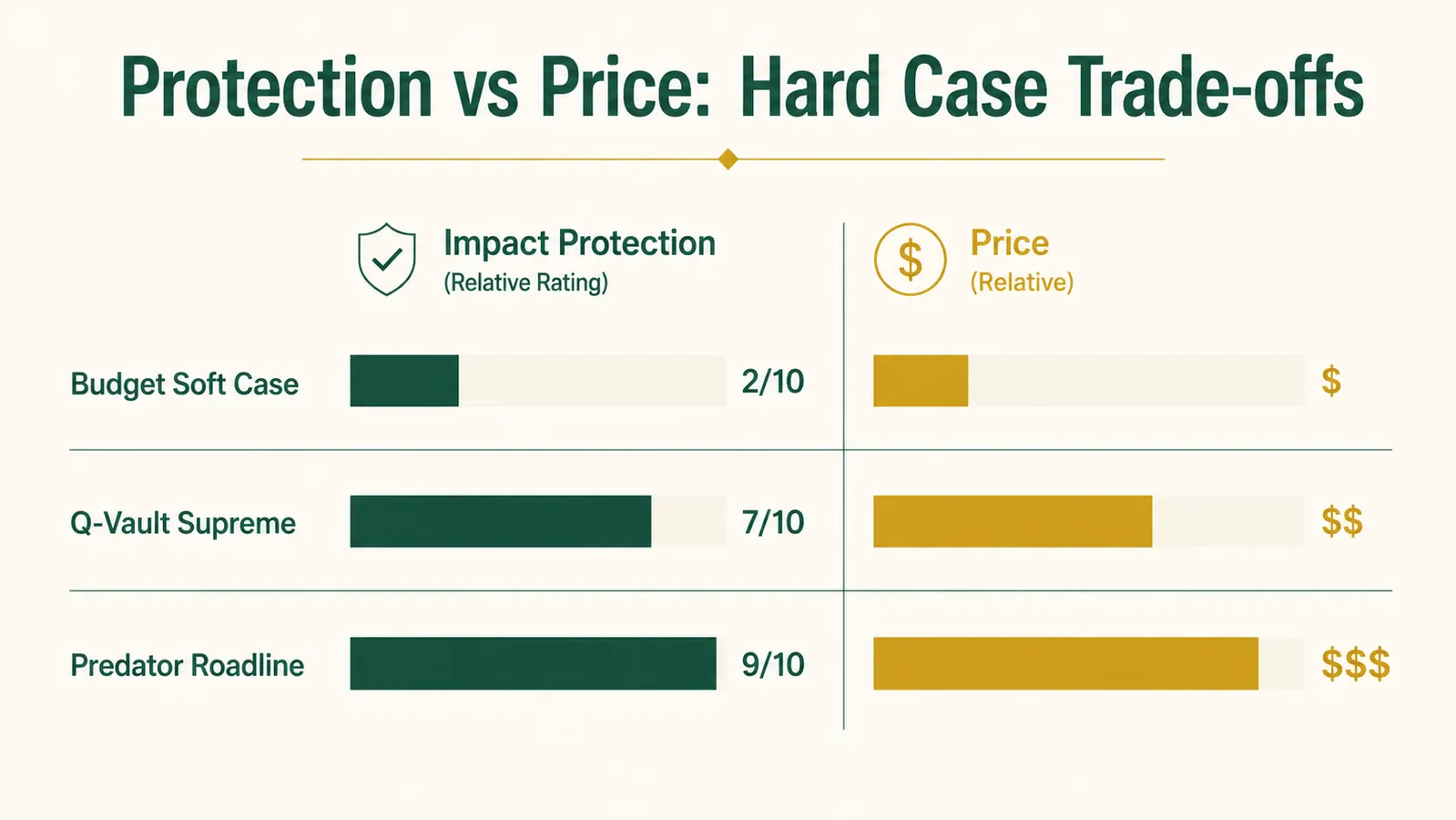
If your cue cost you more than $400, spend more on the case. The Q-Vault Supreme's shell is adequate for most real-world scenarios, but a $500 or $600 cue deserves a case with a more rigid shell, a more confident latch, and a handle that does not dig into your palm. Look at the Predator Roadline or the Casemaster Cue Shield series instead. The price gap is real but so is the build quality difference. Read our Predator Roadline comparison for a full side-by-side on shell rigidity, latch confidence, and carry comfort.
Skip it also if you plan to use it as a carry-all. The accessory pocket is not built for that, and overloading it stresses the hinge and bows the lid in ways that compound over time. If your pre-match kit includes a glove, tip tool, chalk holder, joint protectors, and a spare tip, pair this case with a separate small accessory pouch. The case is engineered for cue-plus-one-chalk. Respect that and it lasts. Ignore it and you will be looking at a replacement in eighteen months.
One more group: players who are sensitive to strong chemical smells should know the off-gassing period is real. If you are buying this as an immediate-use item and cannot air it out for a few days, you will notice the odor during your first session. It is not a defect. It goes away. But if smell sensitivity is a concern, that detail matters.
If your cue is worth protecting, the Q-Vault Supreme is the minimum hard-case standard.
At this price, no other hard-shell case with aluminum edging and velvet-lined foam channels competes. Check today's price on Amazon and see if it is still in stock.
Amazon Check Today's Price on Amazon →