
I have been playing in an APA 8-ball league on Thursday nights for going on six years. My current playing cue is a Viking Valhalla 500 series, 19 ounces, maple shaft, Irish linen wrap. I paid more for that cue than I want to admit, and for the first two years I transported it in a vinyl zipper tube bag that came in a bar table kit. Then I dropped it in a parking lot, it rolled under a truck tire before I could grab it, and the joint pin cracked. Lesson learned. I bought the Casemaster Q-Vault Supreme the same week I got the shaft repaired. That was roughly 200 league nights ago, and I have been using it for every trip to the hall since.
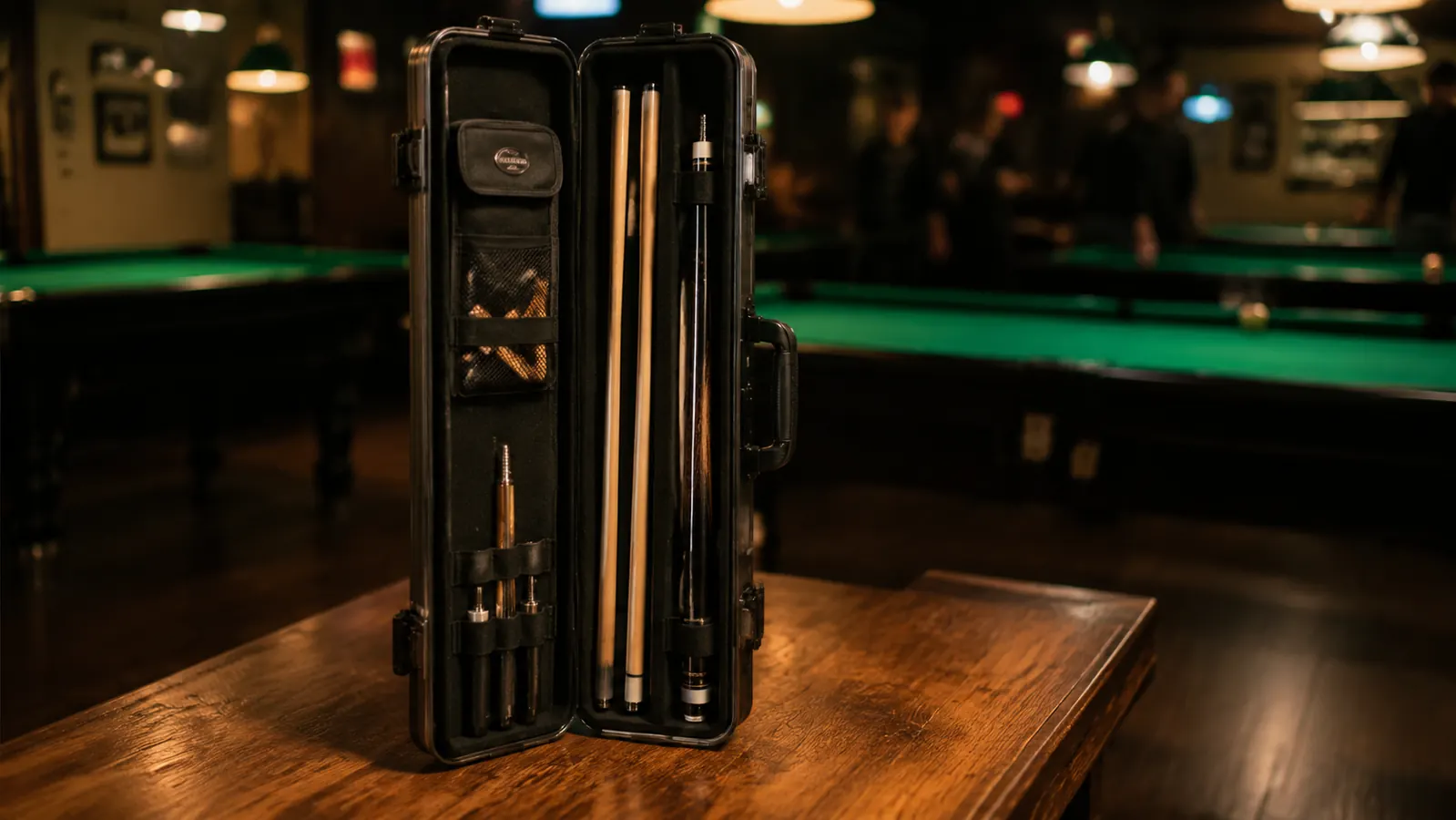
The Q-Vault Supreme is a 1B/2S hard case, meaning it holds one complete two-piece cue plus two shafts. The shell is injection-molded ABS plastic with an aluminum-wrapped trim rail running the perimeter, two cam-action locking latches, and a padded carrying handle. Inside, there is a plush velvet-lined channel for the butt and shafts, plus a small accessory pocket built into the lid for chalk, tips, and a tip tool. At its current price it is the most affordable hard case with real locking latches that I have found on Amazon. Here is everything I know about it after two years of hard use.
The Quick Verdict
The best value entry point into hard-case protection. The shell and aluminum rail hold up to real drops. The latches are the weak link over time, but they are still functional at two years. If you own a cue worth more than $100, the Q-Vault Supreme is a straightforward yes.
Amazon Check Today's Price →Your cue cost more than this case. Stop carrying it in a bag.
The Casemaster Q-Vault Supreme is the hard case I recommend to every league player who does not want to spend $80 on a Predator Roadline. Solid ABS shell, locking latches, velvet interior. Check today's price below.
Amazon Check Today's Price on Amazon →How I Have Used It
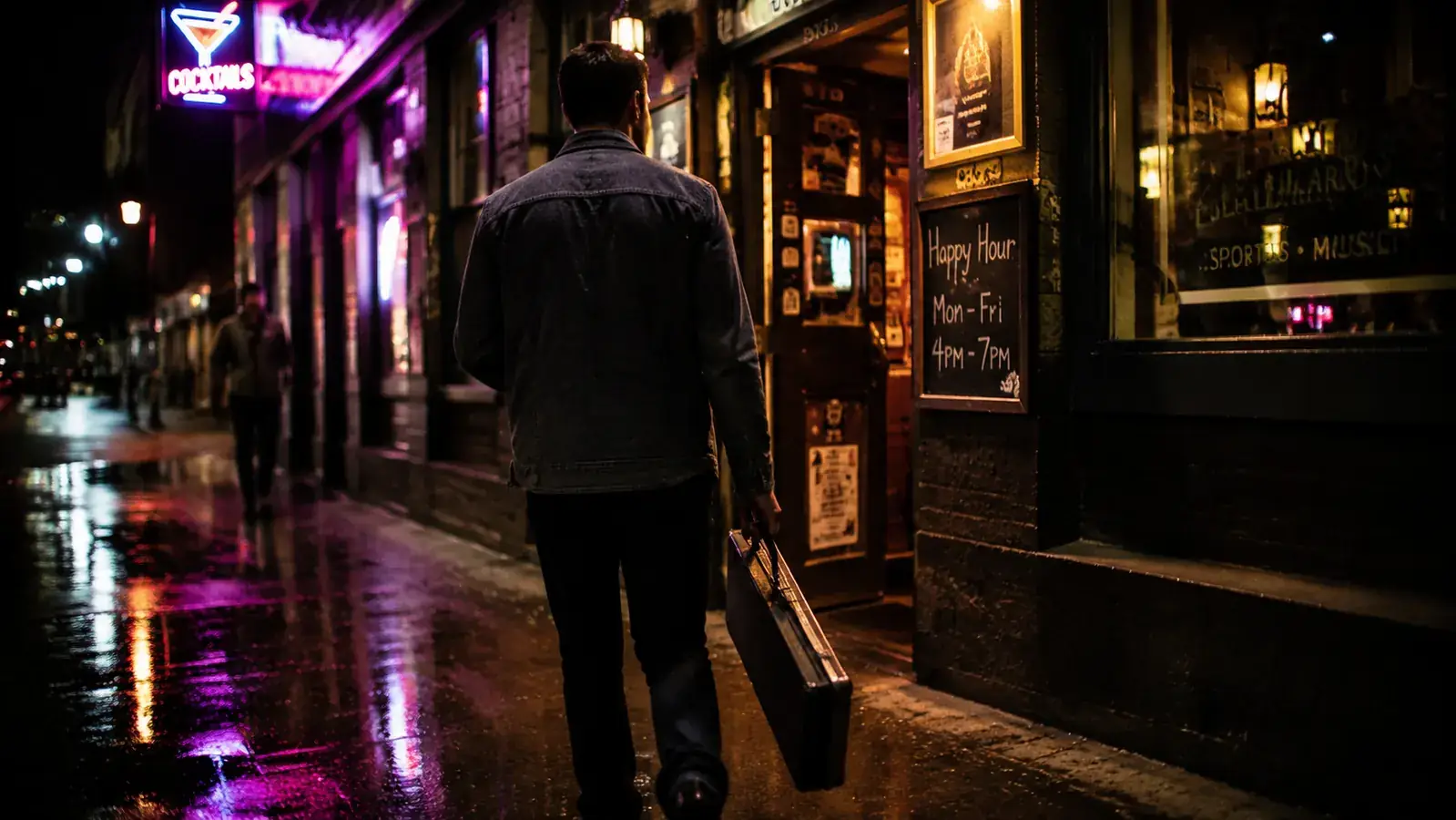
Every Thursday night for two years, sometimes twice a week when there is a tournament. The route from my apartment to the hall is about twelve minutes in the car, but I also carry the case on the city bus when my car is in the shop, which means it has been squeezed into overhead racks, set on wet pavement while I wait for a ride, and occasionally slid across the gravel lot behind the bar because I was carrying too many things at once. I am not gentle with it. That is the point of the test.
I also drive to a regional APA tournament twice a year, which means the case goes in the trunk under a duffle bag and a cooler for a three-hour drive each way. It has been in temperatures ranging from about 15 degrees Fahrenheit in January to over 95 in August. I am not storing it in a climate-controlled case room between sessions. It lives in my hall closet, which gets warm in summer.
In that time I have not replaced anything on the case. The velvet interior is worn in a few spots near the butt cap resting point. One of the two latches takes a firmer push to close than it did when new. The aluminum trim has a few small dings from the parking lot incidents. The shell itself has zero cracks. That is the summary of two years. Everything below explains what that means in practice.
The ABS Shell: What It Actually Takes
The biggest misconception about the Q-Vault Supreme is that the ABS plastic shell is fragile because it is not metal. It is not fragile. I have dropped this case from bar-height twice, once on concrete, once on a tile floor. The cue inside was untouched both times. The shell got a small scuff on the corner from the concrete drop. That is it. ABS has enough flex in it to absorb impact rather than transfer it to the contents, which is exactly what you want for a shaft that costs more than the case.
Where ABS loses to aluminum is in crush resistance. If you set a full cooler on top of this case in a trunk, the shell will bow. I know because I made that mistake on the March tournament trip. The case held shape well enough that the cue was fine, but the lid had a visible curve to it for about two weeks before it gradually returned to mostly flat. A Predator Roadline or an aluminum SKB case would not bow at all. That is one real tradeoff at this price point.
The aluminum trim rail along the case perimeter is not just cosmetic. It is what keeps the shell edges from chipping and adds structural rigidity around the latching points. After two years, mine has maybe five small dents in it from impact, but it has not separated from the shell or cracked anywhere. The rivets holding it on are still solid. This is a well-engineered detail for the price.
The Latches: The Honest Weak Link
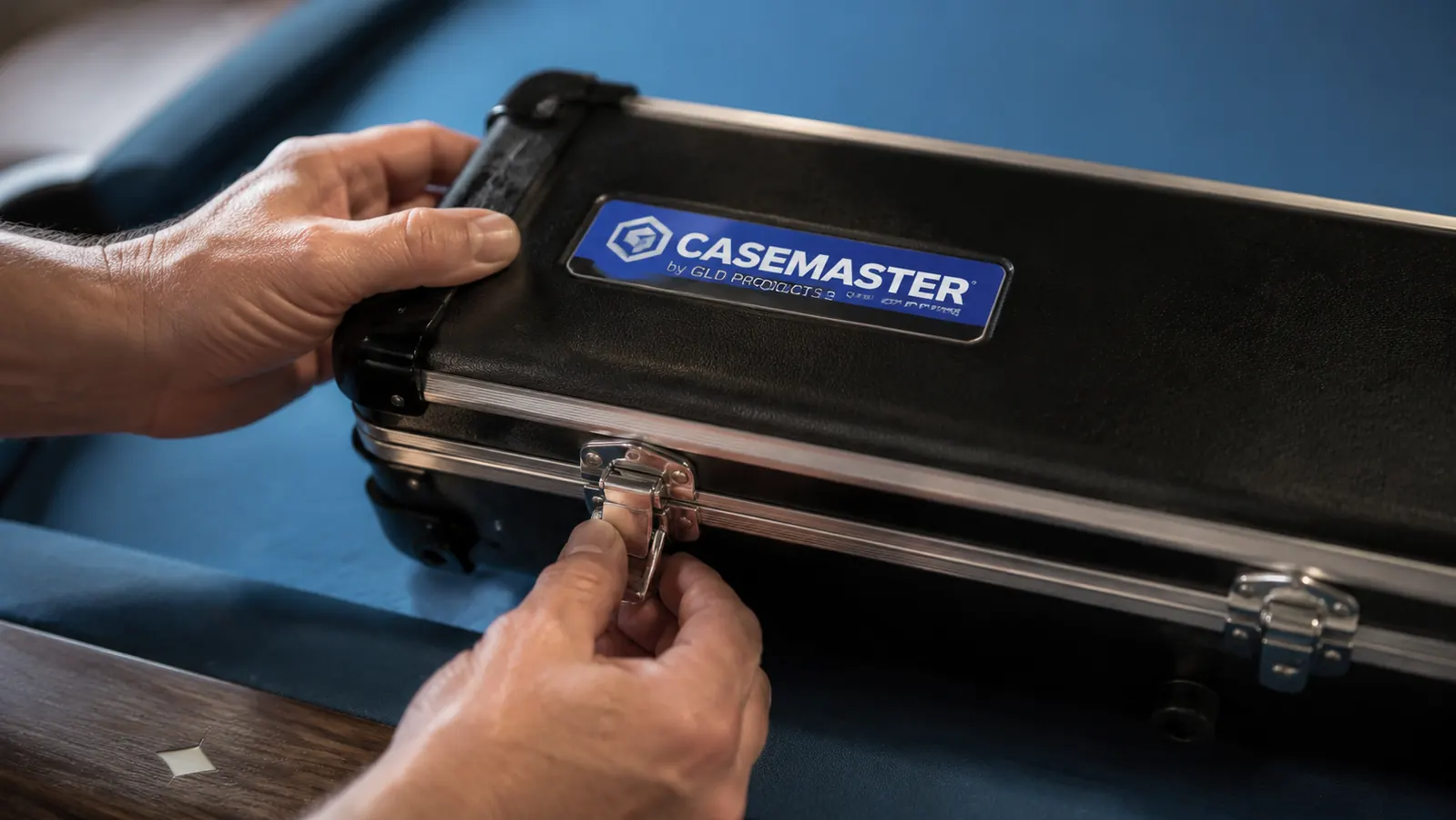
I want to be direct here because this is the part that other reviews gloss over. The cam-action locking latches on the Q-Vault Supreme are functional but not durable in the same class as the shell. At two years of weekly use, my left latch needs a deliberate two-finger press to click closed, whereas at purchase it closed with a thumb push. The latch has not failed and has not popped open spontaneously, but I can feel the mechanism has worn. My right latch still feels like new.
I have read enough Amazon reviews of this product to know latch wear is the most common complaint past the one-year mark. A few people report a latch breaking entirely after 18 to 24 months of daily use. I have not hit that point, but I am not ruling it out. If you are using this case daily for seven days a week, the latches will wear faster. For weekly league use, I think two to three years is a reasonable life expectancy before you might need to replace the case or figure out a fix. Replacement latches for this style run a few dollars on hardware sites, and they are a standard cam latch style, not proprietary.
The shell and the aluminum rail will outlast the latches by years. At weekly use, I would call two years a fair estimate before the latches need attention. For the price, that math still works out.
Interior Velvet and Cue Fit
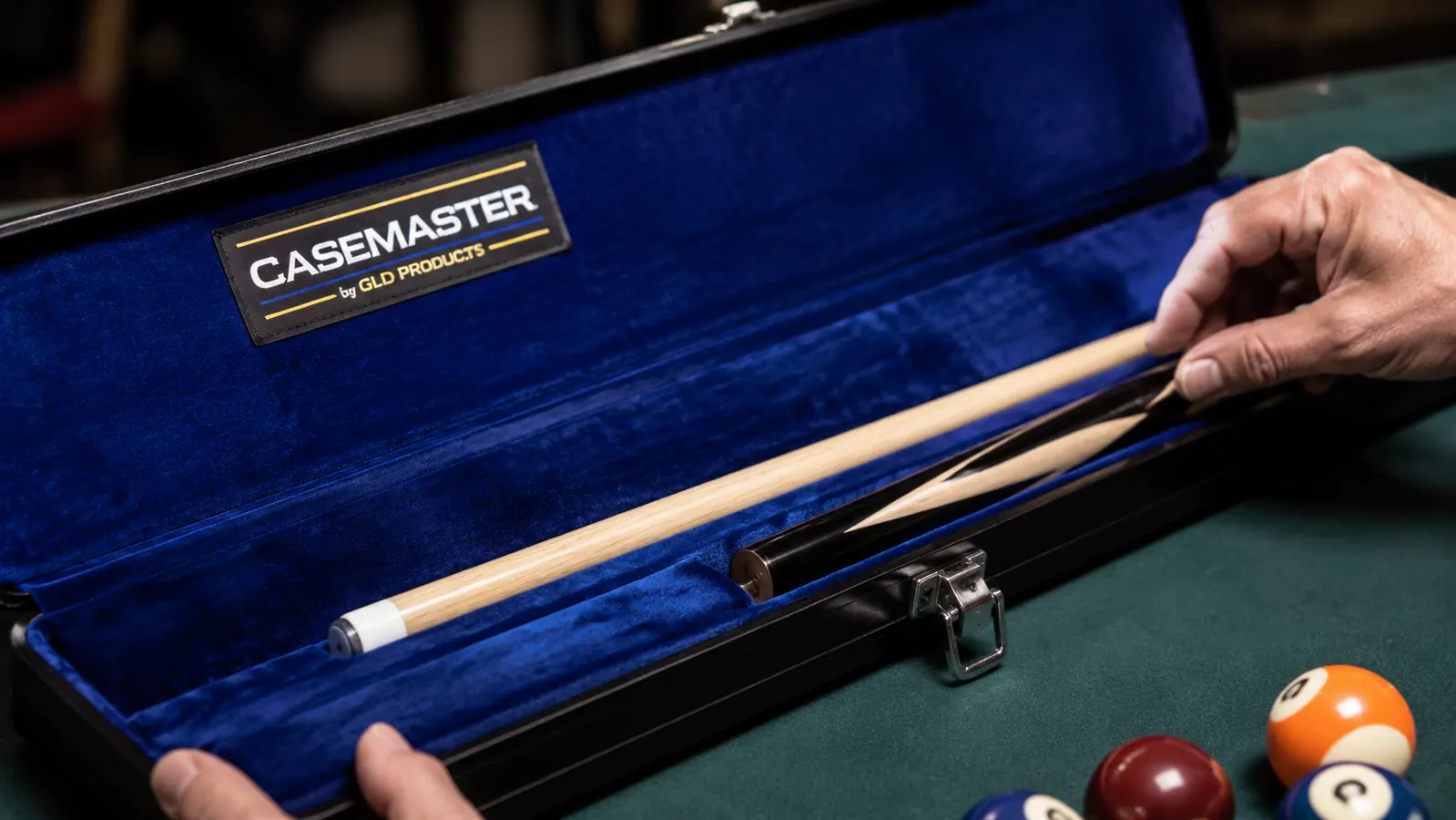
The interior is lined in a blue-grey velvet that I would describe as medium plush. It is not the thick microfiber padding you get in a $200 Instroke, but it is far better than the thin foam liner in budget tube cases. The velvet channel for the butt section is sized for a standard 29-inch pool cue butt with a rubber bumper up to about 1.5 inches in diameter. My Viking butt fits with about 2mm of play on each side, which means the cue does not rattle but also does not press hard against the lining.
After two years, the velvet at the butt cap rest point is noticeably shiny and slightly compressed. It has not pilled or torn. The shaft channels show no wear because the shafts are lighter and smoother. The lid pocket is useful for three cubes of chalk, a tip pick, and a small shaft conditioner cloth. I keep a mini Kamui chalk there and a BRT tip tool. It fits both without forcing the lid.
How It Compares to What I Used Before
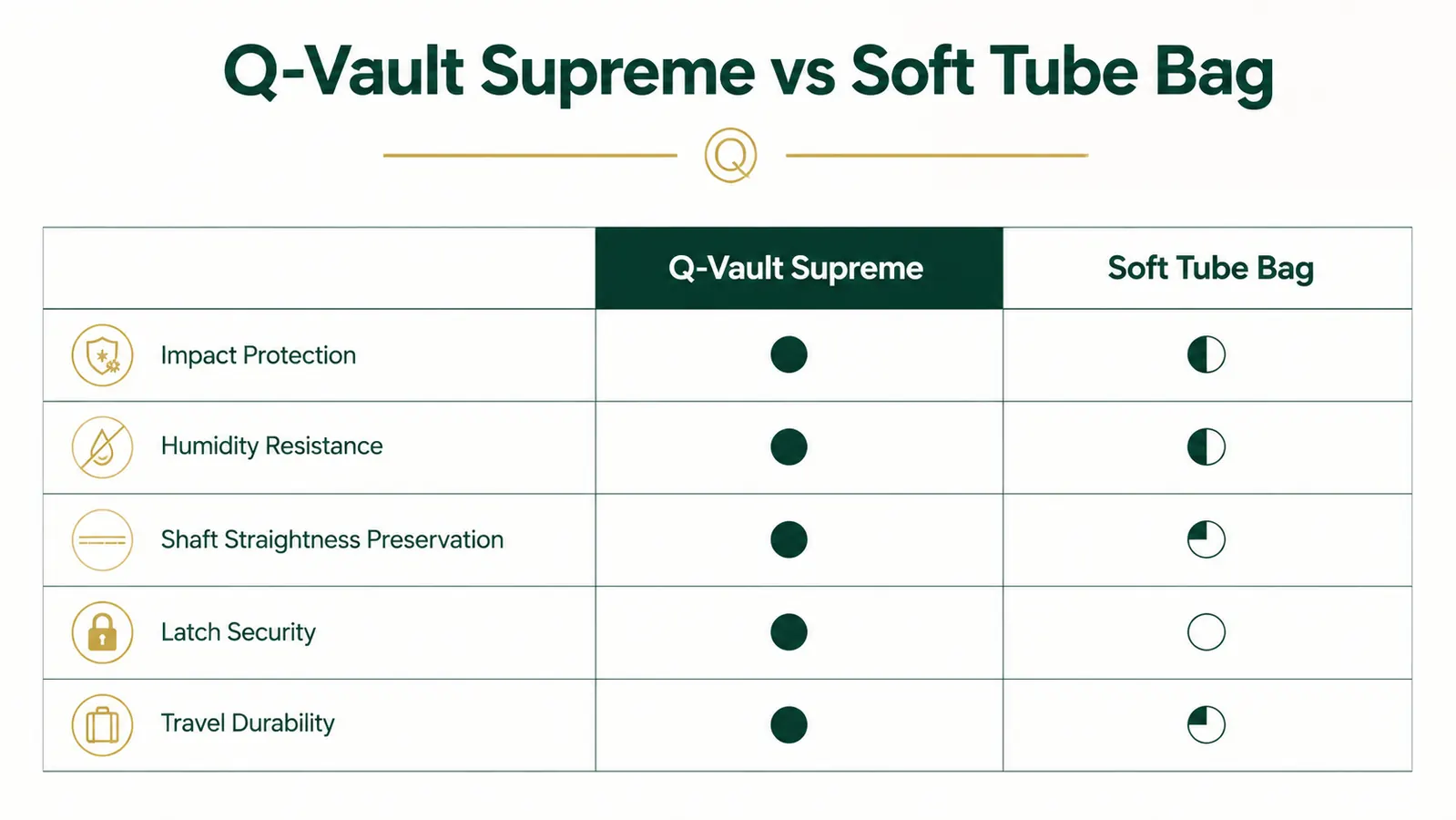
The vinyl tube bag I used before the Q-Vault cost about twelve dollars and did exactly nothing for impact protection. The cue sat in a padded sock that moved freely inside the tube. The bag had one zipper pocket for chalk. When I dropped it, the cue moved on impact. That is how I cracked the joint pin, because the butt and shaft were not secured separately and the joint took the force of the fall.
With the Q-Vault, the butt and the two shaft sections sit in their own velvet-lined channels and do not move relative to the shell. When I drop the case, the shell takes the impact and the cue stays stationary inside it. That is the fundamental engineering difference between a molded hard case and a bag, and it is why I recommend the Q-Vault to every league player who is still using a tube. If you want a deeper look at how the Q-Vault stacks up against a true premium hard case, my Casemaster Q-Vault vs Predator Roadline comparison breaks down the shell strength, interior padding, and carry options side by side.
The one area where the old bag was better is weight. The Q-Vault Supreme with a cue inside weighs about 5.2 pounds. The tube bag with the same cue weighed about 3.1 pounds. That matters on the bus. It does not matter in a car. For most league players, that is a non-issue, but if you are walking to the hall, it is worth knowing.
Temperature and Humidity Performance
Pool cue shafts warp when exposed to humidity swings. This is the part of cue care that most players underestimate. You do not need to drop your cue to damage it; leaving a maple shaft in a hot car for three hours in July will start to introduce subtle bow. The Q-Vault's ABS shell provides meaningful resistance to humidity transfer because it is a sealed enclosure with no fabric exterior that absorbs moisture. My cue shaft has been roll-tested on the table before and after every season for two years and has showed zero measurable warp.
I want to be careful not to oversell this. The Q-Vault is not a climate-controlled vault. If you leave it in a car trunk in August for six hours, heat will build inside the case and the shaft can still be affected. The case slows the humidity transfer and protects against impact; it does not eliminate environmental risk. My guide on how to protect your pool cue from warping and damage covers the storage and humidity steps that work alongside your case.
What Two Years of Use Looks Like
The outside of my Q-Vault has scuffs on two corners, a few small dings in the aluminum rail, and one 2-inch scratch across the shell face from when I slid it across gravel. The handle has darkened from hand oils and leather contact. The rubber feet on the bottom are still intact, which surprised me given the concrete and tile drops. The case looks used, which I think is honest advertising for a case you actually carry.
The inside looks significantly better than the outside. The velvet is worn in one spot. The lid pocket zipper works smoothly. The shaft divider is intact. If I photographed only the interior, you might think it was one year old instead of two. That is a good sign for the part of the case that actually matters for your cue.
What I Liked
- ABS shell survives bar-height drops without transmitting force to the cue inside
- Aluminum trim rail adds structural rigidity at the edges and corners where drops happen
- Velvet interior channels hold butt and shafts separately so they cannot impact each other on a fall
- Sealed enclosure slows humidity transfer significantly compared to fabric bags or open tube cases
- Locking latches provide basic security against the case opening accidentally
- Accessory pocket in lid is genuinely useful for chalk, tip tools, and a shaft cloth
- Holds a 1B/2S configuration, so you can carry a spare shaft without a separate bag
Where It Falls Short
- Latch mechanism wears with heavy use; one of my two latches requires more force to close at two years
- ABS shell can bow under sustained crush weight, like a loaded cooler sitting on top in a trunk
- At 5.2 pounds loaded it is noticeably heavier than a tube bag, which matters if you walk to the hall
- Velvet shows compression wear at the butt cap rest point after 18 to 24 months of regular use
- No shoulder strap included; the handle is comfortable but one-handed carry only for distance
- Interior sizing is for a standard 1.5-inch butt diameter; oversized or extended butts may not fit cleanly
Who This Is For
The Casemaster Q-Vault Supreme is the right case for any league player who owns a cue worth $75 or more and is still carrying it in a tube bag or a soft case. The math is straightforward: one cracked joint pin on a mid-range cue costs more to repair than this case costs new. If you drive to the hall once or twice a week and your cue rides in a car, this is the minimum protection that makes sense. It is also a solid option for a beginner who just bought their first personal cue and wants to step up from the soft bag that came with it.
Who Should Skip It
If you own a cue in the $300 or above range, I would step up to a Predator Roadline or an Instroke. The Q-Vault's latches are the honest limiting factor, and a $350 Predator deserves latches that are built to last five or more years without wear. Players who walk long distances to the hall or take public transit regularly might also want a case with a shoulder strap, which the Q-Vault does not have. And if you need to carry more than one complete cue, the 1B/2S configuration will not cover you.
Two years in, I would buy it again at this price.
The Q-Vault Supreme is still the case I put on my rack every Thursday. The shell does its job, the velvet is worn but intact, and my cue has never taken a hit inside it. If you are done gambling on soft bags, check today's price on Amazon below.
Amazon Check Today's Price on Amazon →