
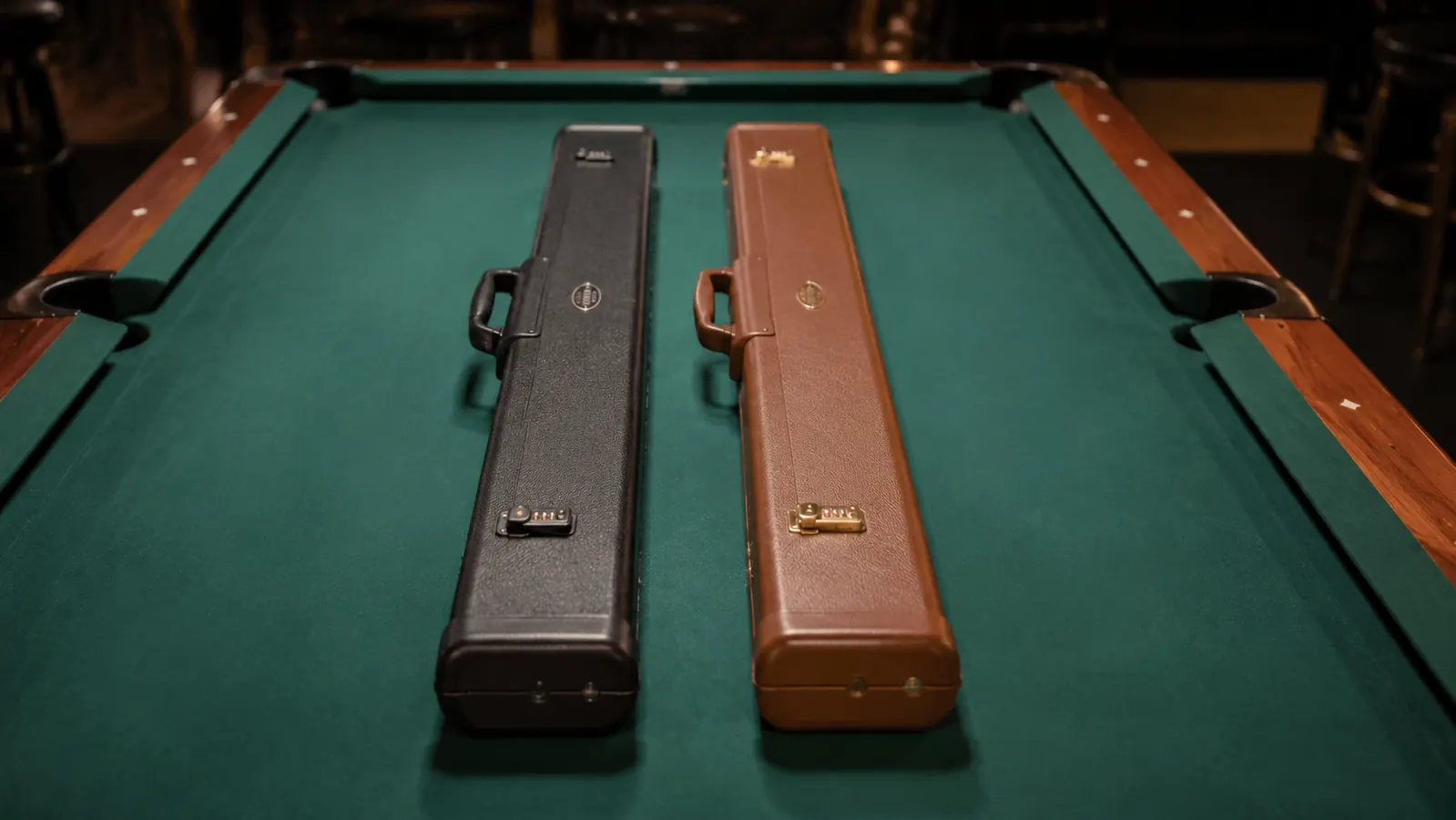
If you play APA or BCA league, you already know the drill: you haul your cue to the bar every Tuesday night, park it against the wall, and hope nobody knocks it over during somebody else's match. A soft case is not enough for that situation. A hard case is not optional once you have a cue worth protecting. The question is whether you spend $27 on the Casemaster Q-Vault Supreme or push past $70 for a Predator Roadline.
I have carried both. The short answer: the Q-Vault does the one job a hard case has to do and costs less than a rack of beers at most bars. The Roadline is genuinely better in a few specific areas, but those advantages matter mostly for players transporting high-end cues on flights or in the back of trucks. For a two-piece playing cue going to league night, the budget option wins on value by a wide margin.
| Spec | Casemaster Q-Vault Supreme | Predator Roadline |
|---|---|---|
| Street Price | ~$27 | ~$70-$85 |
| Shell Material | Hard plastic with aluminum edge rails | Hard polymer with reinforced corners |
| Interior Lining | Velvet-lined foam cradle | Nylon-lined foam with tighter cue channel |
| Latch System | Dual snap latches | Dual lockable latches with key |
| Cues Held | 1 complete 2-piece cue | 1 complete 2-piece cue |
| Carry Option | Handle only | Handle + removable shoulder strap |
| Weight | Light | Slightly heavier |
| Amazon Rating | 4.6 stars (4,598 reviews) | Not on Amazon |
| Best For | Budget-conscious league players | Players with premium cues needing max protection |
Your cue cost more than $50. A $27 hard case is the cheapest insurance you can buy.
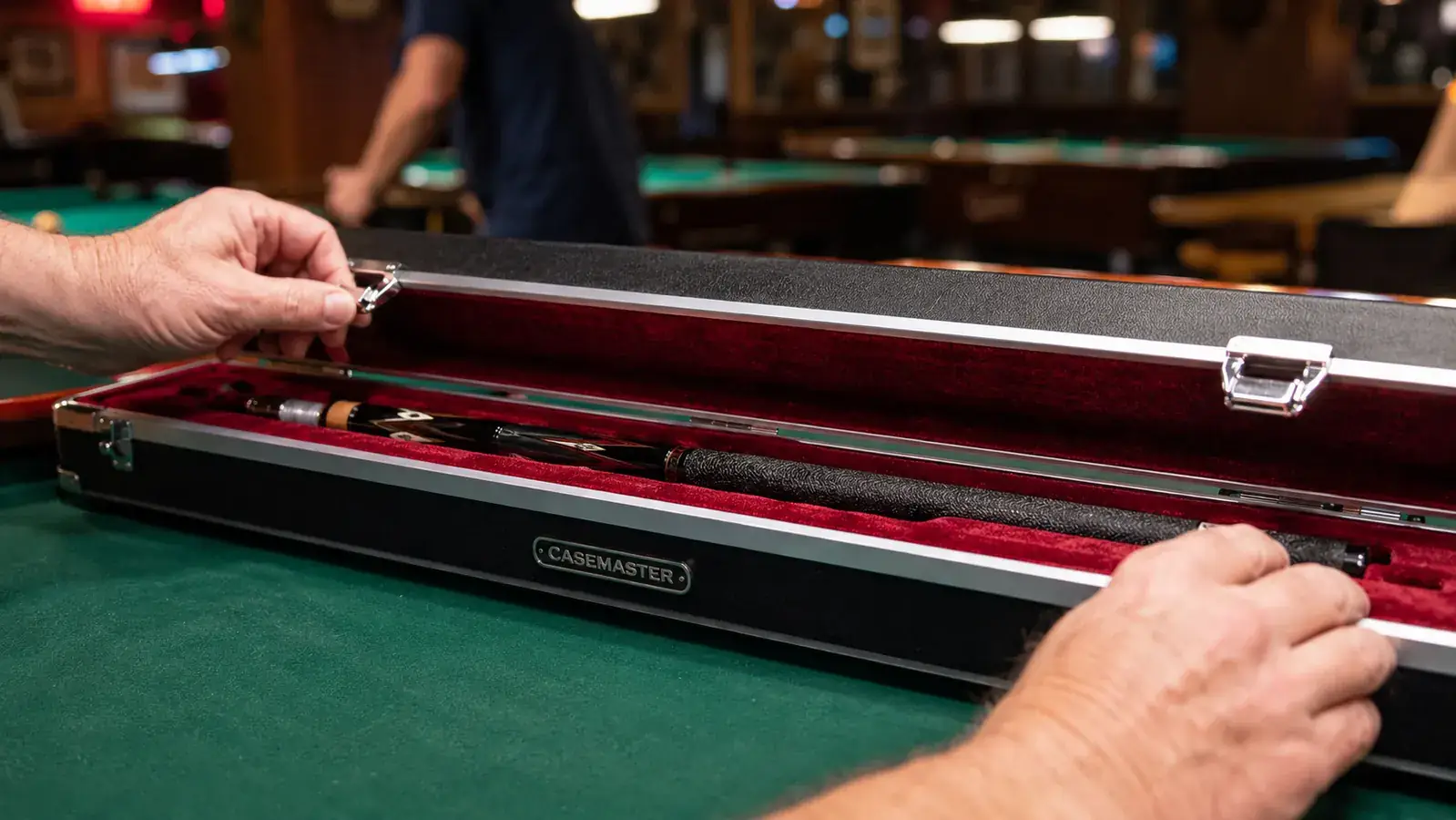
The Casemaster Q-Vault Supreme holds a single 2-piece cue in a velvet-lined hard shell with aluminum edge protection. Over 4,500 league players have reviewed it. The current price on Amazon is below what most players spend on tip work in a season.
Amazon Check Today's Price on Amazon →Where the Casemaster Q-Vault Wins
The Q-Vault Supreme has 4,598 reviews on Amazon at a 4.6-star average. That is not an accident. The case does its primary job extremely well: it puts a hard shell between your cue and the world. The aluminum edge rails run the full perimeter, so if the case takes a corner hit or gets knocked off a bench, the rail absorbs the blow before the plastic body ever has to. I have seen Q-Vaults fall off bar stools and come up with scuff marks and nothing more. The cue inside was untouched.
The velvet interior is thicker than it looks in the photos. It cradles the butt and shaft without leaving them sloshing around inside the cavity. League players who carry $80-$200 cues consistently say the Q-Vault protects well enough that they never felt the need to spend more. At its price point, it is also a completely disposable purchase if it ever does wear out, though most I have seen outlast the cues inside them. The weight is light enough that it does not feel like extra equipment, just a carrying case.
One underappreciated advantage: the Q-Vault is sold directly through Amazon with Prime shipping. You can have it on your doorstep in two days. If you are looking at this the week before a tournament or league night and your current bag just gave out, that matters.
Where the Predator Roadline Wins
The Roadline is a genuinely better case in the areas that matter most for serious cue protection. The polymer shell construction is thicker and more impact-resistant than the Q-Vault's plastic body, and the reinforced corner system is specifically designed to handle drops that would dent a standard case. If you are carrying a Predator Revo shaft or a custom cue with a retail value north of $500, the Roadline's extra structural integrity is worth considering.
The lockable latch system is a real differentiator if you leave your cue unattended at tournaments or bar events. The Q-Vault's snap latches are not designed to be locked. Anyone can pop them in a few seconds. The Roadline's key locks add a deterrence layer that is worth the premium if you play in environments where equipment theft is a concern. The removable shoulder strap is also a practical upgrade for players who walk long distances between venues or commute on foot.
The Q-Vault is the answer for players protecting a $50-$300 cue on a budget. The Roadline is the answer for players who would lose sleep over a scratch on a $600 shaft.
Shell and Build Quality: What the Price Difference Actually Buys You
Both cases use a hinged clamshell design with a hard outer shell and soft interior lining. The Casemaster uses a standard hard plastic shell reinforced with aluminum channel rails along every edge. The aluminum does two things: it adds structural rigidity to the case so the shell does not flex under lateral pressure, and it protects the corners and edges where the most common drop impacts happen. For a $27 case, this is a clever engineering solution.
The Predator Roadline's shell is molded from a thicker, higher-grade polymer compound that is more rigid throughout the full panel, not just at the edges. Under a firm squeeze, the Q-Vault will flex slightly in the center of the panel face. The Roadline resists that flex more completely. In practice, both cases will protect a cue from the drops and bumps of league play without issue. The difference shows up in extreme scenarios: a case thrown into a truck bed or dropped onto concrete from waist height. The Roadline absorbs those impacts better.
The interior fit is also tighter on the Roadline. The nylon-lined foam channel holds the cue with less lateral movement during transport, which matters more for players with expensive ferrules and tips. The Q-Vault's velvet interior is softer and looks better, but the cue moves slightly more inside the cradle. Neither is going to cause damage under normal use.
Latch Security and Travel Use
The Q-Vault's dual snap latches are positive and firm. They do not pop open accidentally. But they are not lockable, and they are not rated for airline carry-on or checked baggage situations where inspectors or TSA agents may need to open a case. If you travel by air with your cue, you need a lockable case to comply with most carrier policies and to prevent unauthorized access to your equipment.
The Roadline's key-lock latches give you that travel security. If you fly to tournaments even occasionally, the lockable latch system is a meaningful feature and one of the clearest justifications for the higher price. For players who drive to every match and park their case on a chair next to them, the snap latches on the Q-Vault are completely adequate.
Who Should Buy Which
Buy the Casemaster Q-Vault Supreme if you play league pool on a weekly basis, carry a cue worth $50 to $300, drive to your venue, and want reliable hard case protection without spending more on the case than on accessories. It protects well, it is light, it holds up for years under regular use, and at its current price it is the best value in hard cases on Amazon. The 4,598 reviewers who gave it a 4.6-star average are not all wrong.
Buy the Predator Roadline if your cue cost $400 or more, you travel to tournaments by air at least occasionally, you need the peace of mind of lockable latches, or you want the best-available shell protection regardless of price. The Roadline is a premium product that justifies its cost for players for whom it is the right fit. But for the majority of recreational and mid-level league players, it is more case than they need.
One situation where the answer is obvious: if your cue is a $90 Players or a $120 CUESOUL and you are trying to decide between a $27 case and a $75 case, buy the Q-Vault. Do not spend two-thirds of the cue's value on the case. When you eventually upgrade to a custom or semi-custom stick, revisit the case at the same time.
Alternatives Worth Considering
If neither case fits your budget or needs exactly, there are two options worth looking at. The Iszy Billiards hard case sits between the Q-Vault and the Roadline in price and adds a combination lock without the full premium shell upgrade of the Roadline. It is a reasonable middle ground for players who need lock security but not airline-grade protection. On the higher end, Instroke and SKB make carry cases designed for players transporting multiple cues, which is a different category entirely but worth knowing about if you ever carry a playing cue and a break cue together.
For a deeper look at what the Q-Vault holds up like over years of regular use, read our full long-term review. If you want to understand the honest tradeoffs at this price point before you buy, the honest review digs into the latch wear, hinge behavior, and velvet durability that the product page does not cover.
The Q-Vault is the most-reviewed hard cue case on Amazon for a reason.
Over 4,500 league players have put it through real use and rated it 4.6 stars. If you carry a two-piece cue to any kind of organized play, it is the first case you should own. Check the current price before it changes.
Amazon Check Today's Price on Amazon →