
I spent my first two years in APA league borrowing house cues from a bar rack. Warped, sticky, heavy -- every stick was a different animal. My shot selection was limited because I never knew what the cue was going to do. The night I finally brought my own cue, a teammate said something that stuck: 'Half the improvement you're about to see has nothing to do with practice.' He was right. Owning your own cue eliminates an entire layer of variables from your game. But only if you pick the right one to start.
The problem is the spec sheet. Pool cue listings throw at you: weight, tip hardness, tip diameter, shaft taper, joint collar, wrap material, balance point. None of it is explained in plain English and most of it sounds interchangeable until you actually know what you're looking for. This guide walks through each spec, tells you what it actually affects, and gives you a concrete recommendation for where to start -- so you are not still confused three cues and a few hundred dollars later.
If you want to skip the research and just get the right starter cue, the CUESOUL Rockin Series covers every spec on this list at a price that leaves room for accessories.
It is the cue I recommend to every new league player who asks me where to start. 4.6 stars across more than 4,300 reviews, adjustable weight, 13mm tip, maple shaft, Irish linen wrap. Everything you need, nothing you don't.
Amazon Check Today's Price on Amazon →Step 1: Choose Your Weight (19oz Is Where Most Players Should Start)
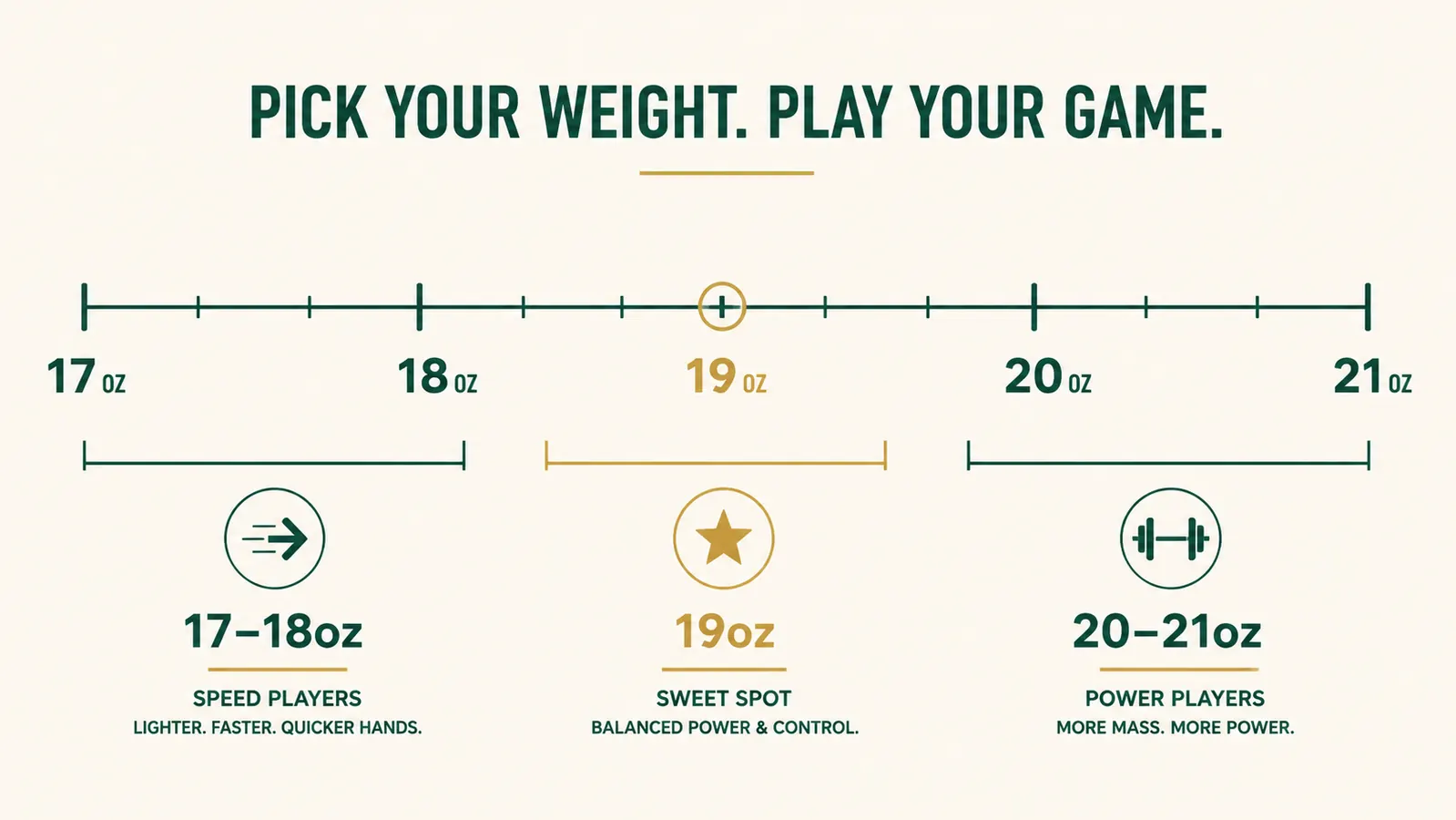
Cue weight runs from about 17oz to 21oz. Most off-the-shelf cues come standard at 19oz or 19.5oz, and that is not a coincidence. It is the weight that produces the most consistent results for players across different stroke speeds and bridge lengths.
Heavier cues -- 20oz and up -- feel solid on the break and on long straight shots, but they rob you of feel on finesse shots. Your cue ball control on short-roll position plays suffers. Lighter cues -- 17oz to 18oz -- reward faster strokes and sharp cut shots, but they require a more developed stroke to hit consistently. For a new league player, 19oz gives you the most forgiving middle ground.
The CUESOUL Rockin comes with a weight bolt system that lets you adjust between 18.5oz and 20oz by swapping the bolt in the butt cap. That adjustability matters because your preference will shift as your stroke develops. Most players start at 19oz, experiment lighter after six months, and settle somewhere in between. Buy a cue that lets you figure that out without buying another cue.
Step 2: Understand Tip Diameter (13mm for Most Games, 12mm for Snooker-Influenced Play)
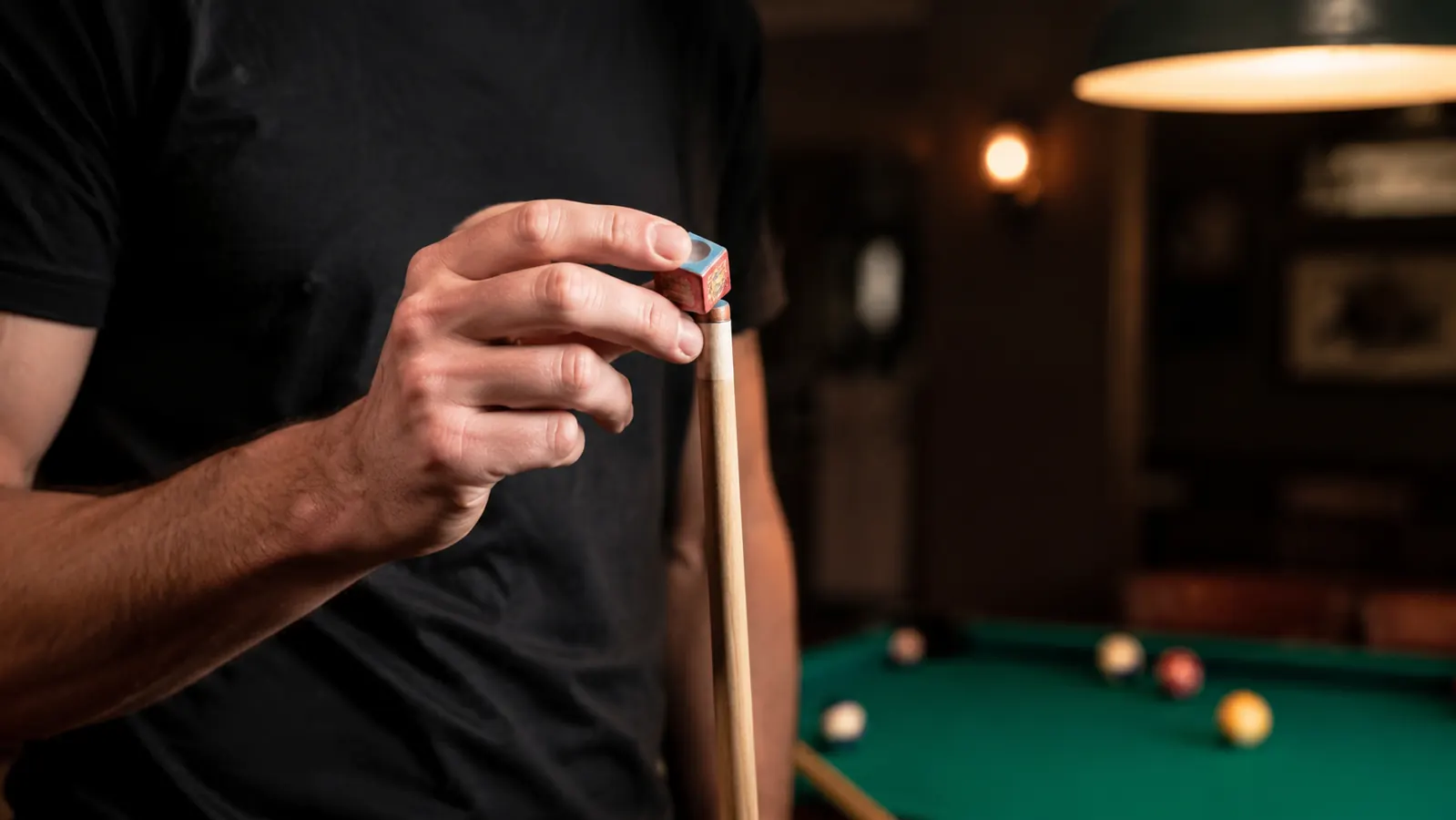
The tip is the only part of the cue that contacts the cue ball. Tip diameter controls how much surface area you have to work with on off-center shots. The standard for American eight-ball and nine-ball pool is 13mm. That is what the house cues at your bar probably use. It is the right diameter for the games you are playing in APA and BCA league.
A 12mm tip is narrower, which means it generates more spin per millimeter of offset but is also less forgiving if your bridge is not perfect. Players who came up on snooker or who play a lot of straight pool sometimes gravitate toward 12.5mm or 12mm because of the precision it encourages. For your first cue, stay at 13mm. You will hit more consistent center-ball shots and not fight the narrower margin for error while you are still building your stroke.
Step 3: Pick Tip Hardness (Medium is Right, Soft is a Trap, Hard is for Break Cues)
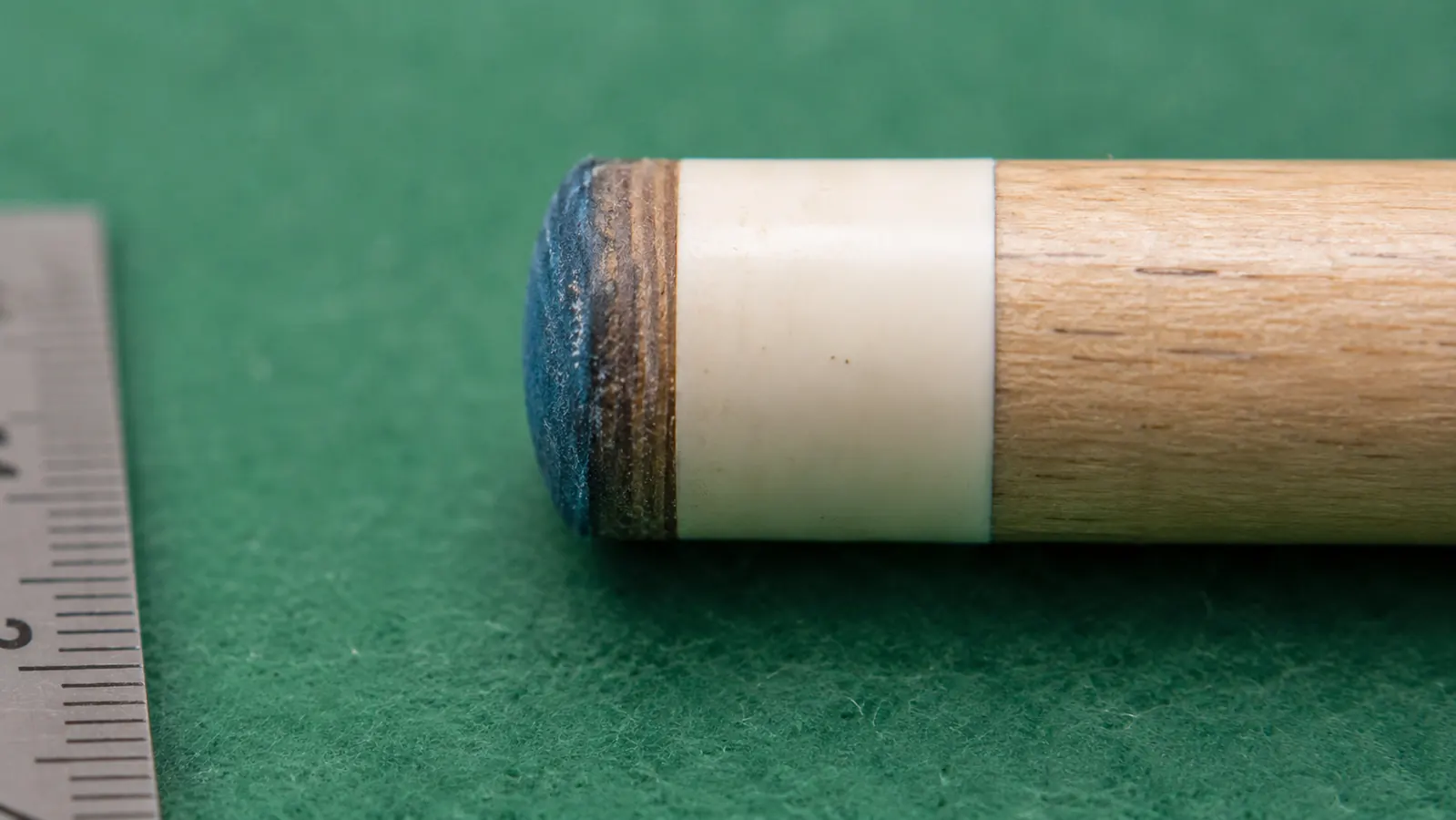
Tip hardness is measured on a scale from soft to extra-hard, and it determines how the tip compresses at contact. A soft tip compresses more, which gives you better english and spin -- in theory. In practice, soft tips mushroom faster, need shaping and pitting more often, and create inconsistency in your shot feedback. They can work well for advanced players who shape and condition their tip every session, but for a new player they are maintenance you do not need.
Hard tips -- the phenolic tips you see on break and jump cues -- are not appropriate for playing cues. They transmit almost no feel, and they will miscue more on off-center shots because they grip the cue ball differently. Medium tips are the standard for a reason. They hold their shape, give you honest feedback on off-center contact, and last long enough for you to get consistent use before they need replacing. The Rockin Series ships with a medium tip that runs about 12 to 18 months before needing a change, depending on how often you play.
Step 4: Choose Your Shaft Material (Maple for Your First Cue, Low-Deflection Later)
Shaft material is where the marketing gets loud. Low-deflection (LD) shafts -- the OB-1, the Predator Z, the Cuetec Cynergy -- promise reduced cue ball deflection on cut and english shots, meaning the cue ball tracks closer to where you aim. That is a real benefit, but it comes with a tradeoff: LD shafts feel different, require you to adjust your aiming system, and typically cost more than the whole budget-end cue you are replacing.
Maple is the correct starting point. It is the traditional shaft material, it is what every house cue is made from, it is what your league opponents' cues are probably made from, and it is what every fundamental aiming system was designed around. When you learn to shoot on a maple shaft, you understand deflection as it actually exists, then you can decide later if an LD upgrade is worth the adjustment. The CUESOUL Rockin Series uses a solid maple shaft with a standard pro taper -- slightly thicker through the mid-section than a radial taper -- which gives you a consistent feel through your bridge hand.
Learn deflection on maple first. Once your aiming system is built, you will know exactly whether an LD shaft is worth the adjustment. Buying an LD cue as your first stick means learning two things at once.
Step 5: Pick Your Wrap Type (Irish Linen Beats Rubber or Bare Wood for Most Players)
The wrap sits on the butt of the cue where your grip hand holds. The three main options are Irish linen, rubber or synthetic grip, and bare wood (no wrap). Each one changes how the cue feels in your hand and how it behaves when your hand is dry versus sweaty.
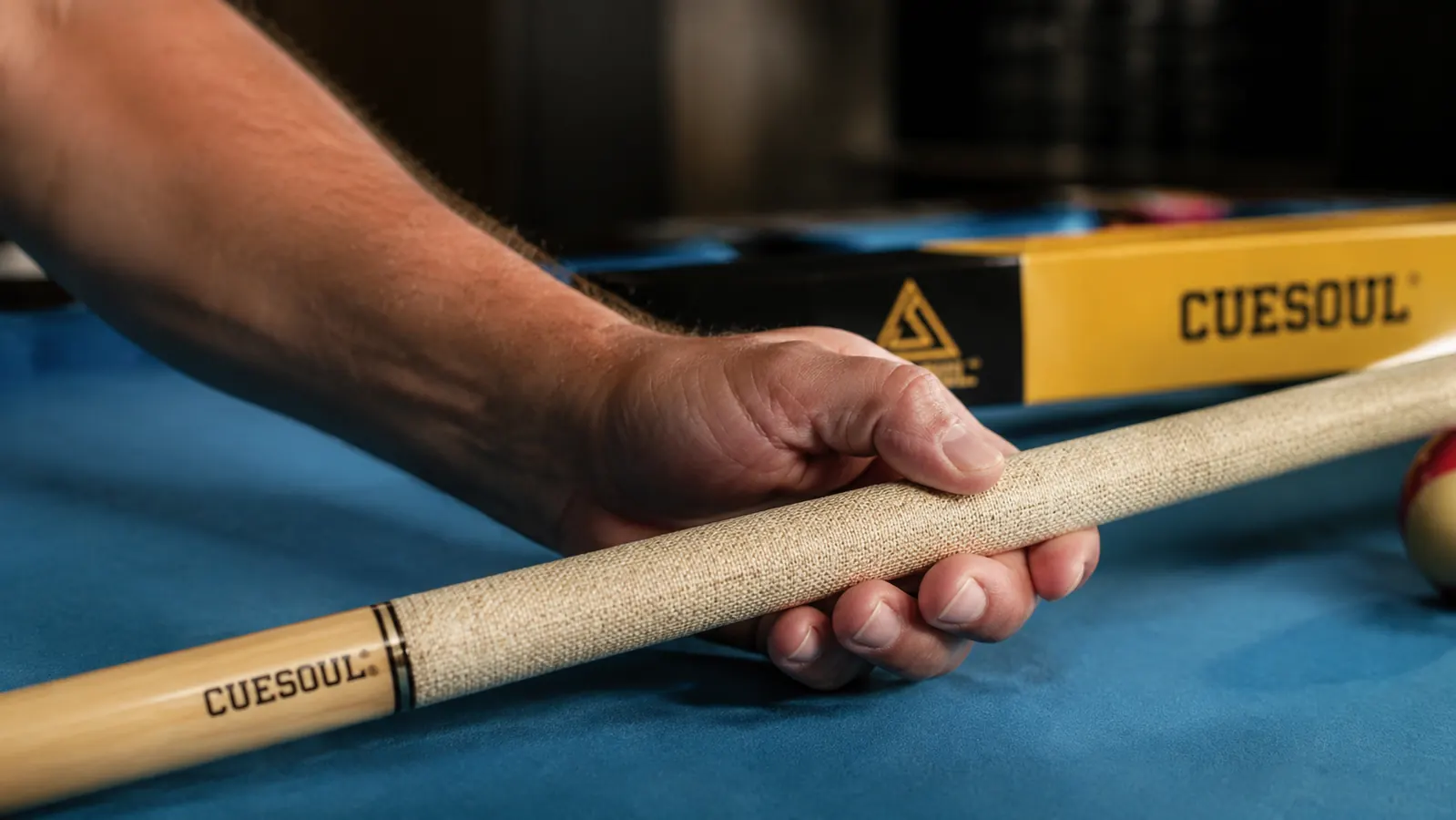
Irish linen is the standard for playing cues in the $30 to $200 range. It absorbs moisture, provides a natural grip without being tacky, and wears evenly over time. Rubber wraps are common on break cues because they hold up to impact, but they feel sticky during long sessions and cause your grip to tighten, which hurts your stroke. Bare wood is preferred by some advanced players because they feel more connected to the cue, but it requires a drier hand and does not forgive slippage. For your first cue, Irish linen is the right call. The Rockin Series uses a full Irish linen wrap and it holds up well through sweaty summer league nights.
Step 6: Understand Joint Type (5/16x18 Is Standard, Stainless Steel Holds Up)
The joint is where the shaft screws into the butt. It controls how solid the cue feels when assembled and how well the shaft-to-butt connection transmits energy. The most common joint pin threads in pool are 5/16x18, 5/16x14, 3/8x10, and Uni-Loc. For a first cue, the specific thread pattern matters less than the material of the joint collar.
Stainless steel or metal collar joints feel solid and hold their tolerances over years of use. Plastic collar joints are common on entry-level cues and they flex slightly -- which some players interpret as vibration or a soft feel. The CUESOUL Rockin uses a stainless steel joint collar, which is one of the reasons it punches above its price range in feel. You will not notice it consciously, but you will not notice a rattle or softness at contact, which is the point.
Step 7: Check the Balance Point (About 18 Inches From the Butt, Give or Take)
Balance point is where the cue rests level when you place it on one finger. Most production cues balance between 17 and 19 inches from the butt end. Players who shoot with a longer bridge tend to prefer a slightly forward balance point. Players with a short compact stroke often prefer a rear balance. For most new players, a balance point around 18 inches from the butt feels natural and neutral.
The way to test this is to pick up the cue and hold it in playing position. Does it feel front-heavy and hard to keep steady? Does it feel butt-heavy and like the tip is floating? If it feels balanced and you are not thinking about it, that is right. Balance is hard to evaluate from a spec sheet -- it is something you feel. If you are ordering online, the weight bolt system on the Rockin lets you shift effective balance slightly by adding or removing weight in the butt.
What Else Helps: Setting a Budget Before You Browse
Pool cue pricing has three real tiers for recreational players. Under $30 gets you a bar-quality cue that is better than a house cue but not by much. These cues typically have hard tips, plastic collars, and shafts that may not be perfectly straight out of the box. They are fine for occasional play but not for league. The $40 to $100 range is where most new league players should land. This covers real maple shafts, stainless joints, medium tips, and Irish linen wraps. The CUESOUL Rockin Series at current pricing sits comfortably in this tier and delivers specs that rival cues priced higher. The $100 to $200 range -- where the Viking Valhalla and similar cues live -- is appropriate once you have been playing a year and know your weight, taper, and tip preferences. Buying at this level before you know your preferences means risking buying the wrong cue at a higher price.
One thing worth knowing before you browse: the cue market is full of relabeled cues from the same factories with different graphics and brand names. A $75 cue with a known brand on the butt often shares a production line with a $35 no-name. The CUESOUL Rockin is an exception because it is widely played in league and has a documented long-term track record across more than 4,300 real reviews. That review volume is not marketing -- it is data. If you want more detail on how it holds up over time, the full breakdown is in my CUESOUL Rockin Series long-term review.
The CUESOUL Rockin Series checks every box on this list: 19oz starting weight with bolt adjustment, 13mm medium tip, maple shaft, stainless joint, Irish linen wrap.
It is the cue I point every new league player toward because it gives you real specs to learn on without locking you into a spec you will regret. More than 4,300 players agree.
Amazon Check Today's Price on Amazon →