
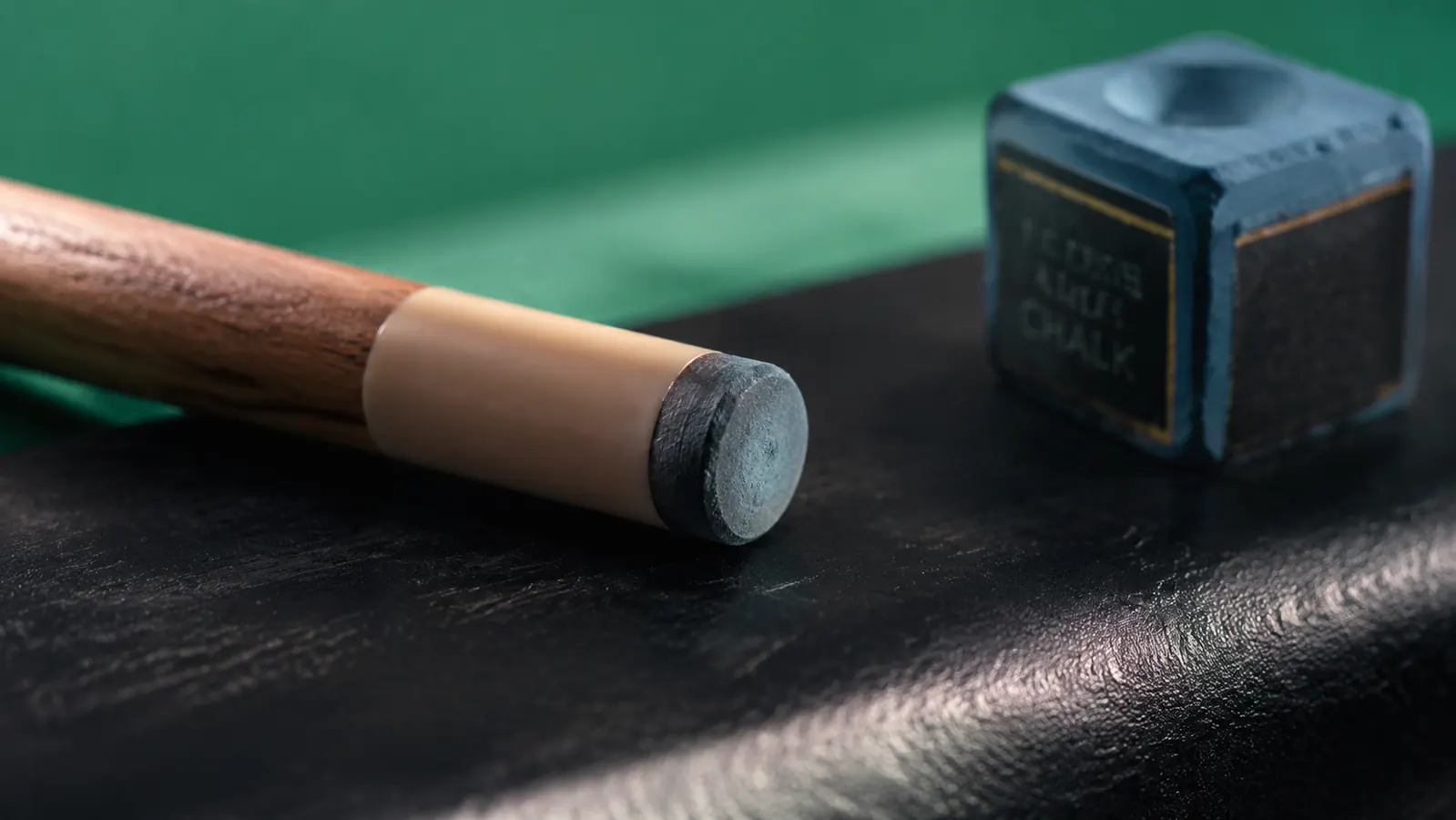
Nobody warned me about the sound. The first time I broke hard with the RAGE Heavy Hitter in an actual match, the guy on the next table turned around. Not because I scratched. Because the phenolic tip hitting a cue ball sounds nothing like a leather tip hitting a cue ball. It is a sharper, higher-pitched crack, and if you have never played beside a dedicated break cue with a phenolic tip, your first instinct is that something snapped. Nothing snapped. That sound is just physics: zero tip compression, all energy transfer, and a very dense tip material making a very direct statement to the cue ball. But nobody puts that in the product description, so I am telling you now.
I am writing this review specifically from the angle of what the Amazon listing does not prepare you for, because the star rating on this stick is honest and the cue genuinely performs. But there are several things I found out the hard way that I want to put in front of you before you click add to cart. We are talking about the chalk situation, the balance point problem, what happens at the joint under a real power break, and the profile of player who is going to return this cue in the first two weeks. The RAGE Heavy Hitter is not for everyone.
The Quick Verdict
A purpose-built break and jump cue that does its core job well once you stop expecting it to feel like your playing cue. The learning curve is real, the chalk behavior is counterintuitive, and the joint sound will startle your league partner. None of that changes the result at the rack.
Amazon Check Today's Price →Still chalking your break cue out of habit? The phenolic tip is working against you.
The RAGE Heavy Hitter is built around a tip that rejects chalk by design. Understanding that before you buy is the difference between loving it and returning it. Check today's price and weight options on Amazon.
Amazon Check Today's Price on Amazon →The Chalk Problem Nobody Mentions
Here is the thing about phenolic tips that the product description glosses over: they do not hold chalk. I am not saying they hold chalk poorly. I am saying chalk does not adhere to phenolic at all in any meaningful way. Phenolic is essentially a hard plastic resin composite, and chalk is designed to grip into the micro-texture of a leather tip, not a smooth, dense synthetic surface. So if you chalk before every break shot the way you chalk before every playing shot, you are accomplishing nothing except decorating your ferrule.
This matters more than it sounds because players who come from a strong chalking habit will occasionally miscue on a break shot and immediately assume something is wrong with the cue. Nothing is wrong with the cue. A miscue on a break shot with a phenolic tip is almost always an off-center hit, not a chalk failure. The tip grip on center contact is fine because phenolic is hitting cue ball leather, not relying on chalk adhesion for friction. The moment you go off-center even slightly, there is no chalk layer to give you any forgiveness. The hit is pure or it is not.
The practical fix is simple once you know it: break without chalking, aim for center ball, and put all your focus on stroke alignment rather than pre-shot ritual. But the transition from a leather-tip habit to this workflow takes a few sessions of conscious adjustment. I chalked by reflex for the first three weeks and then had to catch myself. If you know anyone who returned this cue complaining about miscues, there is a good chance this was the actual problem.
What the Joint Feels Like Under a Hard Break
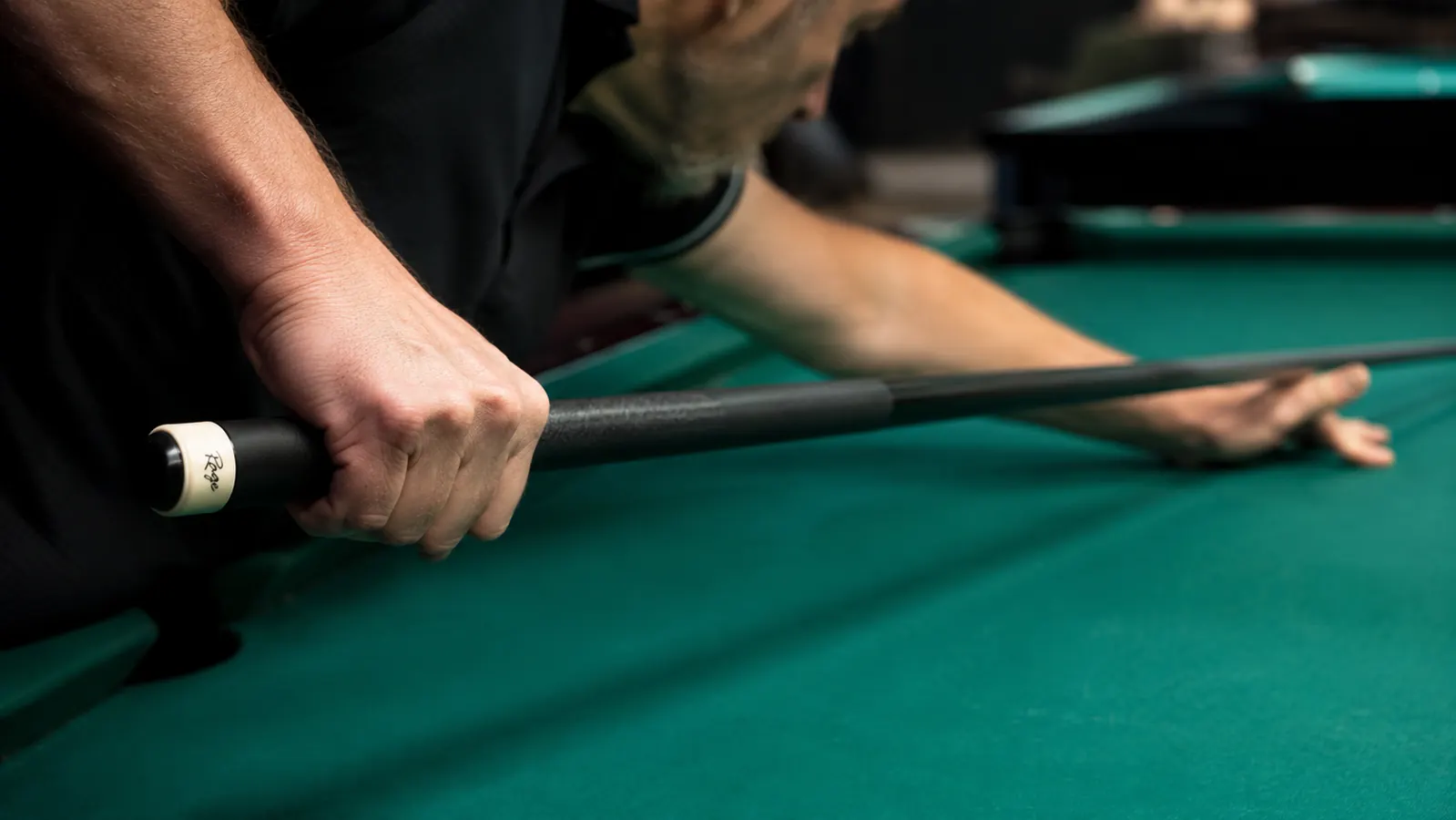
The Heavy Hitter is a 3-piece cue, which means it has two joints connecting three sections. Under a casual stroke this is not noticeable. Under a full-power break it is. There is a subtle transmission of vibration through the joint that you do not get from a one-piece or even a standard two-piece playing cue. It is not a rattle and it is not a defect. It is the mechanical reality of energy traveling through two threaded collar connections instead of continuous wood or fiberglass. Players who are used to one-piece bar cues or a solid two-piece will notice this immediately.
The question is whether it bothers you enough to matter. For most players it does not, once they understand what they are feeling. The joints themselves are solid when properly tightened. Proper tightening on this cue means a firm quarter-turn past what your hand wants to call snug, on both joints, every single time you assemble it. I learned this because I had one joint loosen mid-session in my first month, during a league match. It did not back out completely but it changed the vibration character enough that I could feel something was different. From that point I tightened more aggressively and the problem has not repeated.
Where players run into real trouble is treating the joint tightening as optional or inconsistent. If you are the kind of player who assembles your cue quickly and does not double-check the joints, the Heavy Hitter is going to punish that habit more than a two-piece cue would. The joint system works, but it demands a few extra seconds of attention before every session. That is a minor ask. Just know it going in.
I had one joint loosen mid-match in my first month because I was not tightening firmly enough. After I started giving each joint a hard quarter-turn past snug, it has never happened again.
The Balance Point Issue Is Real and It Takes Longer to Fix Than You Expect
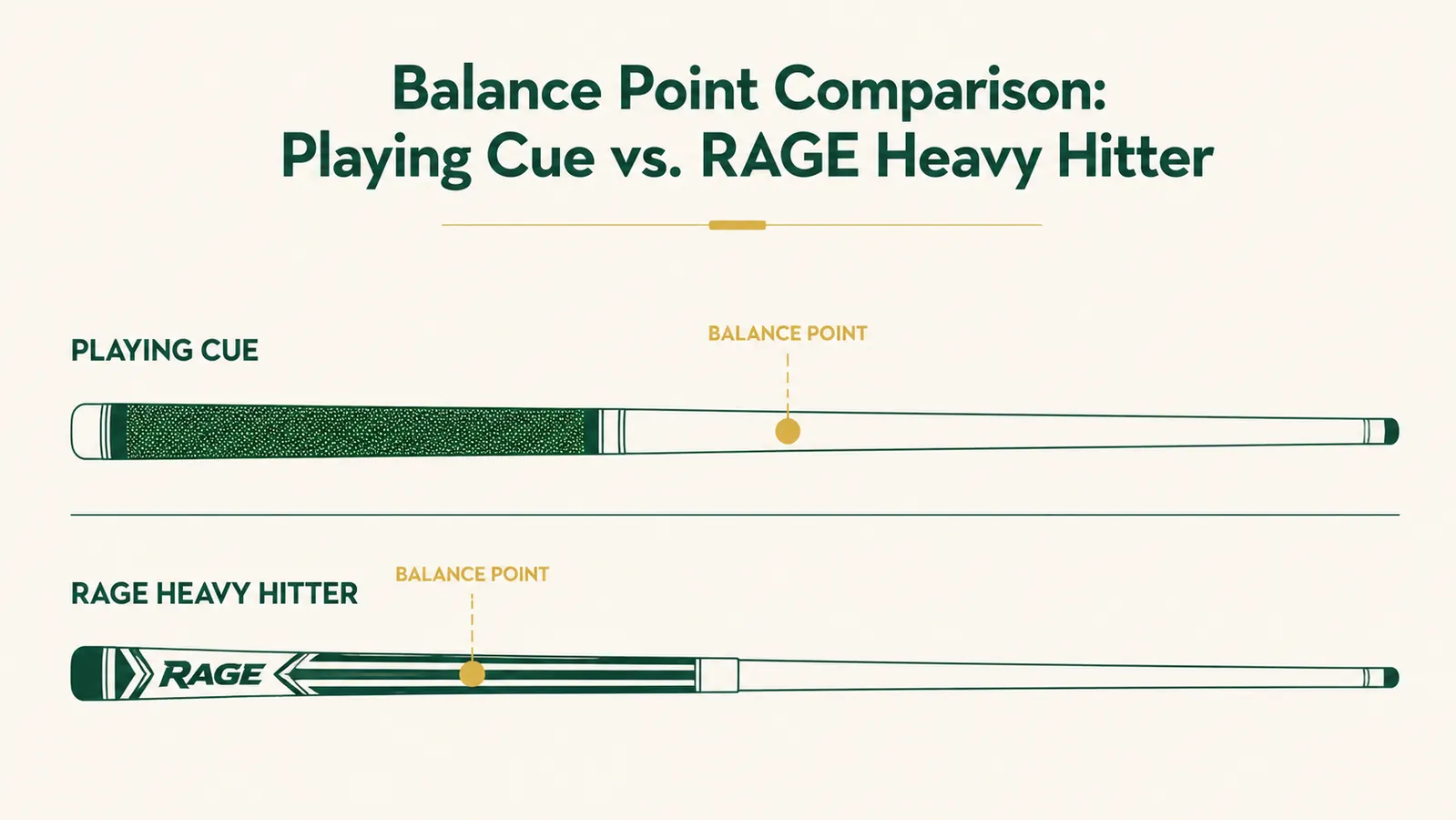
The Heavy Hitter sits rear-heavy compared to a standard playing cue. Not slightly rear-heavy. Noticeably rear-heavy, in a way that changes where the cue wants to pivot in your stroke and how it feels in your bridge hand on the follow-through. The balance point on my 21-ounce version is several inches further back toward the wrap than what I was used to on my playing cue. When you pick this up cold, especially if you have been playing with a well-balanced two-piece for years, it feels almost like the cue is fighting you.
The reason for the rear weighting is intentional and physics-based. Heavier back end helps generate more stroke momentum on a break shot where you are using a long, accelerating delivery. The cue wants to swing through naturally rather than require you to consciously drive it forward. In theory this should make power breaks easier. In practice, the adjustment period to learn to trust that weight and stop over-gripping to compensate is longer than I expected. I was over-stroking consistently for about four sessions before I stopped consciously thinking about the balance.
If you pick this cue up, take three breaks with it, decide it feels wrong, and return it, you are leaving before the learning curve resolves. Minimum ten sessions before you have a fair read on whether the balance is working for or against your break stroke. Plenty of people return this cue in week one because of balance and then miss out on what it delivers in weeks four through forty.
The Jump Shot Setup: Genuinely Useful, But Not Effortless
The Heavy Hitter is marketed as a jump break cue, which means it handles both tasks in the same stick by converting from a 3-piece into a shorter 2-piece jump configuration. You remove the butt section and use the front two pieces. In this configuration the cue is lighter and shorter, which makes the steep elevation angles required for legal jumps easier to manage. The phenolic tip works well for jumps because you need a clean, hard downward hit on the bottom of the cue ball, and phenolic gives you that contact without the grab that a leather tip can introduce at steep angles.
What nobody tells you is that jump shots still require practice. The 2-piece Heavy Hitter setup does not hand you a jump shot ability you did not have before. What it does is give you a tool that makes the technique achievable, once you put in the reps. I drilled jump shots at home for about a month before I started attempting them in league matches. If you buy this expecting to pull off clean legal jumps in week one without practice, you are going to be frustrated. The cue is capable of it. Your technique has to catch up to the cue.

The Aesthetics: This Is Not a Cue You Show Off
The graphics on the Heavy Hitter are functional at best. The wrap is simple, the butt has basic geometric artwork, and there is nothing on this cue that is going to make someone across the room ask what you are shooting with. If you care about your cue looking impressive in the rack or drawing admiring comments at league night, this is not that cue. Predator, McDermott, and Lucasi all have better cosmetics at comparable or higher price points. What the Heavy Hitter has instead is a phenolic tip that holds up to hundreds of breaks without replacing, joints that stay solid when you maintain them, and a break that performs at a level you would not expect from the plain exterior.
This is a working cue, not a showpiece. If you need both, look elsewhere or plan to spend more. If you want something that does the job reliably over a long stretch without cosmetic distractions, the plain aesthetics start to feel like a feature rather than a limitation. I have stopped caring what mine looks like entirely because every time it blows open a tight rack I remember why I bought it.
The Pricing Reality at This Level
The Heavy Hitter sits in a price band where it is competing against options from Lucasi and Players on one side and against the lower-tier Predator and OB break sticks on the upper side. At its current price it gives you genuine phenolic tip construction and a working jump capability, which are not universal at this range. Where it gives ground to pricier options is shaft quality and joint feel. A Predator Break Cue at significantly higher cost has a cleaner joint, a more refined shaft taper, and construction tolerances that the Heavy Hitter does not match. If you are an advanced player who can feel the difference between a 12.75mm and 13mm shaft on a break stroke, the Heavy Hitter will leave you wanting.
For most league players, the practical difference between the Heavy Hitter and a cue that costs twice as much lands in feel and cosmetics, not in balls pocketed per session. The rack does not care about your joint tolerance. The phenolic tip does the same physics at this price as it does at double. That is the value argument for this stick, and it holds up when you evaluate it honestly.
What I Liked
- Phenolic tip delivers genuine energy transfer that outperforms leather-tipped cues on the break, and survives heavy use without reshaping or replacement
- 3-piece jump break design converts to a functional jump cue with the butt removed, giving you a second shot type from the same case slot
- Multiple weight options available, which matters because heavier is not universally better on a break stroke
- Joints stay solid through extended use when tightened correctly, meaning a firm quarter-turn past hand-snug on every joint every session
- Honest price-to-performance ratio for the league player who wants dedicated break capability without a premium-brand budget
Where It Falls Short
- Phenolic tip holds no chalk, which catches players with strong chalking habits off guard and causes early miscues until the routine adjustment is made
- Rear-heavy balance is a meaningful adjustment, not a minor one, and it takes more than a few sessions to stop over-gripping through it
- The joint vibration under a hard power break is perceptible and different from a one-piece or two-piece, which bothers some players and never bothers others
- Aesthetics are basic, nothing on this cue competes visually with Predator, McDermott, or even mid-tier Lucasi options at similar price ranges
- Jump shot capability requires dedicated practice to unlock, the cue enables the technique but does not deliver it out of the box
Who This Is For
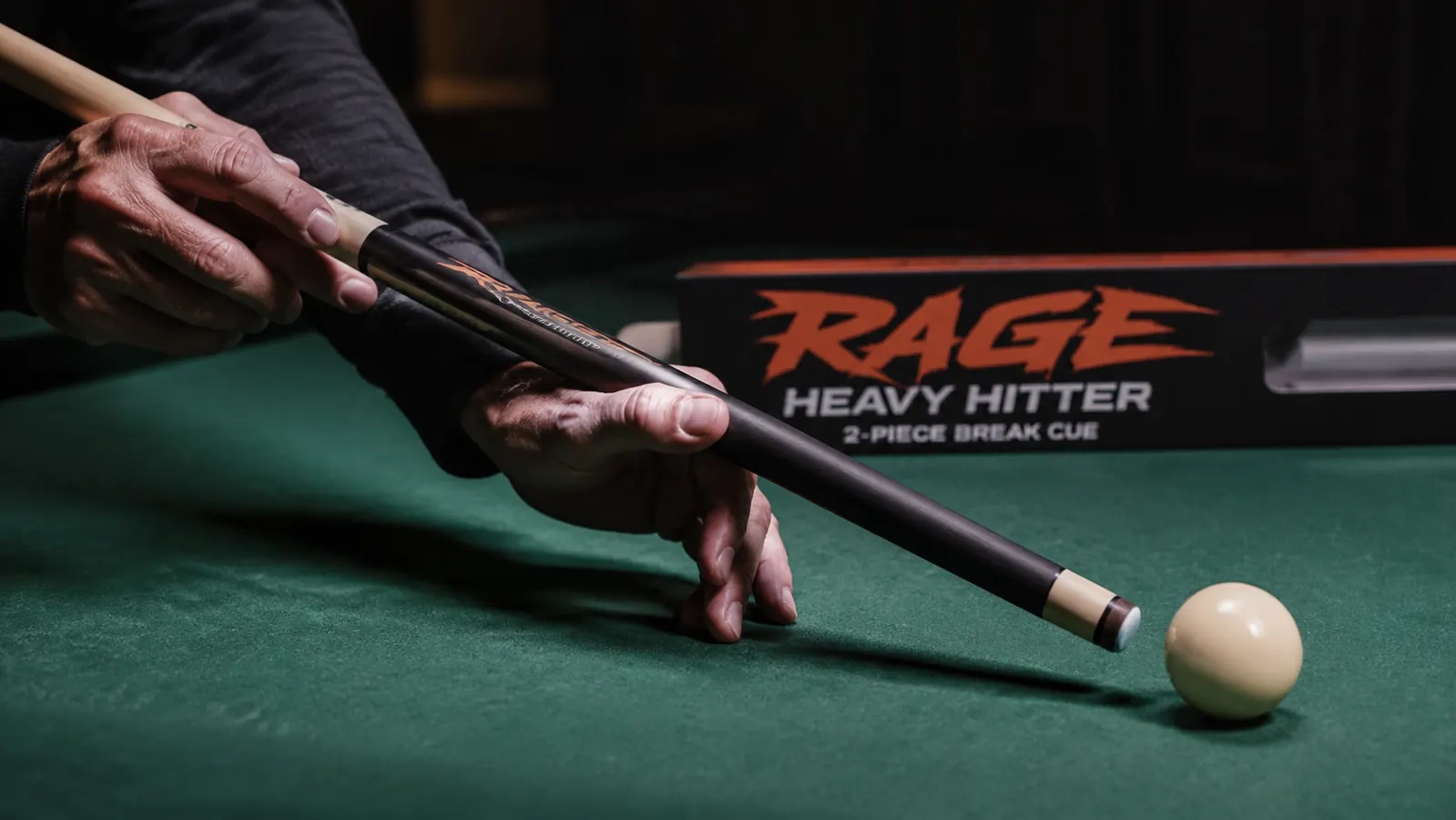
The RAGE Heavy Hitter is the right buy for an intermediate league player who has been breaking with their playing cue and wants to stop. If you are at the APA 4-through-7 range or equivalent, you are breaking enough racks per week that dedicating a stick to that one job starts making a measurable difference in both break results and playing cue tip life. The 3-piece format is a genuine advantage for tournament travel or for anyone who keeps their sticks in one case. The jump capability is a real upgrade once you develop the technique. You can get there at a price that does not require a significant financial commitment.
Who Should Skip It
Skip this cue if you play casually and inconsistently, meaning once every few weeks without a regular practice routine. A dedicated break cue only returns value if you are breaking enough racks to feel the difference, and the adjustment period for balance and chalk habit requires regular sessions to work through. Skip it also if you are a high-skill player shopping at this price range expecting premium construction. APA 8 or 9 level players who can feel shaft quality and joint precision will find the Heavy Hitter's construction tolerances limiting and will be better served by a Predator or OB break option at a higher investment. And skip it if you already know from experience that rear-heavy balance is something your stroke never adapts to.
Know what you are buying before you break with it the first time.
The RAGE Heavy Hitter is a legitimate dedicated break and jump cue at a realistic league-player price. The phenolic tip, the balance, and the joint behavior are all features once you understand them. Check today's price and weight options on Amazon.
Amazon Check Today's Price on Amazon →