
My teammate Darlene bought the Viking Valhalla 100 in the fall and had it in her hands for our APA team's first night of the winter session. She had done her research, read the reviews, and felt good about the decision. By the third rack of the evening she handed it to me across the table and said, 'Something feels off with this tip.' She was right. The stock tip that comes on the Valhalla 100 ships hard, noticeably harder than medium, and for the first several sessions it does not hold chalk the way a broken-in layered tip should. That is not something any of the top Amazon reviews mention, and it is the first of several things I want to cover in this piece that the four-and-a-half-star product page glosses over.
The Viking Valhalla 100 Series is a hard rock maple cue made in the United States by a company that has been building cues since 1965. It lists with a lifetime warranty, an Irish linen wrap, and a price that puts it firmly in the serious-upgrade bracket. For the right player it is a good stick. But the product page leads with heritage and warranty and does not say much about the specific ways this cue will frustrate you in the first two months, or why players who rely on English are going to run into a ceiling faster than they expect. That is what this review is actually about.
The Quick Verdict
The Valhalla 100 earns its reputation over time, but it requires patience through a real break-in period, and the price-to-spec case is weaker than Viking's brand story suggests. Buy it for the warranty and long-term durability, not for out-of-box performance.
Amazon Check Today's Price →If you go in knowing the break-in curve, the Valhalla 100 pays off over years, not weeks.
Viking's domestic build quality and lifetime warranty are real. The stock tip and initial shaft feel take adjustment. Check today's price on Amazon and read the spec sheet before you commit.
Amazon Check Today's Price on Amazon →How We Tested It
Darlene let me shoot with her Valhalla 100 extensively over the first eight weeks she owned it, both at league nights and at her basement table where she practices. I also borrowed it for two solo practice sessions with her permission to run position drills specifically designed to stress the tip and the shaft under English load. My own cue is a Cuetec Cynergy, which runs a carbon fiber shaft, so I came into this comparison with a calibrated sense of what low-deflection feel actually means on spin shots.
I also talked to two other players in our extended APA network who have been shooting with the Valhalla 100 for over a year. One of them, a skill level 6 in 8-ball named Troy, gave me specific detail on the linen wrap issue I will cover later. The other, a woman named Portia who plays 9-ball on a separate team, raised the warranty question and had actually gone through the claim process. Her experience shapes a section below.
The Stock Tip Problem Nobody Warns You About
The cue ships with what Viking describes as a medium-hardness layered tip. In practice, the tip arrives at the hard end of that range. On the first session, it will chalk adequately but it will not grip the cue ball the way a properly conditioned tip does. You will see more cue ball skid on off-center hits, and your English at any distance past four feet will be inconsistent in ways that feel like stroke problems but are actually tip problems.
The fix is time. After roughly six to eight sessions of regular play, the tip seats and softens into a range where it performs correctly. Some players accelerate this with a tip tool to add surface texture in the first week. What you should not do is assume the cue is broken because early shots feel flat. It is not broken. It is just not ready yet. The maddening part is that nobody in Viking's marketing communicates this, and new owners coming off a used cue with an already-conditioned tip will be confused about what they bought.
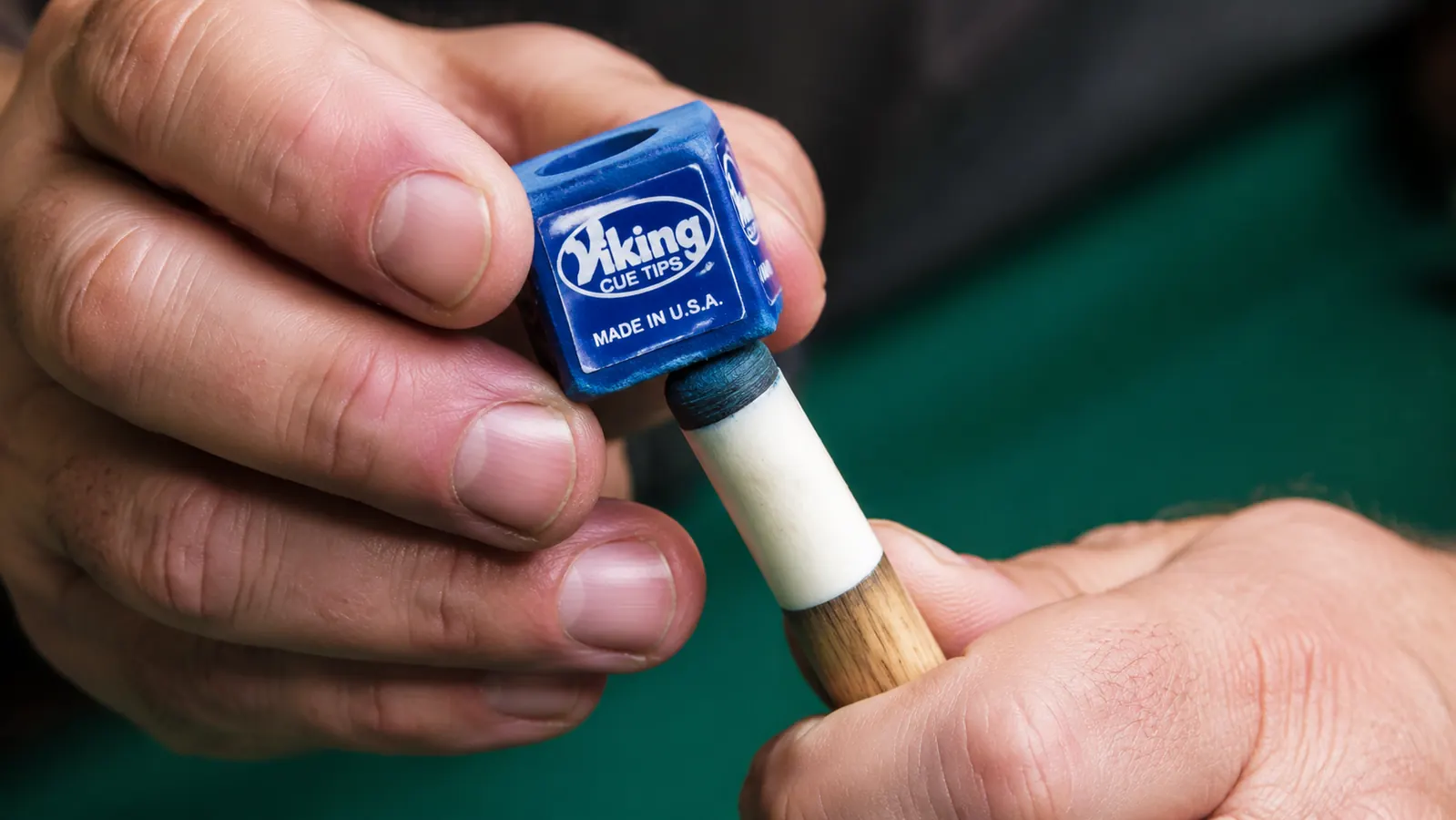
Darlene almost returned the cue at the end of week two because she thought she had gotten a defective unit. She did not. By week six it was performing exactly the way the reviews described. If you buy this cue, plan for a break-in window. The tip is the gating factor, not the shaft and not the joint.
The Linen Wrap Fading Issue on Certain Colorways
Troy is the player I mentioned who has been shooting his Valhalla 100 for over a year. He bought the version with the darker butt finish, a burgundy stain with a black wrap accent. After about nine months of regular play, the linen on his cue had shifted noticeably toward a grayish tone in the grip area. Not dirty, not frayed, just faded. He chalks his bridge hand fairly often and does not use a glove, and the natural oils from prolonged grip contact had worked into the linen fiber over time.
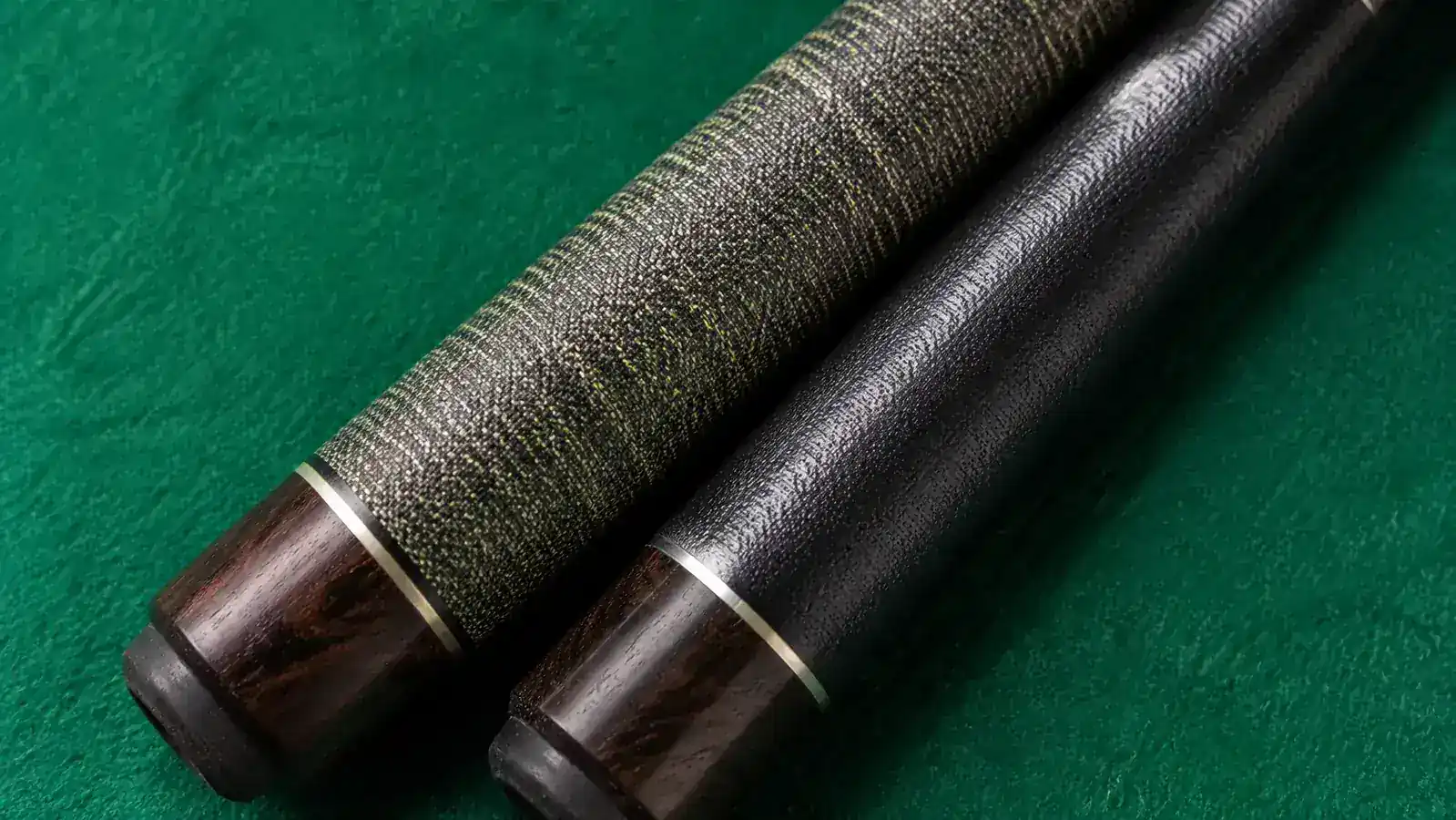
This is not unique to Viking. Any natural fiber wrap will take on character from regular contact. But it is worth knowing if you care about aesthetics, because the linen on the Valhalla 100 is not sealed or treated the way synthetic wraps are. It absorbs what you put into it. If you shoot in a humid environment, play multiple racks per session with bare hands, and do not wipe down the grip area after play, expect visible color shift somewhere in the six-to-twelve-month window. The structural grip is not compromised. The look is.
The linen grip is functionally solid for years, but it will absorb oils and shift color over time. If the look of your cue matters to you, budget for a rewrap at the one-year mark or start using a glove.
The Shaft Deflection Reality Check
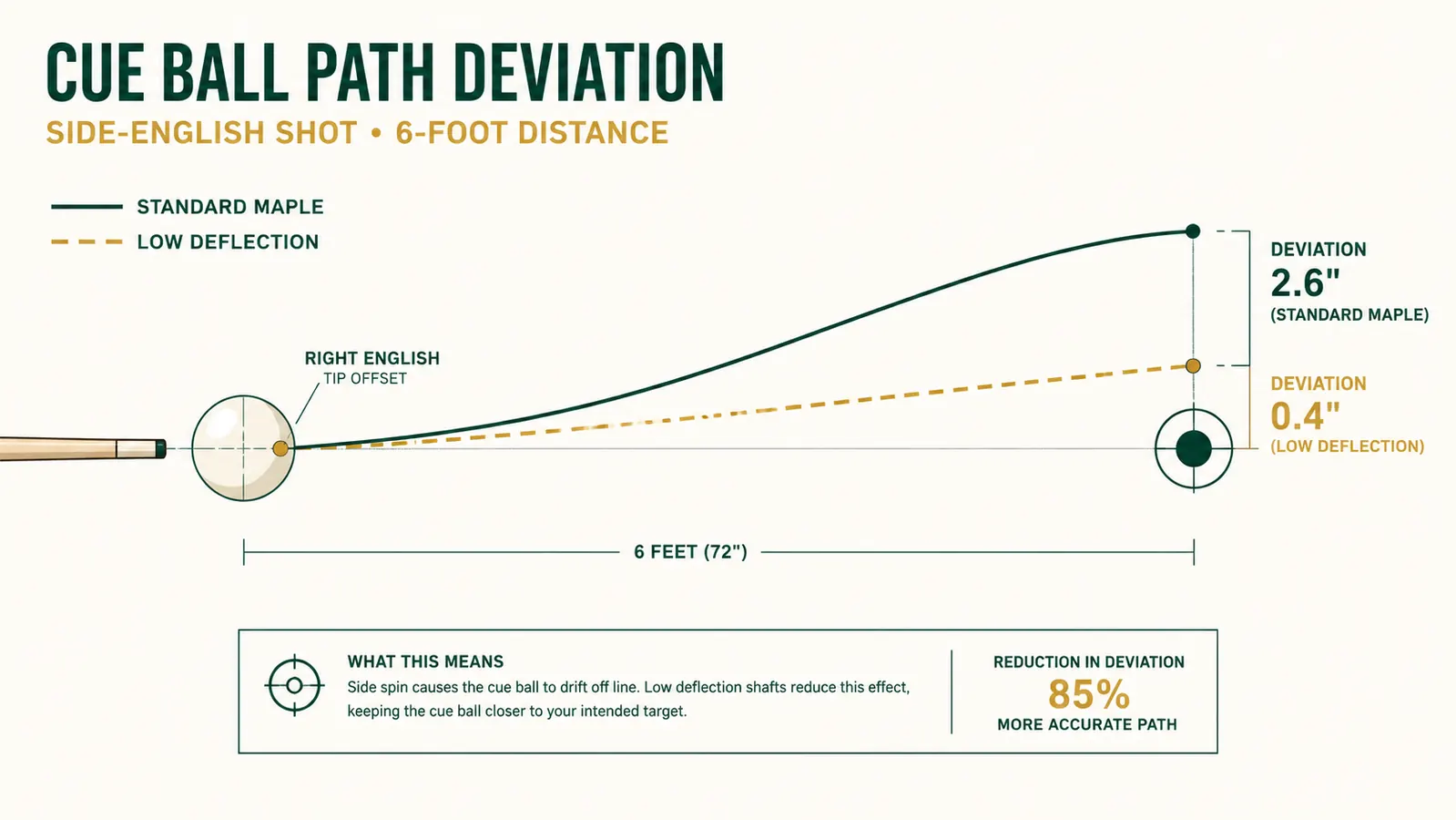
The Valhalla 100 uses a standard hard rock maple shaft. This is not a low-deflection shaft. Viking does not claim it is. But I want to be specific about what that means for actual play, because a lot of players in the upgrade bracket do not fully understand the difference until they shoot side-by-side.
On a center-ball hit at any distance, the Valhalla 100 is accurate and consistent. On a draw or follow shot with modest inside or outside English, it is very manageable. The gap opens when you push into heavier English at distances over five feet. On a shot where I am applying meaningful left or right spin to shape position from the far end of the table, my Cuetec Cynergy requires virtually no compensation. The Valhalla 100 requires a consistent aim adjustment, typically a few millimeters toward the direction of English, to account for shaft deflection at contact. This is learnable. Plenty of excellent players shoot on standard maple their entire careers and compensate automatically. But it is a ceiling. If you advance to the point where you are running English-heavy patterns from length consistently, the maple shaft becomes a limiting factor and you will want a shaft upgrade.
The Valhalla 100 uses a standard 5/16x18 joint, which is common enough that aftermarket low-deflection shafts from OB or Predator are available in that thread. So the long-term path is: buy the Valhalla 100 butt now, upgrade the shaft in a year or two when your game demands it. That is actually a reasonable strategy if you understand it going in. Just do not buy this cue expecting a low-deflection feel at stock configuration, because you will not get one.
The Price-Versus-Spec Reality
Part of what you are buying with the Valhalla 100 is Viking's domestic manufacturing reputation and a warranty that has survived fifty years of claims. That is worth something real. But if you strip away the brand story and look at the specs, a $140 standard maple cue with a medium layered tip and an Irish linen wrap is not dramatically different on paper from several other options in the $90-$120 range. The Lucasi L-2500T, the Players C-960, and the Meucci MO-2 all deliver similar shaft materials and tip setups at lower prices.
What those cues do not deliver is Viking's quality control consistency and a warranty with a proven claims record. In my experience, the variation in shaft straightness and wrap quality at the factory level is tighter on Viking than on the budget alternatives. You pay a premium not just for specs but for consistency across units. Two Valhalla 100s will feel like the same cue. Two cues from a lower-tier brand at $90 may feel noticeably different from each other.
That is a real value, but it is an intangible one, and the product page does not explain it clearly. If you are comparison shopping on specs alone, the Valhalla 100 will look expensive for what it is. If you understand that you are buying into manufacturing discipline and a serviced warranty, the price makes more sense. For a direct comparison with the closest competing cue, see how it compares to the McDermott Lucky, which is the most common alternative buyers consider at this price point.
The Warranty: What It Actually Covers and What It Does Not
Portia went through the warranty process after her joint collar developed a small crack at month fourteen. She contacted Viking directly, described the issue, and they asked for photos. Based on the photos they determined the crack was a manufacturing defect rather than impact damage, and they sent her a prepaid shipping label. She mailed the cue back and received a replacement in about two and a half weeks.
The important nuance she raised is this: Viking covers manufacturing defects for life. They do not cover physical damage from misuse, impact, or storage neglect. A shaft warped because someone left the cue in a leaning position against a wall without a case does not qualify. A shaft warped because of a flaw in the maple grain does. In practice, the line between these two categories is determined by Viking on a case-by-case basis from photos. Portia's experience was positive. Others online have had their claims denied. The warranty is real, but it is not unconditional, and players who treat it as a general damage guarantee will be disappointed.
Also worth noting: during the two and a half weeks Portia was without her cue, she had no backup stick. If you are shooting weekly league, that gap matters. The long-term performance breakdown on this cue goes deeper into the warranty experiences from other players in our network.
What I Liked
- Domestic build quality produces consistent shaft straightness across units, which cheaper brands do not reliably deliver
- Lifetime warranty is real and has a verifiable claims history, valuable for a cue you plan to shoot for five-plus years
- 5/16x18 joint opens the door to low-deflection shaft upgrades later when your game demands it
- Irish linen wrap provides better breathability than synthetic alternatives for long sessions
- Ferrule integrity is above average at this price, with lower cracking risk than budget competitors
Where It Falls Short
- Stock tip ships hard and requires six to eight sessions of break-in before it performs correctly, confusing new owners
- Linen wrap absorbs oils and shows color shift in the grip zone by nine to twelve months of bare-hand play
- Standard maple shaft deflects meaningfully on heavy English at distance, a real ceiling for advancing players
- Price premium over $90-$120 competitors is driven by brand consistency and warranty, not by spec superiority
- Warranty requires mailing the cue back, leaving you without your stick for two to three weeks during the claim
Who This Is For
Buy the Viking Valhalla 100 if you are a regular league player who wants a cue that will hold up for years and be backed by a company that actually answers the phone. If you are in the APA 4-6 range or BCA equivalent and shooting two or three times a week, this cue will grow with your game for a year or two before you hit its ceiling on English-heavy patterns. It is also a strong fit for players who want to invest in a quality butt and plan to swap in a low-deflection shaft down the road. The 5/16x18 joint makes that upgrade path viable and relatively affordable.
Who Should Skip It
Skip the Valhalla 100 if you are already shooting on a low-deflection shaft and are happy with it. Going back to a standard maple taper to get a better butt is a poor tradeoff. Also skip it if you are impatient. The break-in period on the stock tip is real, and if you are the kind of player who judges a cue in the first session you will return it before it shows you what it can do. Skip it if your budget ceiling is under $120 and you are weighing specs rather than brand value, because at that price point you can find comparable shaft and tip specs elsewhere. And skip it if you are a pure beginner. Your game is not yet sensitive enough to justify the price difference over a solid $60-$80 stick.
Go in with realistic expectations and the Valhalla 100 is a cue you will shoot for years.
The stock tip needs a break-in window, the linen wrap will show wear over time, and the standard maple shaft has a ceiling on heavy spin shots. Knowing all of that going in, it remains one of the better-built cues at this price from a brand that backs up its product. Check today's price on Amazon before you decide.
Amazon Check Today's Price on Amazon →