
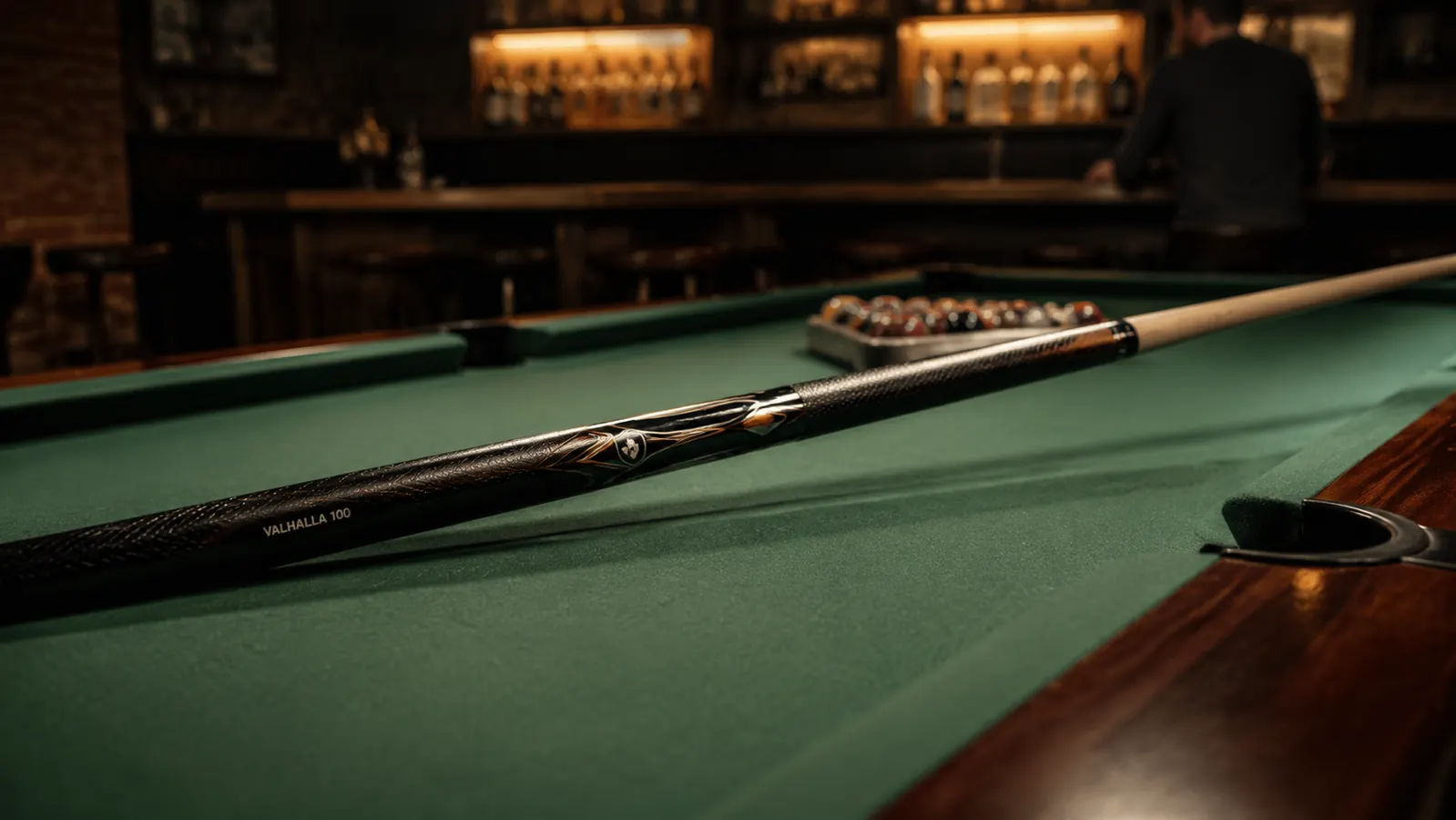
Here is the short version: if you are choosing between the Viking Valhalla 100 Series and the McDermott Lucky and your goal is getting a real upgrade cue that lasts more than two seasons, the Viking wins. Both cues are aimed at the same buyer, both are American-brand names, and both sit in a price range where the decision feels meaningful. But they are not equals. The Viking Valhalla 100 gives you a solidly constructed shaft, a genuine warranty with teeth behind it, and a cue that holds its playability after you have put actual hours on it. The McDermott Lucky is a better-looking cue on the shelf and a reasonable starting point, but it starts showing its limits once you are playing three or four nights a week.
I have played with both. I ran the Valhalla 100 through a full APA season and borrowed a Lucky from a teammate for about six weeks when my shaft was getting reworked. I know what each cue does under repetitive league conditions. This comparison is not about specs on a box. It is about what you actually feel at the table after 100 hours of play.
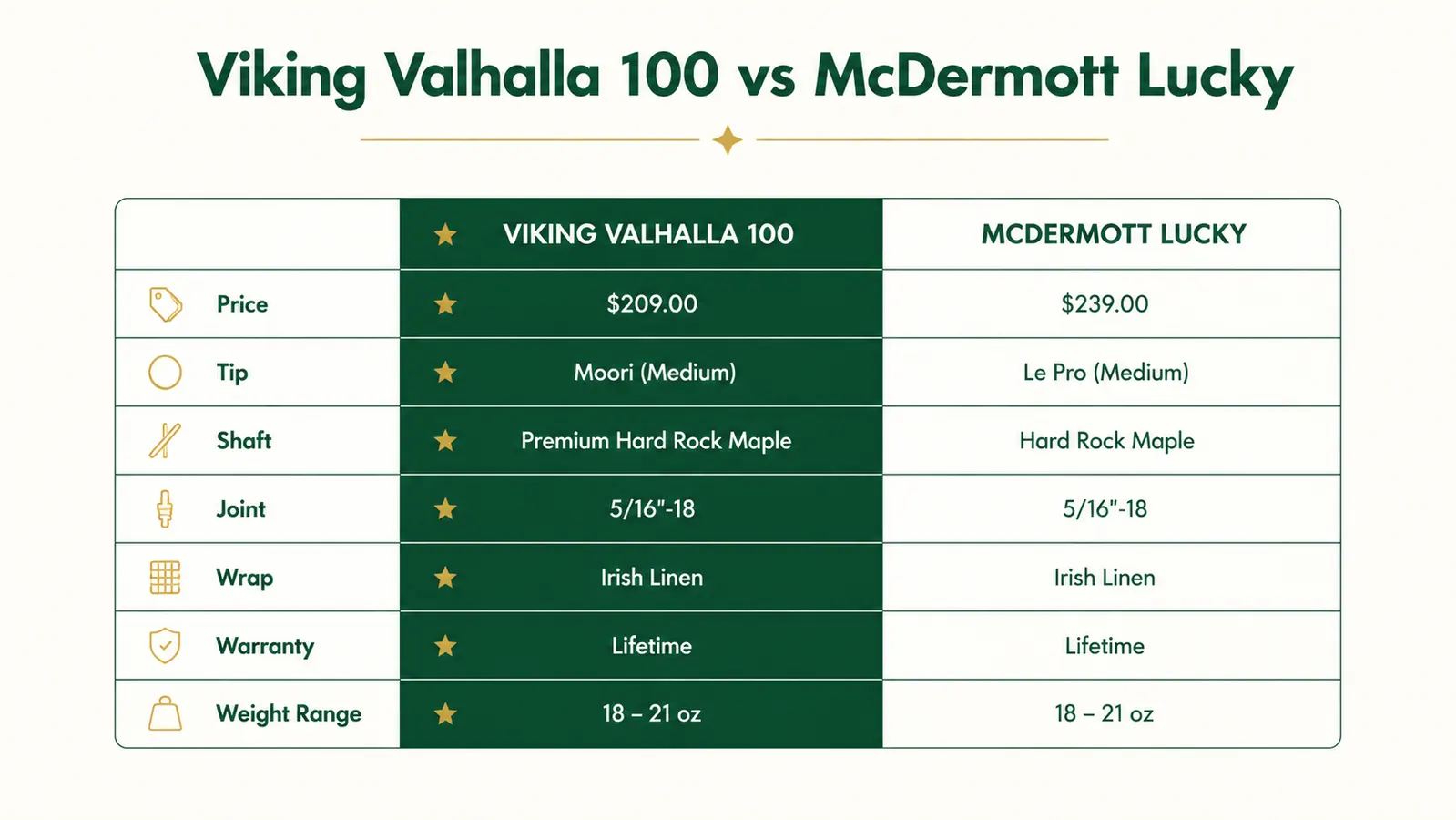
| Spec | Viking Valhalla 100 | McDermott Lucky | |
|---|---|---|---|
| Price Range | ~$140 (current price on Amazon) | ~$110-$130 (varies by style) | |
| Tip Material | Le Pro leather tip, medium hardness | Water buffalo leather, medium-hard | |
| Shaft Wood | Hard rock maple | Hard rock maple | |
| Shaft Diameter | 13mm | 12.75mm-13mm depending on model | |
| Joint Type | 5/16x18 stainless pin | Quick-release joint (McDermott proprietary) | |
| Wrap | Irish linen | Irish linen or wrapless, model-dependent | |
| Weight Range | 18-21oz with weight bolt system | 18-20oz, non-adjustable on most models | |
| Warranty | Lifetime warranty | Lifetime warranty on shaft defects only | |
| Made In | USA | USA | |
| Amazon Reviews | 995 reviews, 4.6 stars | Varies by model, typically 400-700 reviews |
Where the Viking Valhalla 100 Wins
The weight bolt system is the first thing that separates these two cues. The Valhalla 100 ships with a bolt system that lets you dial the butt weight from 18 to 21 ounces without buying a new cue. If you are switching between a heavier break cue and your playing cue on the same night, being able to nudge your stick from 19oz to 20oz and feel the difference in your bridge arm matters. The McDermott Lucky does not offer this on most models. You pick a weight and you live with it.
The warranty terms are also meaningfully different. Viking backs the Valhalla 100 with a true lifetime warranty. I know people who have sent in a warped shaft two years after purchase and had it replaced without an argument. McDermott does offer lifetime coverage, but read the fine print: their Lucky line covers manufacturer defects, and the definition of what qualifies as a defect can get narrow when you are trying to get a shaft replaced. Viking's warranty process, in my experience and from what I have heard from teammates, is simpler and less adversarial.
Shaft consistency is the third advantage. After about 60 hours on the Viking Valhalla 100, the shaft broke in without dramatically softening or changing its deflection characteristics. Le Pro tips at medium hardness hold their shape through a full season without mushrooming badly, which matters for English shots where tip shape directly affects cue ball contact area. The Lucky's tip starts softer and tends to flatten out faster under heavy use. That is not the end of the world if you tip your cue regularly, but it is one more maintenance task you are taking on.
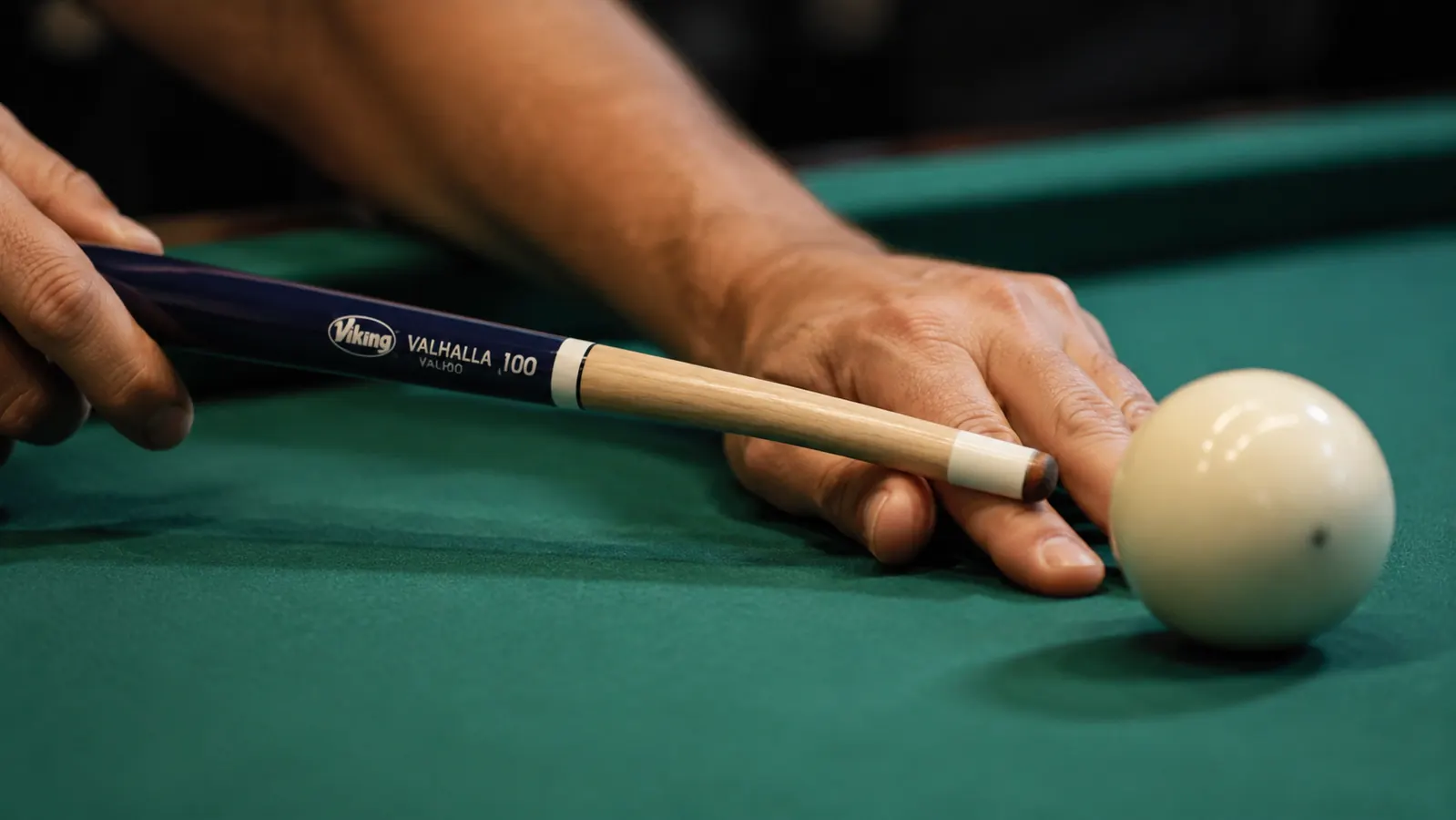
Ready to stop second-guessing and just play better?
The Viking Valhalla 100 Series is the cue I reach for when I want a consistent shaft, adjustable weight, and a warranty that actually means something. Check today's price on Amazon and see which finish options are in stock.
Amazon Check Today's Price on Amazon →Where the McDermott Lucky Wins
Visual presentation is the obvious one. McDermott builds cues that look expensive, and the Lucky line is no exception. The stain work, the inlays, and the finish on a McDermott Lucky are legitimately impressive for the price. If you play in a bar league and your cue is out on the table between shots where people are looking at it, a Lucky will turn more heads than a Valhalla 100. That matters to some players more than shaft specs do, and there is nothing wrong with that.
The quick-release joint on the McDermott is genuinely useful if you are doing a lot of three-quarter or full-table setup work and need to break the cue down between shots. The Valhalla 100 uses a standard 5/16x18 pin that screws together cleanly but requires a few more rotations. It is a small thing, but players who play in tight spaces or who travel with their cue appreciate the faster assembly of the Lucky's proprietary joint. The joint on the Lucky also feels tight and secure; there is no wobble to speak of once it locks.
The McDermott Lucky looks like a $300 cue and plays like what it is. The Viking Valhalla 100 looks like what it is and plays above its price point. Know which matters more to you.
Shaft Feel and Deflection at the League Level
Neither of these is a low-deflection shaft. Both are standard-taper hard rock maple, which means the cue ball is going to move off-axis on heavy spin shots no matter what you do. If you are playing at a level where you are intentionally throwing two tips of left English on a stop shot and compensating in your aim point, you already know you are not in the Predator Z-shaft price range. These cues are for players who are past beginner deflection habits and want a consistent standard taper at a sensible price.
Where I noticed a difference is in feedback. The Valhalla 100 has a slightly firmer hit at contact. Not stiff, but solid. You feel the shot. The Lucky has a softer hit, partly because of the tip compound and partly because of how the joint transfers vibration. Some players love a soft hit. I find that a firmer hit gives me more information about where I contacted the cue ball, which helps me self-correct during a session. Your preference here depends entirely on your stroke and your shot diagnosis habits.
Grip and Wrap: Linen vs Wrapless
The Valhalla 100 comes with Irish linen wrap across the board. Linen absorbs sweat on a summer league night better than any synthetic wrap, and it does not get slick. After a full season, my wrap showed normal wear but no fraying or peeling. The Lucky line is inconsistent here. Some models ship with Irish linen, others come wrapless, and the wrapless models feel noticeably different in the hand, especially if you have a loose bridge or tend to re-grip during a long run. If you are buying a Lucky, confirm which wrap configuration you are getting before the order ships, because the aesthetic photos on Amazon do not always match what arrives.
Long-Term Durability: After 100 Hours of Play
A cue is not a once-a-month purchase for most serious league players. You are putting 50 to 100 hours on a stick per season, and you need it to hold its geometry and playability for at least two to three years. Both of these cues can do that, but the Valhalla 100 does it more reliably. The joint on the Viking stayed snug all season with no loosening. The butt finish did not flake or chip even after regular bag travel. My teammate's Lucky, by comparison, developed a small amount of joint play after about 80 hours. Nothing catastrophic, but noticeable on draw shots where butt vibration was picking up.
Shaft straightness held on both cues through a full season stored in a hard case. I would not test either cue in a soft bag in a hot car, but that is true of any wood shaft at any price point. If you are going to spend real money on a cue, spend the $27 on a hard case and store it horizontally in a climate-controlled room. See our comparison of the Casemaster Q-Vault for case options if you are traveling with your stick.

Who Should Buy the Viking Valhalla 100
Buy the Valhalla 100 if you are playing two or more nights a week and you want a cue that holds up under that kind of use without demanding constant maintenance. It is also the right call if you are between skill levels and not sure yet what weight you shoot best with, because the bolt system lets you experiment without buying a second cue. Players who take the warranty seriously and want a brand that honors it without a fight should also default to Viking. Read our full Viking Valhalla 100 long-term review for a deeper look at how it holds up across an entire year of consistent play.
Who Should Buy the McDermott Lucky
The Lucky makes sense if aesthetics are a genuine priority for you, if you prefer a softer hit at contact, or if the quick-release joint is a practical feature you will actually use. It is also a reasonable choice for someone who plays once a week at a casual level and is not going to log the kind of hours that expose its durability limits. I would also recommend it to someone who is buying a cue as a gift and wants something that looks impressive without requiring the recipient to understand shaft specs. For players who want a deeper look at what the Valhalla 100 does that the product listing does not tell you, our honest Viking Valhalla 100 breakdown covers what surprised us.
The Viking Valhalla 100 is the one I'd hand a teammate who is ready for a real cue.
Lifetime warranty, adjustable weight, consistent Irish linen wrap, and a shaft that breaks in without going soft. Check availability and today's price on Amazon before this configuration sells through.
Amazon Check Today's Price on Amazon →