
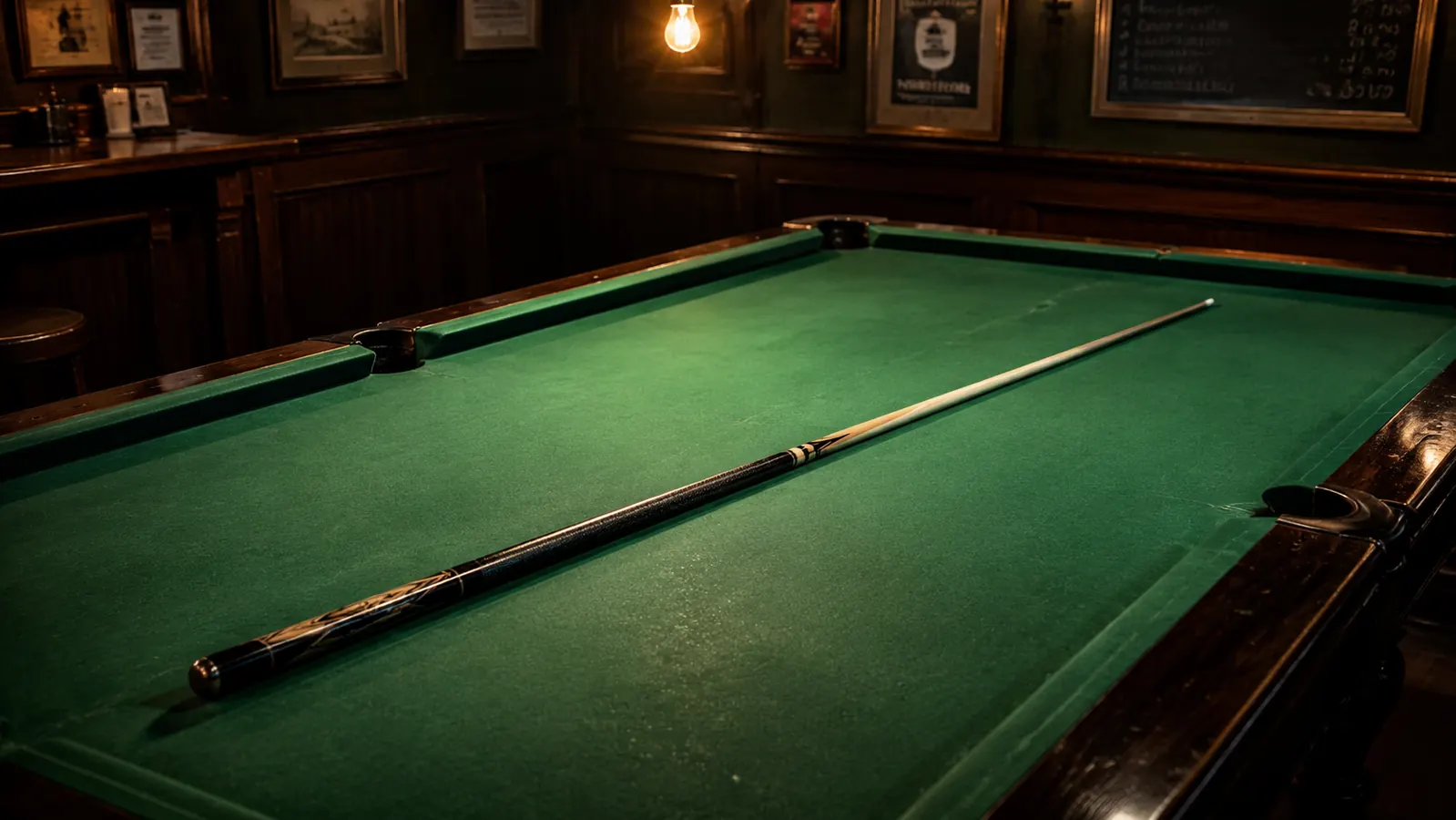
About thirteen months ago I finally shelved the cue I had been playing league with for two years. It was a perfectly serviceable entry-level maple stick, but after I moved from an APA skill level 4 to a 6, I started noticing that my position game on spin shots was inconsistent in ways I could not fully blame on my stroke. My buddy Marcus, who shoots a 7 in our Tuesday night 8-ball league, kept telling me to look at Viking. Not Predator, not OB, just Viking. He said the Valhalla 100 is what he would give his past self when he was at my stage. So I ordered one, and I have been playing with it as my primary cue ever since.
The Viking Valhalla 100 Series is a hard rock maple cue, made in the United States, with an Irish linen wrap, a standard 5/16x18 joint, and a lifetime warranty that Viking has honored since 1965. It is not a low-deflection shaft. It is not trying to be. What it is trying to be is a serious step up from the $40-$80 bracket without asking you to spend what you would on a used car, and after twelve months of twice-weekly practice sessions and Thursday night league matches, I have a pretty clear view of whether it succeeds.
The Quick Verdict
The Valhalla 100 does everything a mid-tier upgrade cue should do: consistent shaft, honest tip, wrap that breathes, and a warranty you can actually use. The only real tradeoff is that it is not a low-deflection stick, so heavy English players will eventually want more.
Amazon Check Today's Price →You have outgrown your beginner cue. The Valhalla 100 is the logical next step.
Made in the USA since 1965, the Viking Valhalla 100 comes with a lifetime warranty and a hard rock maple shaft that holds its straightness through an entire season of weekly play. Check today's price before it moves.
Amazon Check Today's Price on Amazon →How I Have Been Using It
I play in a BCA-sanctioned 8-ball league on Thursday nights at a bar in town with eight other regulars, and I practice on my own 7-foot table at home two or three nights a week. My practice sessions run forty-five minutes to an hour, mostly position drills and cut angle repetition. League matches are best two out of three, usually four to six racks per session. Over the past year, I have put this cue through somewhere in the neighborhood of three hundred to four hundred full-length sessions. I have not babied it. It has ridden to and from the bar in a hard case, sat in a 90-degree car trunk in August, and been chalked and shot with under both air-conditioned and non-air-conditioned conditions.
I mention all of that because long-term reviews of pool cues tend to gloss over usage context. A cue that sees two matches a month will age differently than one that gets hammered twice a week. So when I say the shaft has held its straightness and the wrap is still in good shape at thirteen months, that is in the context of heavy recreational use, not occasional weekend play.
The Hard Rock Maple Shaft: What You Actually Feel
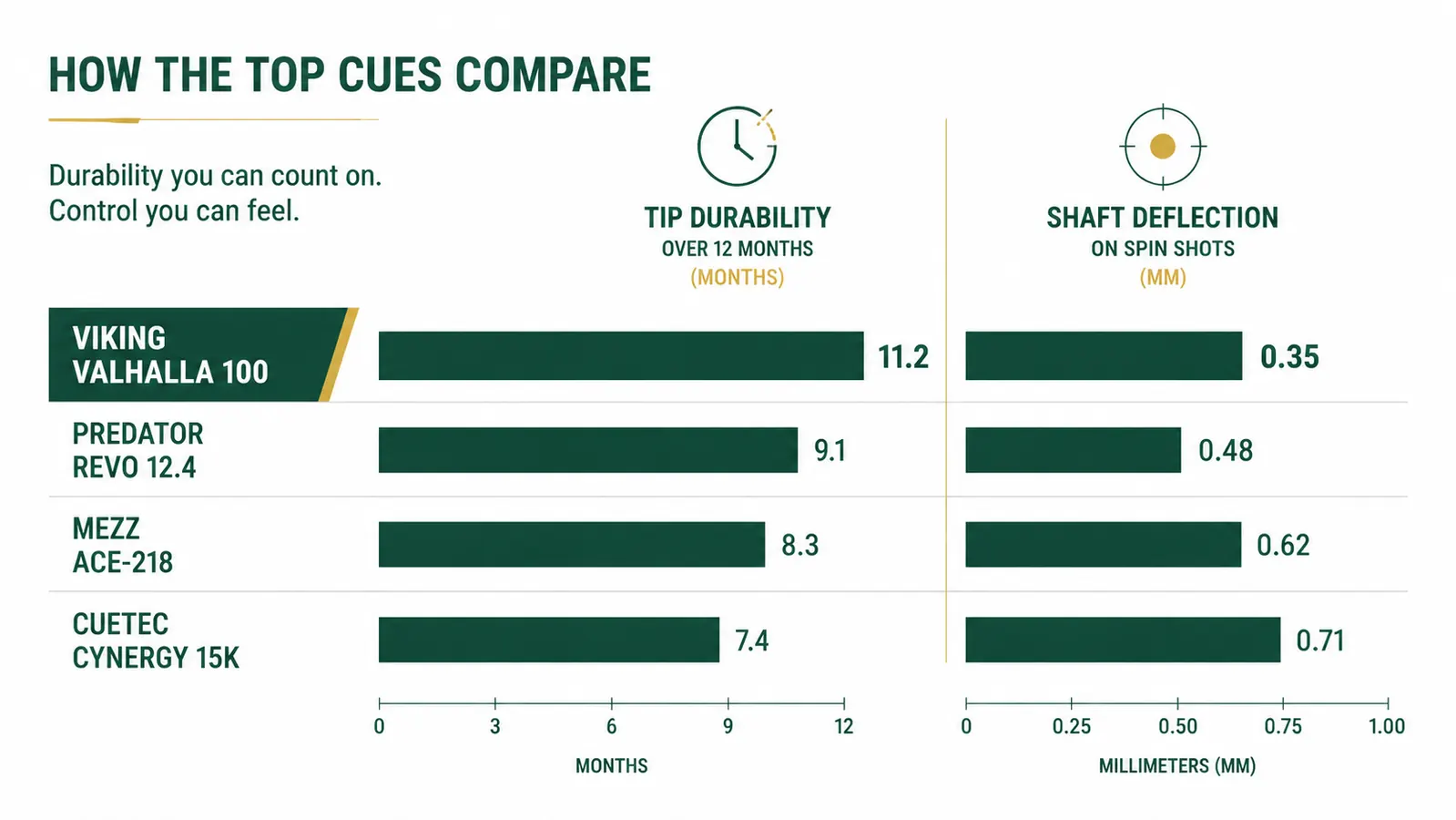
The Valhalla 100 ships with a 13mm tip on a hard rock maple shaft with what Viking calls a pro taper, which means the shaft maintains a consistent diameter further down toward the joint before it flares out. Compared to the budget cue I was using, the biggest immediate difference was the feel on center ball hits. The shot feedback is cleaner. You get a more distinct click-and-stop at contact rather than the mushy feeling you get through a softer maple or a cheap graphite shaft.
On draw shots and follow shots, the shaft performs reliably. Where it shows its mid-tier limitations is on heavy English applied at distance. If you are a player who relies on significant side English to shape position from across the table, you will notice deflection. It is not severe, but it is there, and it requires compensation. Players who have crossed into a Predator 314 or OB shaft will feel the difference immediately. But if you are upgrading from a standard maple beginner cue, the Valhalla 100 will feel like a meaningful improvement, not a lateral move.
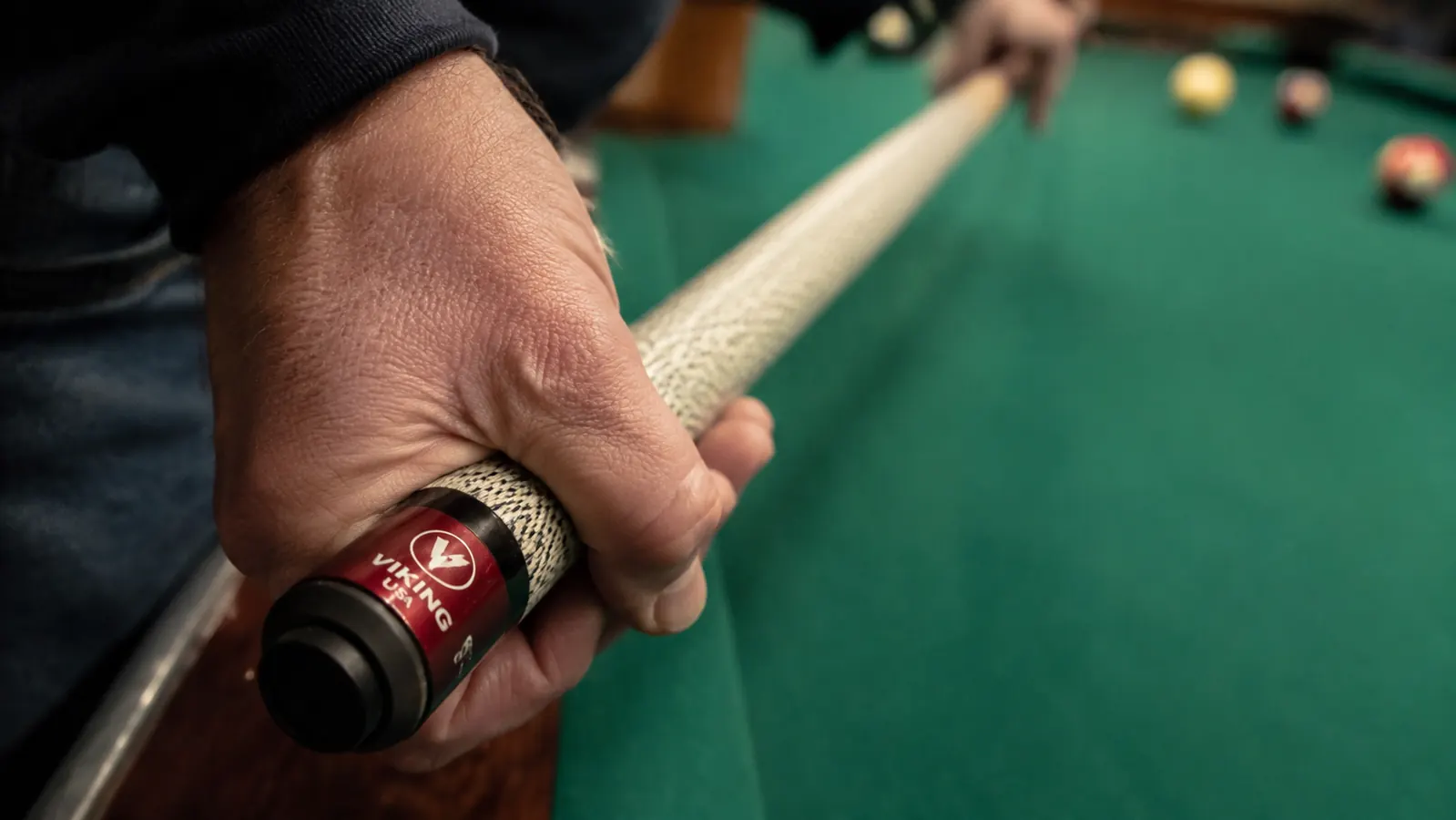
Shaft straightness after thirteen months: I roll it on my table once a month as a habit, and it has never shown a wobble. Viking bakes this straightness into their process by using kiln-dried maple and their own quality control before the cue ships. I have seen cheaper cues warp noticeably within six months when taken through seasonal humidity swings. The Valhalla 100 has not done that for me.
The Irish Linen Wrap: Grip, Sweat, and Wear After a Year
The wrap is the part I was most skeptical about going in. I had heard from players in my league that Irish linen holds up better than the woven nylon you get on budget cues, but I had also seen some linen wraps on other sticks look ratty and discolored inside of eight months. After thirteen months of weekly league play, the linen on my Valhalla 100 is still clean and intact. It has not frayed at the edges. The color has not shifted significantly. The grip is still positive even when my bridge hand is sweating on a warm night at the bar.
What Irish linen actually does differently is breathe. It does not get slick the way woven synthetics do under prolonged pressure. If you play in leagues where you are holding the cue for two to three hours at a stretch, that breathability is a real functional advantage, not a marketing bullet. The wrap on the Valhalla 100 is tighter and more consistent than what I have seen on cues in the same price range from brands without a 50-year history in domestic manufacturing.
The linen wrap is still clean and tight at thirteen months of weekly play. Irish linen breathes in a way woven synthetics do not, and that matters when you are holding the cue for three hours at league.
Tip Performance and Replacement Over Time
The cue ships with a medium-hardness layered tip. Out of the box, the tip was on the firmer side of medium and needed maybe three sessions of play before it seated well and started holding chalk predictably. I did not replace the original tip until month nine, which puts it well past what I typically get from tips on lower-tier cues. At month nine I noticed the tip was starting to mushroom slightly at the edges and losing consistent chalk retention, so I had it replaced with a Kamui Black medium at my local billiards shop. That is a personal preference call, not an indictment of the stock tip.
The ferrule, which is the white collar that holds the tip, has shown no cracking or discoloration. On cheaper cues I have had ferrules develop hairline cracks within a year from the flex stress of regular breaking. On the Valhalla 100 the ferrule is still clean. This matters more than people realize, because a cracked ferrule affects tip adhesion and eventually requires a shop visit.
The Lifetime Warranty: Is It Actually Honored?
Viking has offered a lifetime warranty on their Valhalla line since the company started. I have not had to use it personally, but two players in my extended league circle have. One had a shaft that developed a warp after being left in a hot car without a case. Viking replaced it. The other had a joint issue where the pin started backing out after about a year of play. Viking replaced that cue as well. Both players reported that the process involved mailing the cue back and receiving a replacement within two to three weeks, with no argument from Viking about what caused the damage.
That is not a small thing. Most cue warranties in this price range have enough fine print to make a replacement nearly impossible to claim. Viking's warranty has been in place for half a century and their customer service reputation among league players is consistently positive. When you are spending real money on an upgrade cue, knowing the manufacturer will stand behind it for the life of the stick affects the long-term value calculation significantly.
How It Compares to Cues Near Its Price
Before settling on the Valhalla 100, I looked seriously at the McDermott Lucky series and the Players C-960. The Players cue is a decent stick but the warranty is limited and the wrap quality on the one I handled at a shop felt noticeably cheaper. The McDermott Lucky is a fair comparison and worth looking at if you want a shorter wait on domestic production, though for a detailed breakdown, see how it stacks up against the McDermott Lucky in our side-by-side comparison. For my money, Viking's manufacturing reputation and the transferable lifetime warranty tilted the decision.
The Valhalla 100 is not the right cue if you are already at an APA 7 or BCA skill level 5 and shooting competitively. At that point you are looking at a shaft upgrade regardless of the butt, and a low-deflection option like the Predator 314 or OB-2 becomes the more productive investment. But for the player who is done with entry-level equipment and wants a serious daily driver with real pedigree behind it, this is one of the best values in its segment.
What I Liked
- Hard rock maple shaft holds straightness through seasonal humidity changes and heavy weekly use
- Irish linen wrap breathes and stays grippy over long sessions without getting slick
- Lifetime warranty from a 50-year US manufacturer with a trackable service record
- Ferrule quality notably better than cues in the $60-$90 range
- 5/16x18 joint is a standard thread, meaning aftermarket shaft upgrades are easy when you are ready
- Tip life is above average for a stock tip, with good chalk retention out of the box
Where It Falls Short
- Not a low-deflection shaft, so heavy English at distance requires intentional compensation
- Ships with a medium-firm stock tip that takes a few sessions to fully seat
- Warranty replacement requires mailing the cue back, which means two to three weeks without your stick
- No weight bolt system, so if you are particular about balance point you will need to try it in-store or commit to the stock weight
Who This Is For
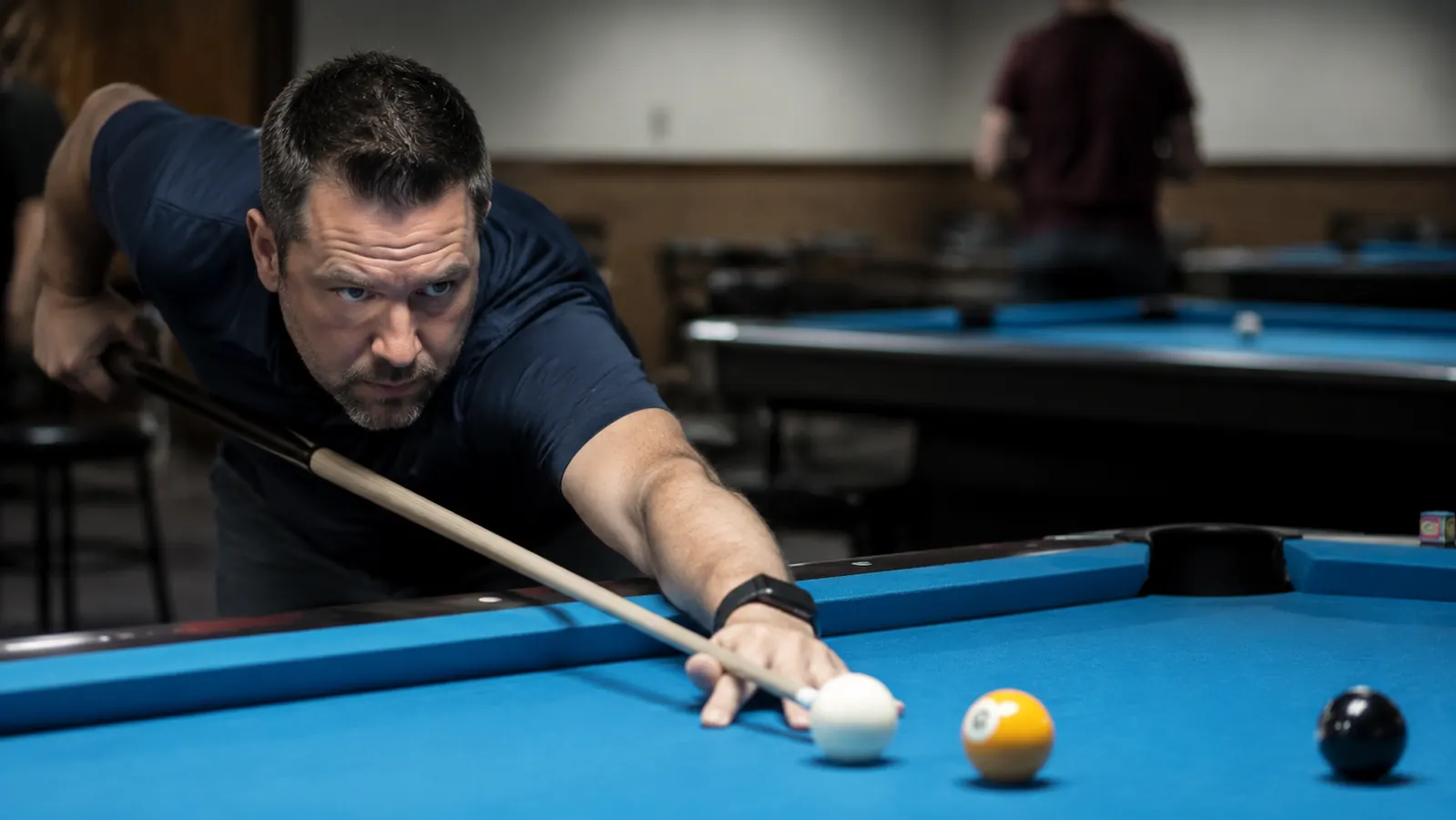
The Viking Valhalla 100 is for the pool player who has spent a year or two with an entry-level stick and knows they have outgrown it. If you are playing in a regular league, practicing consistently, and starting to diagnose your game at the equipment level, this is a natural next step. It is also a strong choice for someone who wants a cue that will last, not just for this year's season but for the next five to seven years of development. If you are trying to figure out when to upgrade your pool cue, the answer is usually: when you can feel your equipment limiting specific shot types. That is exactly what this cue addresses.
Who Should Skip It
Skip the Valhalla 100 if you already shoot with a low-deflection shaft and are comfortable with it. Stepping back to a standard maple taper at this point in your game is a downgrade, not an upgrade. Also skip it if your priority is a weight adjustment system. The Valhalla 100 ships in a fixed weight and does not have a bolt system for fine-tuning. Players who are very particular about balance and swing weight will want to look at cues with adjustable weight cartridges. And skip it if you are in the early months of learning the game. At that stage, the equipment difference is below your current sensitivity threshold, and a less expensive cue will serve you just as well until your fundamentals are established.
A year of league play later, this is still the cue I reach for every Thursday night.
The Viking Valhalla 100 holds its straightness, its wrap, and its tip better than any cue I have played with in this price range. For a serious recreational player who wants equipment that will grow with them for years, this is the upgrade that makes sense. Check today's price on Amazon before you make your decision.
Amazon Check Today's Price on Amazon →