
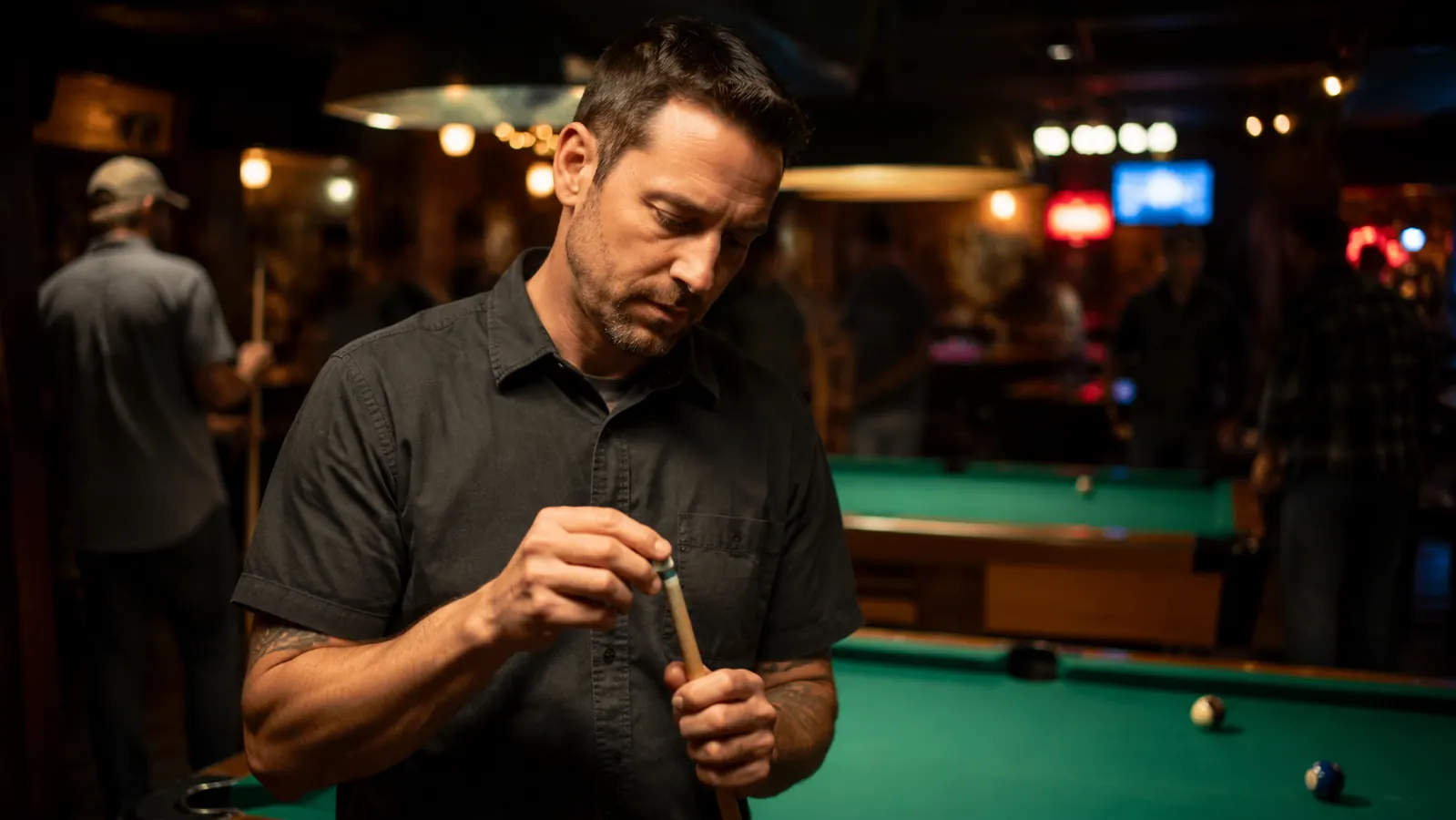
It was the fifth game of a seven-game APA match, and we were tied at two wins apiece. I had ball-in-hand after my opponent scratched on his break, and I was looking at a wide-open table. Three balls fell clean. Then I lined up a simple stop shot on the seven, the tip slid off the cue ball, and I scratched straight into the corner pocket. My opponent ran the table. We lost the match by one game.
I drove home that night replaying it. I had chalked before that shot. I was not shooting hard. My stroke felt normal. But the miscue happened anyway, and it cost us. When I got to the house, I pulled out my cue and checked the tip under a desk lamp. Slightly domed, good contact surface, no cracks, normal wear for a mid-grade layered tip. There was nothing wrong with it.
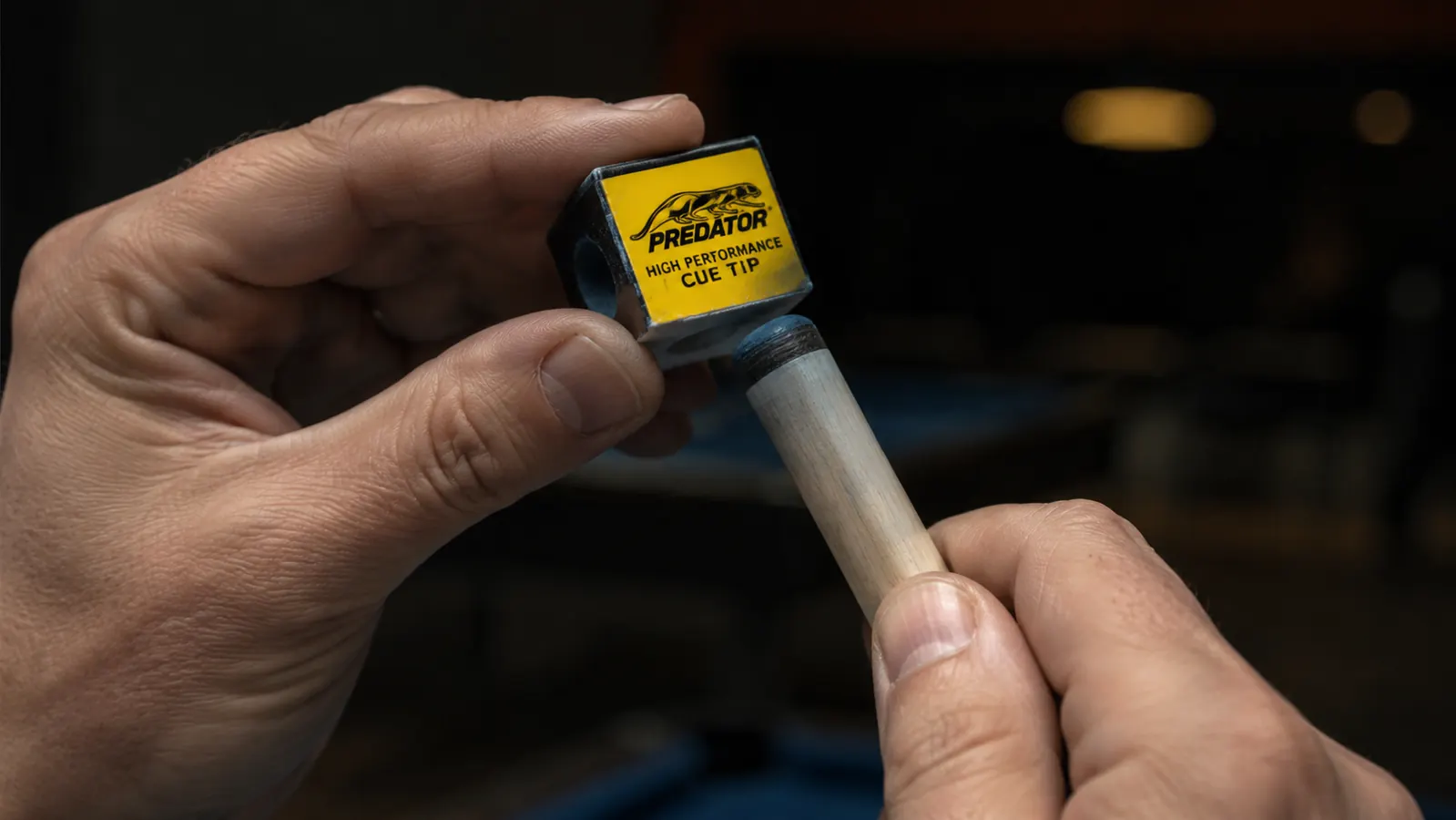
I had been using the same brand of chalk for about two years. A bulk box of twelve cubes I picked up at a local billiard supply shop. Hard, waxy, cheap. The kind you can squeeze between your fingers and barely make a dent. I had never thought much about chalk. You put it on the tip, you shoot. That is what I figured.
But that week I started paying attention. I counted actual miscues across two practice sessions. Not cue ball skid, not a slightly off hit. Full miscues, where the tip failed to grip and the shot went wrong. Eight in roughly ninety minutes. That felt high. Too high for a player who had been shooting league for four years.
I had been blaming my stroke for shots that my chalk was losing. That is a rough thing to figure out four years in.
A guy in my league named Dave shoots with a Predator shaft and he had mentioned Predator Cue Chalk a few weeks earlier. I had brushed it off because chalk is chalk. After my miscue disaster, I went back and asked him about it. He told me hard chalk does not adhere the same way to softer tips, and that the chalk compound -- not just the application -- determines how much friction you actually get at the contact point. He had switched to Predator chalk about a year before and said his miscue rate on cut shots dropped noticeably.
The chalk you are using right now might be costing you shots you think are stroke errors.
Predator Cue Chalk uses a softer, higher-adhesion compound that sticks better on every tip type. It is the chalk most serious league players switch to once they start paying attention. Check the current price on Amazon.
Amazon Check Today's Price on Amazon →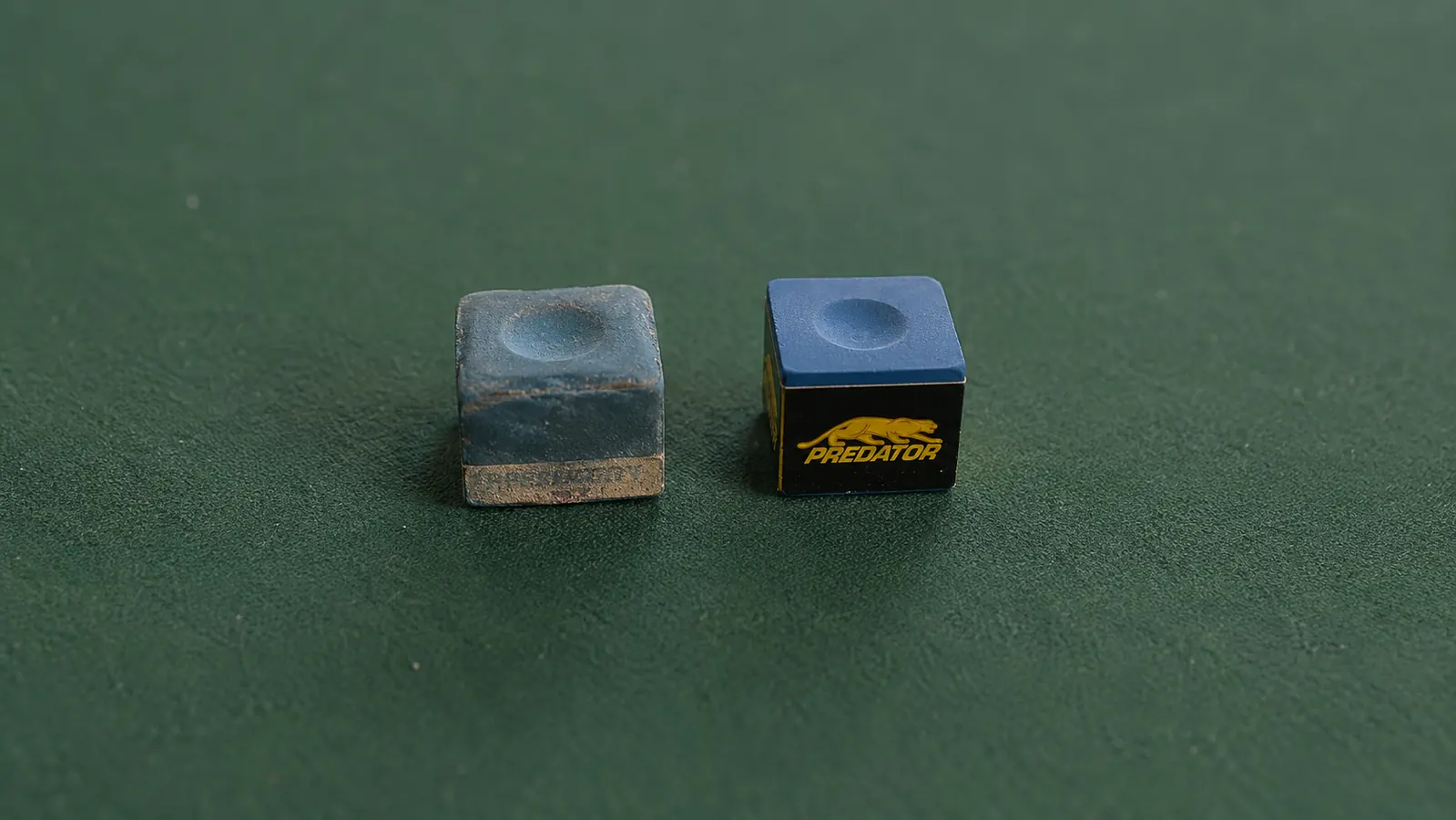
I ordered Predator chalk and waited for my next practice session. The cube itself is noticeably softer than what I had been using. When you press it against the tip and rotate, it loads differently. It feels like it is actually bonding to the leather instead of just dusting the surface. That sounds like a small thing, but once you notice the difference in application, you start to wonder what has been happening to the contact at tip level for the last two years.
First session with Predator chalk, I played for about ninety minutes. I tracked my miscues the same way I had before. Two. Both happened when I forgot to re-chalk after a few shots in a row. When I kept up with chalking every one or two shots -- which is what the compound almost demands because the adhesion reminds you that it matters -- I did not slip once. Not even on a cut shot with inside English where I would have normally felt the tip start to lose grip.
Second session was cleaner still. One miscue in two hours of play, and it was my fault for chalking sloppily, scrubbing instead of rotating. The chalk was doing its job. I was not doing mine for about four seconds that night.
What I Would Tell You If We Were Sitting at My Kitchen Table
Here is the honest version: for most of the miscues I have blamed on my stroke over the years, at least some of them were chalk. Maybe a lot of them. The thing is, a miscue does not announce its cause. You just know the tip slipped, and your brain goes immediately to your arm, your bridge, your elbow position. It almost never goes to that small blue cube sitting on the rail next to your beer.
Predator chalk is not a magic fix. If your tip is mushroomed, pitted, or so hard it would make a good cutting board, no chalk in the world saves you. Get the tip sorted first. But if your tip is in reasonable shape and you are still miscuing more than once or twice in a long session, the chalk is worth looking at before you start rebuilding your stroke from scratch.
The price difference between generic chalk and Predator is real. You will notice it. But when I think about the match I lost because I scratched on a stop shot with ball-in-hand, I wish I had spent that money two years earlier. That is the kind of math you do not see until after the fact.
If you play league, if you care about your shot-making, and especially if you shoot with any kind of English or spin, try a cube. One cube. See if your sessions feel different. That is all I am saying. It did for me, and now it is the only chalk I keep in my case.
One cube tells you everything you need to know about whether your current chalk is holding you back.
Predator Cue Chalk is what I keep in my case now. Softer compound, better adhesion, fewer miscues on spin shots and inside English. If your tip is fine and you are still slipping, this is the next thing to change.
Amazon Check Today's Price on Amazon →