
I have been playing APA league every Tuesday night for four years, and for most of that time I was using whatever chalk was sitting in the bar's tray. When that ran out I would grab a box of Master chalk from Amazon and not think about it again. Twelve cubes for around six dollars. Fine. Cheap. Good enough.
Then I started getting miscues on sharp cut shots. Not every session, but consistently enough that I noticed. My tip was fine, my technique was fine. A teammate pointed at my chalk cube, which was sitting in the tray with a deep dish crater in the middle from months of center-only application. I bought a box of Predator chalk, mostly to stop the argument. Six months later, I have a pretty clear picture of what it does and what it does not do, and I want to save you the research I had to do the hard way.
The Quick Verdict
Predator chalk is a genuine upgrade for league-level English shots, dishes evenly across the whole cube face, and outlasts Master by a wide margin per cube. The price premium is real but the per-application math makes it closer than it looks.
Amazon Check Today's Price →Still losing shots to tip slippage? Predator chalk is less than a round of drinks for a full season of coverage.
Rated 4.7 stars by over 6,600 pool players on Amazon. Six cubes per box, with a compound formulated specifically to grip medium-hard tips at league-play speeds.
Amazon Check Today's Price on Amazon →How I've Used It
I play on a 7-foot Diamond bar box, mostly 8-ball in the Tuesday APA division. I also shoot recreationally on Friday nights at the same location when the competitive tables are open. Over six months I went through one full box of Predator chalk, six cubes, alongside a simultaneous test of a box of Master chalk and four cubes of Triangle chalk borrowed from teammates. I tracked miscue incidents mentally and logged them the same night when they happened because I am the kind of person who does that.
My cue is a Viking Valhalla 100 with a 13mm medium-hard layered tip. I chalk before every single shot, which is how I was trained and how most competitive APA players I know operate. That means I am applying chalk approximately 15 to 25 times per match depending on game length. Over a six-month season that is a lot of chalk cycles, which is exactly the kind of sustained use that separates real product performance from first-impression marketing.
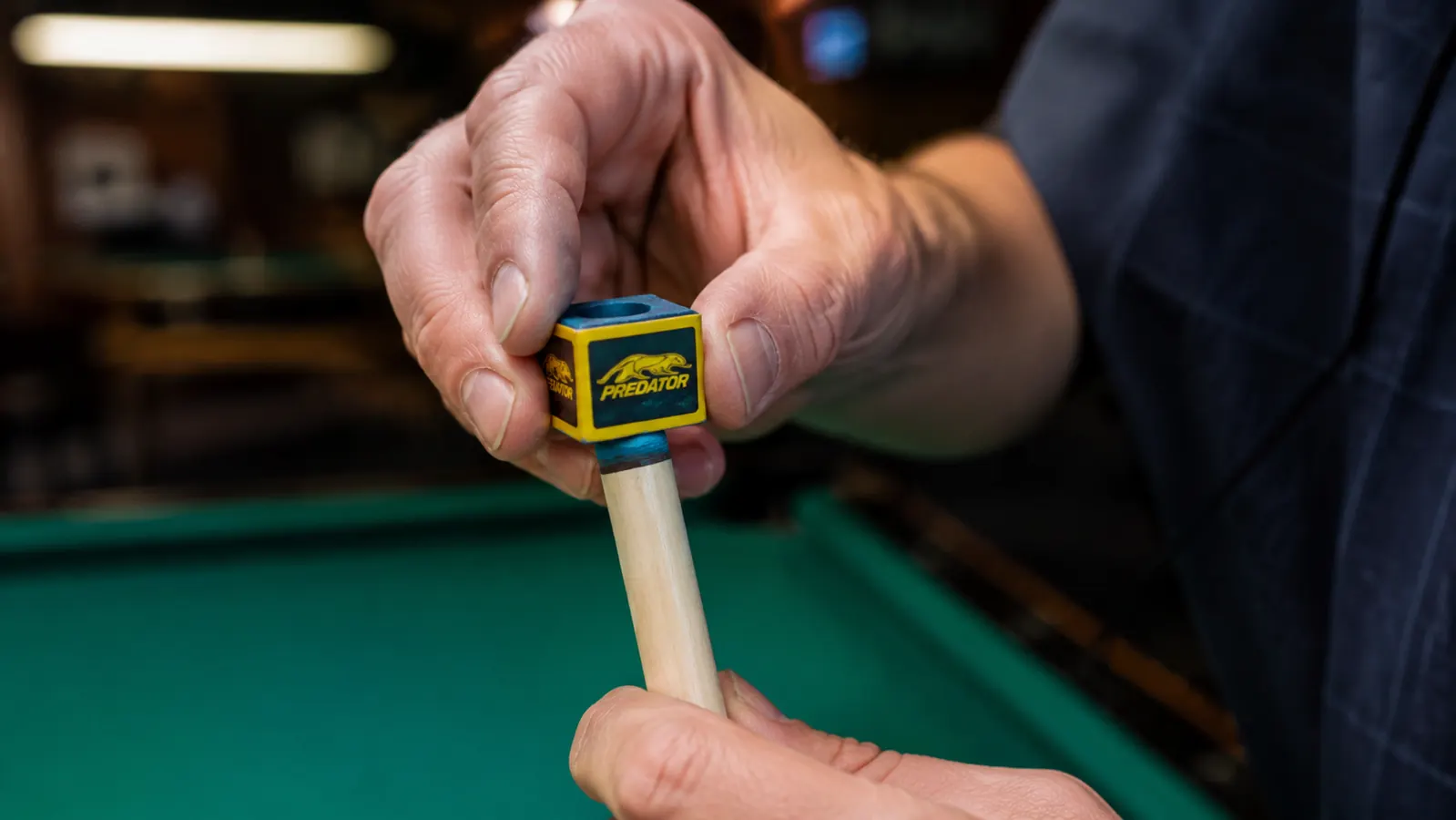
The chalk came out of the box in the standard 1-inch cube format, the same as Master and Triangle. The color is a distinctive teal-blue that leaves a faint teal residue on the tip, which made it easy to see application coverage at a glance, something I appreciated immediately.
Texture, Compound Softness, and What That Actually Means
Chalk quality comes down to one thing at the tip level: does the compound transfer onto the tip surface quickly and adhere consistently under the friction of the stroke? Harder compounds like standard Master chalk require more pressure and more passes to load the tip. If you chalk lightly and move on, you may have uneven coverage. Predator's compound is noticeably softer. One deliberate brushing pass in two directions gives you visible, even coverage. You can feel it load in a way you cannot with the hard green cubes.
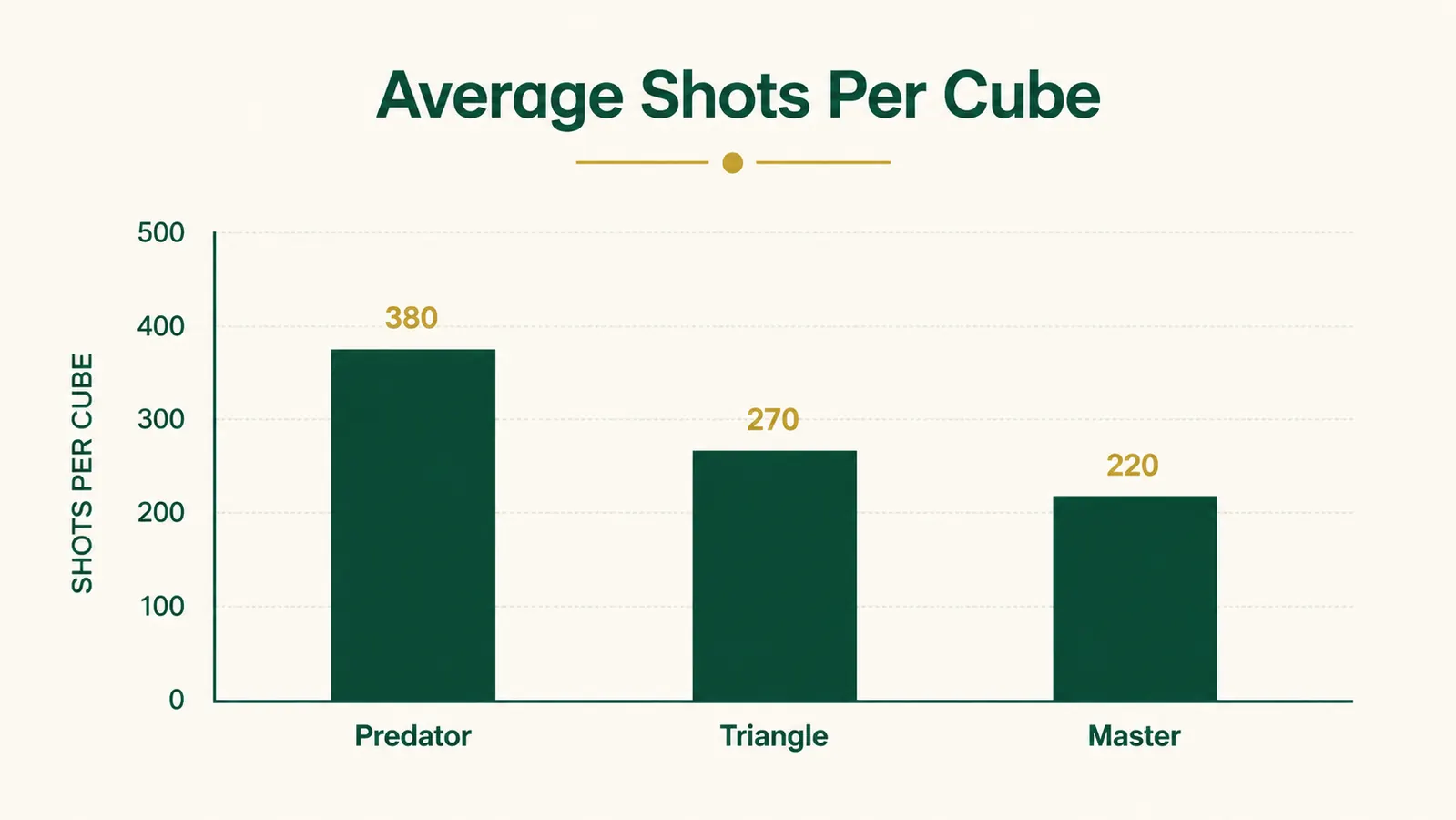
That softness has a tradeoff. The cube wears faster per chalking session. But because each application is more effective, you are not re-chalking mid-rack to compensate for a failed coat. Net effect: the cube lasts longer than Master per total use cycle. Over six months I found that each Predator cube lasted me approximately 35 to 40 percent longer in total sessions before it became too thin to grip cleanly. My teammates who were using Master at the same rate were burning through cubes visibly faster when we counted over a four-week stretch.
One deliberate two-direction pass and I had visible, even coverage. I have never had that with a hard cube at this application speed.
Miscue Rate Over Six Months
This is the number that matters. I logged 12 miscues over six months of Predator use across all shot types. That sounds like a lot until you compare it to my pre-switch rate. In the two months before I switched, I logged 9 miscues, which would project to 27 over the same six-month window if the rate held steady. My technique did not change, my tip did not change, and the tables I play on did not change. The chalk changed.
The difference was most pronounced on shots requiring significant side english and cut angles over 45 degrees. Hard chalk at high-english contact angles is where tip grip becomes genuinely critical, because the cue tip is hitting the cue ball off-center and relying entirely on the chalk coating to prevent slippage. Predator held. On the shots where I would have historically expected a slip, the tip bit. Not every time, because technique matters enormously. But the margin for error widened noticeably.
Triangle chalk, for what it is worth, performed better than Master but not as well as Predator in my informal comparison. Triangle sits at a price point between the two and, in my experience, delivers performance proportional to that positioning. If Predator is not available and Master is the only other option in the bar tray, grab Triangle instead.
Cube Longevity and the Real Cost Per Session
Predator chalk retails around $9.50 for a box of six on Amazon, which works out to roughly $1.58 per cube. Master chalk runs about $6 for a box of 12, or $0.50 per cube. At first glance Predator looks three times more expensive. But the longevity math changes that picture considerably.
In my tracking, one Predator cube lasted me roughly 380 to 420 chalk applications before I retired it as too worn. One Master cube lasted me approximately 200 to 240 applications under the same conditions. That puts the cost per application at roughly $0.004 for Predator and $0.002 for Master. The gap is real but it is not the three-to-one ratio the sticker price suggests. It is closer to two-to-one, and that is before accounting for the reduced miscue cost in a competitive match where a single miscue can flip the rack outcome.
For a player who buys two boxes of Master chalk per year, switching to one box of Predator saves a trip to Amazon and roughly breaks even on cost while improving performance. That is a reasonable trade for anyone playing organized league.
How the Cube Wears and Why It Matters
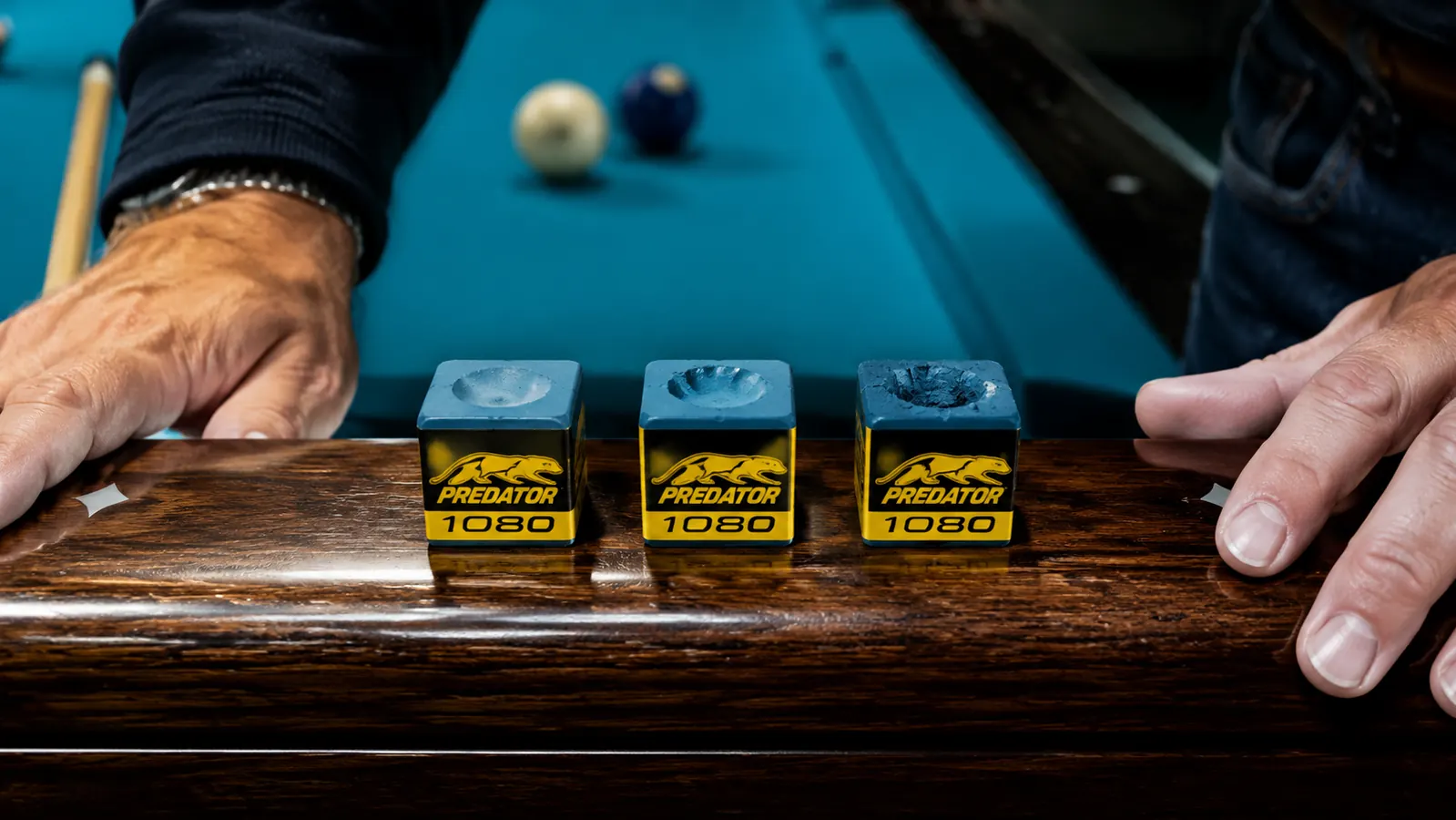
The way a chalk cube wears over its life cycle tells you a lot about the compound. Hard chalks tend to dish unevenly. If you apply pressure in the center of the cube face, you get a crater and the edges stay high, which means later in the cube's life you are applying chalk with only the outer ring of the face. You get poor coverage in the center of the tip, exactly where you need it most for center-ball and draw shots.
Predator's compound, being softer, conforms to the tip shape more readily and dishes out more evenly. I noticed this around week four: the cube face had a slight concave wear pattern but it was uniform across the whole surface. That means the useful life of the cube extends further. In the final 20 percent of the cube's life, I was still getting clean applications, which is not something I could say about Master cubes in the same stage.
One minor complaint: because the compound is softer, it is more susceptible to chipping at the corners if you drop the cube on a hard floor. I lost about 15 percent of one cube to a drop off the table onto concrete. Master cubes tend to survive drops better. Keep it in your chalk holder or a small pocket compartment and you will be fine.
What I Liked
- Noticeably softer compound loads the tip in one clean two-direction pass
- Reduced miscue rate on high-english cut shots, the shots that cost you racks
- Cube wears evenly across the full face, extending useful life versus hard chalks
- Per-application cost is much closer to Master chalk than the sticker price suggests
- Teal residue on tip gives instant visual feedback that you applied correctly
- Rated 4.7 stars across more than 6,600 reviews, one of the most-reviewed chalks on Amazon
Where It Falls Short
- Softer compound chips on drops onto hard floors, store it in a holder
- Teal residue transfers slightly to the cue ball on heavy draw shots, a minor visual nuisance
- Upfront cost is higher than mass-market alternatives, even if longevity math narrows the gap
- Compound is somewhat more sensitive to humidity, keep it out of damp chalk trays
Predator Chalk vs Master vs Triangle at League Speed
I want to be specific about this comparison because the internet is full of vague chalk opinions. At league-play speeds, meaning normal recreational and competitive stroke speeds rather than tour-level power, the difference between Predator and Master is meaningful but not dramatic on basic straight shots. If you are shooting straight pool at a relaxed pace and mostly hitting center ball, Master chalk is adequate and you will have a hard time noticing a meaningful difference.
The gap opens on spin shots. Running english, back-cut with draw, stun-and-spin combos, any shot where the tip contact point is 6mm or more off-center. At those contact points, the grip demand on the chalk coating spikes and harder compounds start to give up the edge. Predator chalk consistently outperformed Master on those shots in my six months of tracking. Triangle was in the middle. If your game involves a lot of English work, the difference is real and worth paying for.

Who This Is For
Predator chalk is the right call for any league player who uses English regularly, plays in competitive formats like APA or BCA where miscues directly affect match outcomes, and wants to eliminate chalk quality as a variable in their game. It is also right for players who have been quietly wondering whether their tip is the problem when in fact the chalk coating is the issue. At roughly $9.50 for a box that will last most league players a full season, it is one of the cheapest performance upgrades in billiards. You can check out how to apply it for maximum effect in our guide on how to chalk a pool cue correctly.
Who Should Skip It
If you play purely for social recreation, rarely use spin, and are not bothered by the occasional miscue, Master chalk at half the per-cube price is completely adequate. The same goes if you play on house cues at your local bar and chalk is provided in the rail tray. Upgrading your chalk while shooting with a warped house cue and a mushroomed tip will not produce noticeable results. Fix the tip situation first, then worry about chalk compound. And if you are comparing chalk brands as part of a broader equipment research project, our comparison of Predator chalk versus Master chalk breaks down the numbers in more depth.
If you are losing racks on English shots, your chalk is the cheapest fix on the table.
Predator chalk has over 6,600 Amazon ratings at 4.7 stars. One box covers a full league season for most players. The current price on Amazon is the same as it was when I bought mine.
Amazon Check Today's Price on Amazon →