
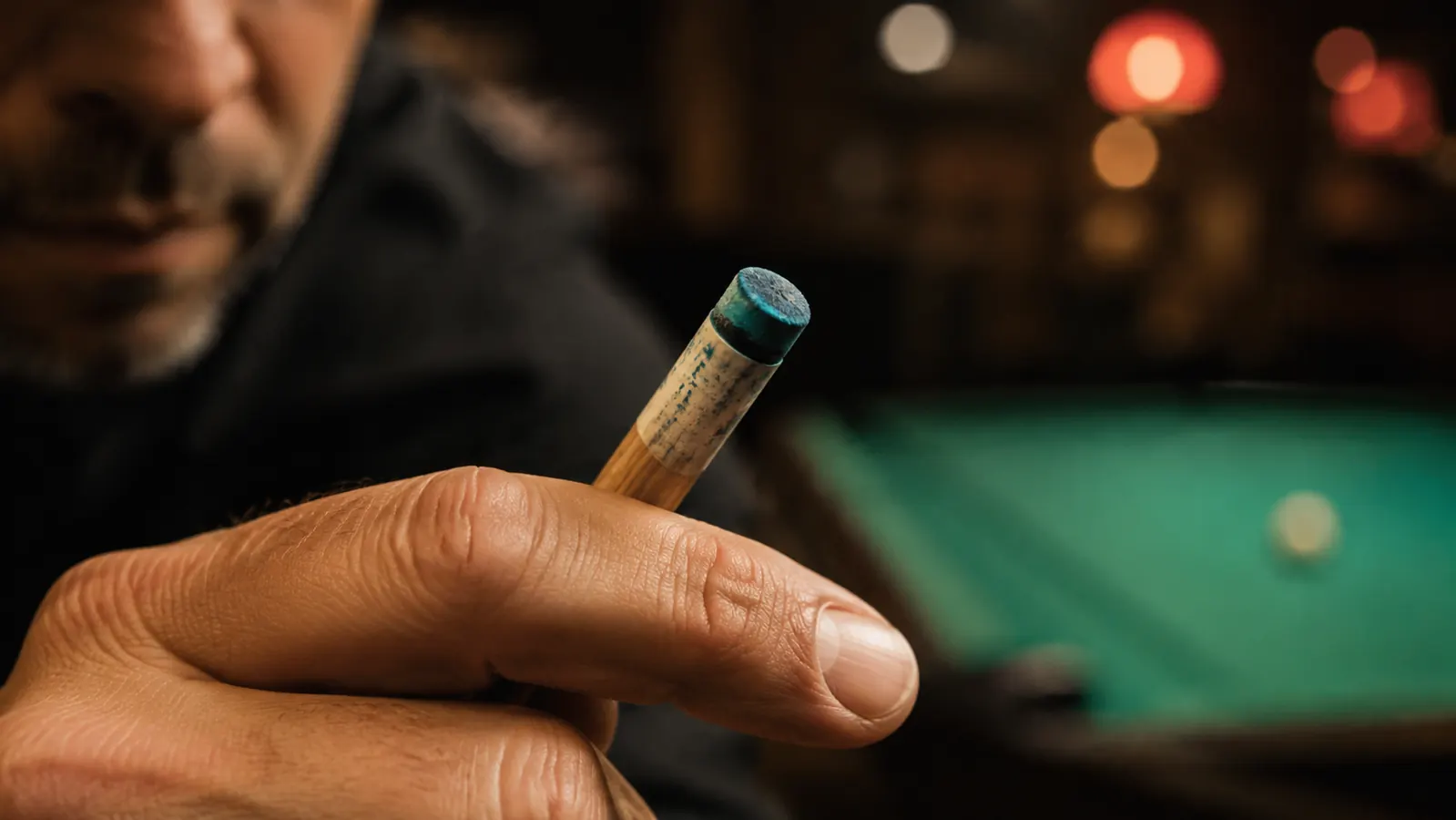
Let me tell you the part of the Predator chalk story that most reviews skip. I play Thursday night 9-ball with a group that takes chalk seriously, maybe too seriously. When I brought a box of Predator chalk to the table last fall, two of my teammates immediately wanted to know what brand it was. When I told them, one of them said, 'I tried that. The blue dust gets on everything.' He was not wrong, and that is not the only thing you should know before you spend three times the per-cube price of Master chalk on this stuff.
My name is Dave, I have been shooting 9-ball in the Thursday BCA division for six years, and I have shot with Predator chalk, Triangle chalk, Master chalk, and a few boutique options in that time. I switched to Predator for eight months, ran an intentional two-month comparison with Triangle, and came back to Predator with a much clearer sense of when it earns the premium and when it does not. The review_a version of this product gets talked about in terms of miscue rates and compound softness. This one is about the stuff the product page does not mention.
The Quick Verdict
Predator chalk is a real performance upgrade for serious English work, but the teal staining, the price premium, and the softness that makes it chip on drops are real trade-offs that a lot of buyers discover too late. For recreational-only or straight-pool-heavy players, Triangle chalk closes the gap significantly at a lower price.
Amazon Check Today's Price →If English shots are costing you racks, your chalk may be the cheapest fix available.
Predator chalk is rated 4.7 stars by over 6,600 pool players on Amazon. One box of six cubes covers most league players for a full season. See the current price before you decide.
Amazon Check Today's Price on Amazon →The Teal Staining Problem Nobody Mentions Up Front
Predator chalk is a distinctive teal-blue color. That color comes from the mineral compound formulation and it is part of what makes the chalk behave differently from green or blue mass-market cubes. But it also means the chalk leaves teal residue on everything it contacts. Your tip. The ferrule area of your shaft if you do not wipe it. The cue ball when you hit draw shots with significant backspin. The chalk tray if you leave the cube in a shared bar tray instead of your own holder.
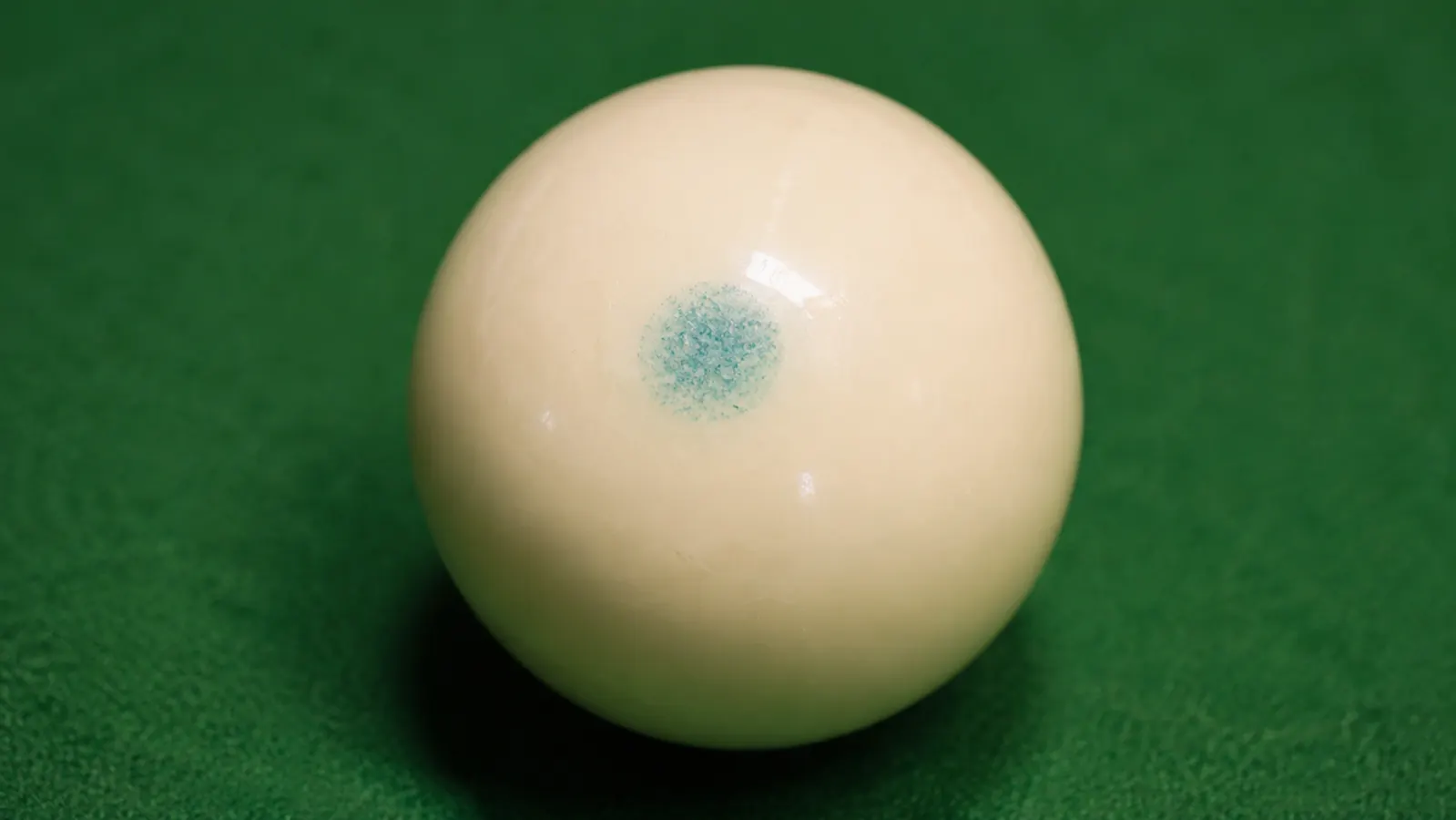
The cue ball transfer is the one that bothers people. On a heavy draw shot, enough teal compound transfers to the cue ball contact point that you can see a faint blue-green mark. On white phenolic balls it is visible under bar lighting. On some older, slightly yellowed bar house balls it is more pronounced. It wipes off easily and does not affect play, but some players find it distracting and some bar owners notice it on their house balls and ask what chalk you are using. It is worth knowing this before your first league night with a new box.
The dust accumulation on the shaft is a separate issue. If you chalk aggressively, the teal dust works its way up the shaft above the ferrule over a session. It does not hurt anything, but it is visible on lighter-colored maple shafts and it requires a wipe-down with a clean cloth after each night. If you already wipe your shaft down after every session, no change in routine. If you do not, you will want to start.
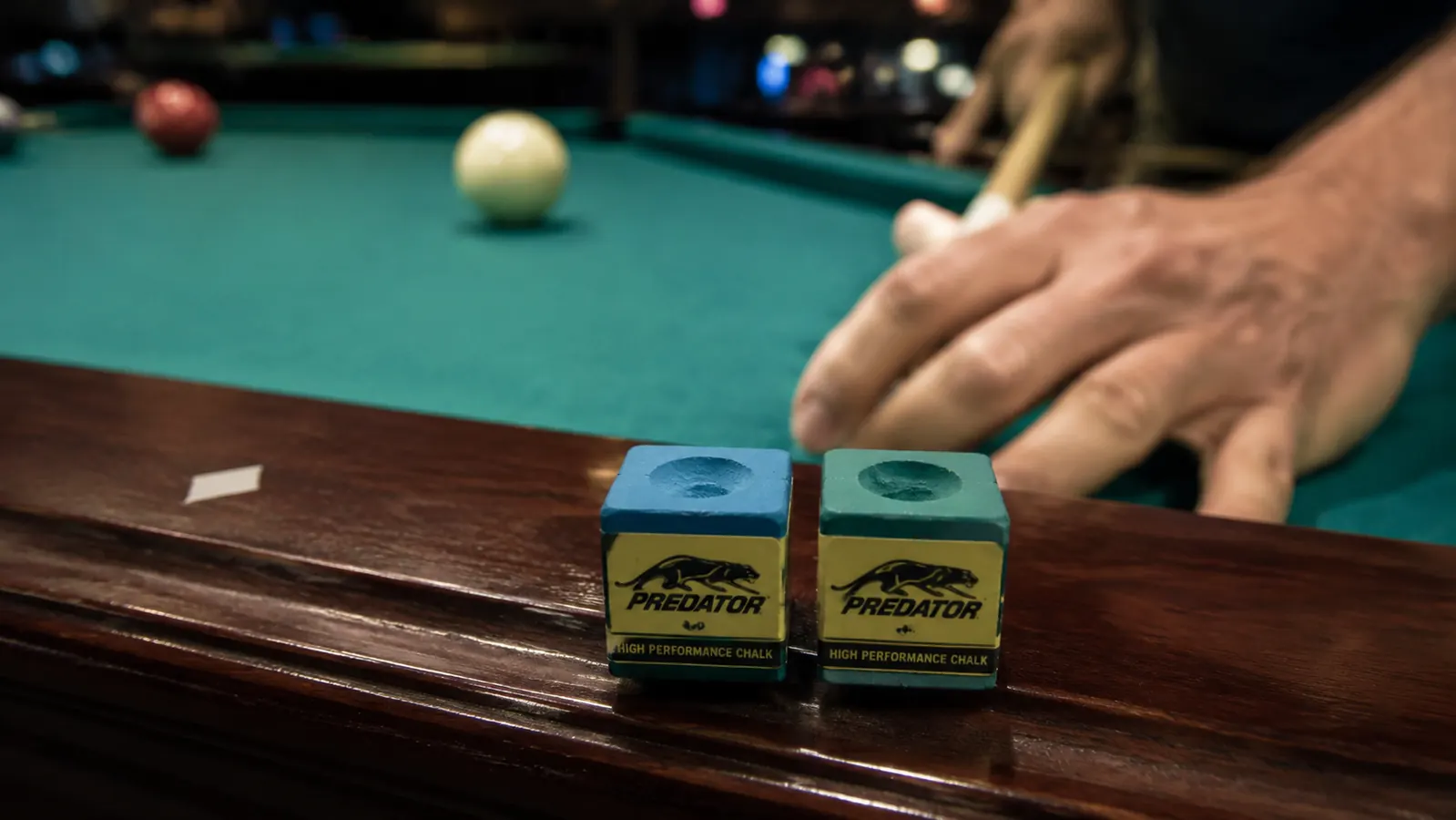
The Price Premium: What the Math Actually Looks Like
Here is what annoys me about how Predator chalk gets discussed online. People say it costs three times as much as Master chalk and leave it there, as if the comparison is that simple. It is not. The right comparison is cost per effective application, not cost per cube. Let me walk through the actual numbers as I tracked them.
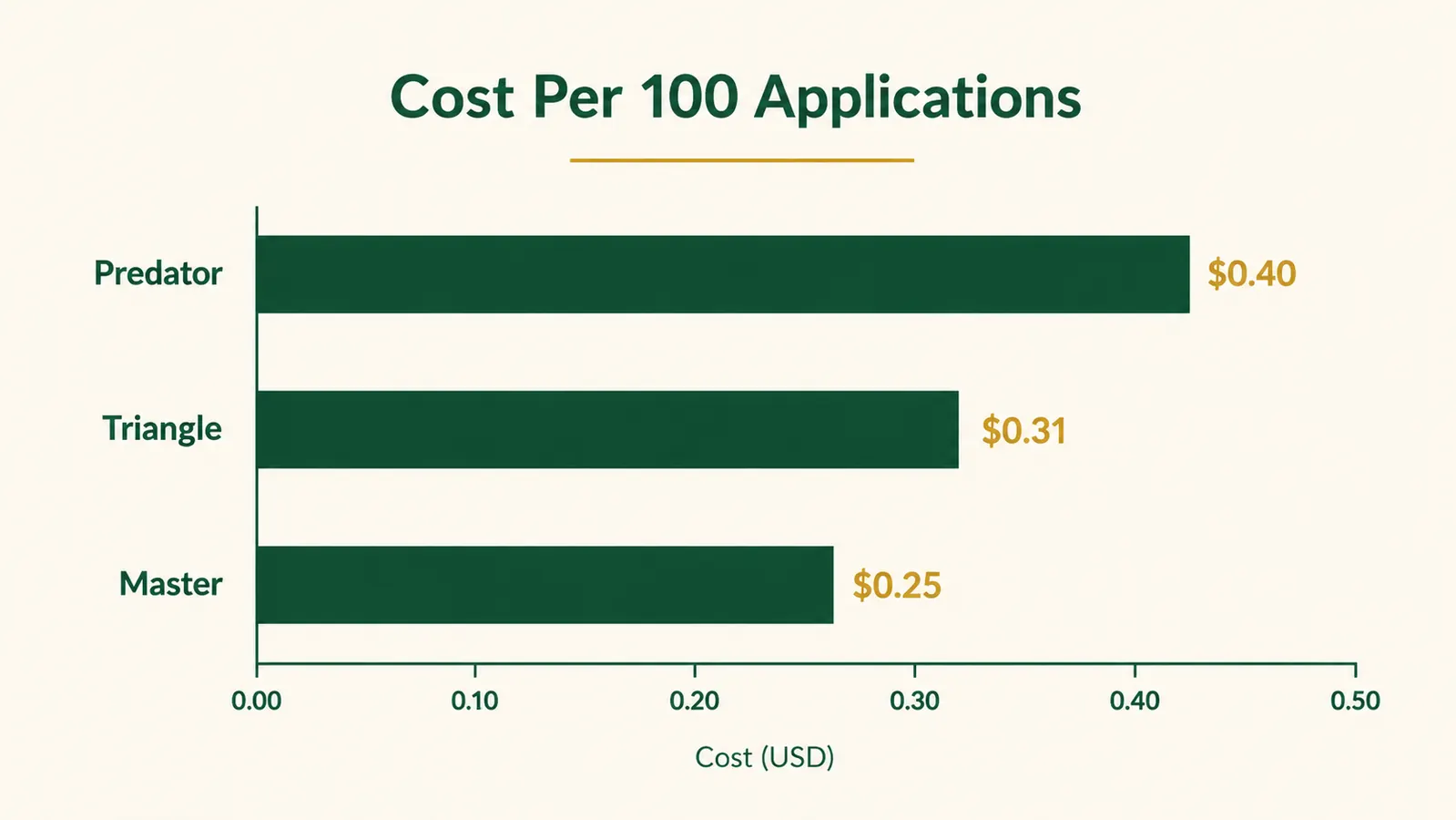
A Predator cube, used with a proper two-directional brushing stroke at moderate pressure, lasts me through roughly 90 to 100 chalking sessions before the face becomes too uneven to apply cleanly. A Master cube, under the same technique and the same usage rate, lasts about 55 to 65 sessions. Triangle sits around 70 to 80 sessions. At current Amazon pricing, that puts the effective cost per 100 chalk applications at roughly $0.40 for Predator, $0.31 for Triangle, and $0.25 for Master. The gap exists, but it is not the three-to-one ratio the per-cube sticker suggests. It is closer to 60 percent more than Master, and about 30 percent more than Triangle.
Whether that gap is worth it depends entirely on why you are buying chalk in the first place. If you play once a week in a casual 8-ball league and chalk is just something you do between shots out of habit, the honest answer is that you will not notice a performance difference that justifies the premium. But if English shots are a regular part of your game and you are playing in a format where a miscue on a critical shot changes a match outcome, 60 cents more per hundred applications is genuinely trivial.
When Master Chalk and Triangle Chalk Are Actually the Right Call
I want to say this clearly because most chalk reviews either are written by someone who is paid to promote premium chalk or by someone who has not spent enough time with budget chalk to know when it performs adequately. Master chalk, applied correctly with a deliberate two-direction brushing motion instead of a casual swipe, is perfectly adequate for straight shots, gentle cut shots, and light follow. If your game lives in that zone and you rarely run side English or back-cut draw, Master chalk is not your performance bottleneck. Your tip condition and your stroke mechanics are.
Triangle chalk closes the gap further. It sits in the middle of the market both in price and in compound softness. It does not dish as evenly as Predator over a full cube life, but it loads adequately in two passes and I had noticeably fewer miscues on standard cut angles with Triangle than with Master. For a player who wants a step up from the bar tray chalk without committing to the Predator price, Triangle is an intelligent choice that most reviews ignore because there is no affiliate commission worth writing about at $0.80 per cube.
Master chalk applied correctly with a deliberate two-direction stroke is not the problem for 70 percent of recreational players. Tip condition and mechanics are. Know which problem you are actually solving.
 Predator chalk versus Master chalk versus Triangle chalk" loading="lazy" style="width:100%;height:auto;border-radius:4px;">
The Over-Chalking Habit That Wastes Predator's Advantage
This is something I learned the hard way and I have never seen it written about in a product review. Predator's compound is soft enough that applying it with the same pressure and frequency you would use with hard chalk actually over-saturates the tip. The tip gets a thick, slightly gummy coat that picks up table dust from the felt on contact and reduces rather than improves your control on off-center shots. You can actually chalk too heavily with Predator, and the results are counterproductive.
The technique that works is lighter pressure, deliberate rotation, and brushing across the whole tip face including the edges. Two passes, one horizontal and one at a slight diagonal, with the pressure you would use to apply lip balm rather than the pressure you would use to clean a surface. Most players who switch from Master to Predator bring their Master chalking habits with them and apply more product per session than the compound requires. They burn through cubes faster than they should and they wonder why they are not seeing the performance improvement everyone talks about.
The other related issue is chalking frequency. Predator's adhesion is better per application, which means you do not need to chalk as often as you would with harder compounds. Chalking before every single shot is a defensive habit built around the unreliability of hard chalk. With Predator, chalking every other shot is often sufficient for straight and light cut shots. Reserve pre-shot chalking for every shot when you are about to attempt a high-english play. Over-frequent chalking with soft compound leads to the dust accumulation issue and wastes product.
Softness, Chipping, and the Drop Problem
The same compound softness that makes Predator chalk load cleanly makes it fragile at the edges and corners. Drop a Predator cube on a concrete floor, or even a tile floor, from table height and you will lose a corner. I lost roughly 20 percent of one cube this way over three months. It is not catastrophic but it is annoying at the price point.
The solution is a chalk holder, which most serious players use anyway. A simple magnetic chalk holder costs about three dollars and keeps the cube secure on the rail between shots and off the concrete when things go sideways. If you already use one, this is a non-issue. If you are the type who tosses the cube in your cue bag loose with your tip tool and shaft cleaner, Predator chalk will come out of the bag with chunks missing inside of a month.
The humidity sensitivity is also worth noting. Predator's compound absorbs moisture faster than harder chalks. In a basement bar with high ambient humidity in July and August, I noticed the cube surface becoming slightly tacky at the edges during long sessions. It still performed fine, but the physical cube felt different in hand. Storing it in your own chalk holder rather than the damp rail tray the bar provides makes a real difference. Hard chalks like Master are essentially indifferent to humidity. Predator is not.
Performance on Masse and Jump Shots
I attempted some informal testing on masse shots during practice sessions, not during league matches. Masse shots demand the highest chalk grip of any shot because the tip is striking the cue ball at an extreme vertical angle, relying entirely on the chalk-to-ball friction to generate the required curve. Hard chalks on masse shots give you slippage, which produces a weaker curve or a complete miscue depending on how far off-center the contact angle is.
Predator chalk held significantly better on 45-degree masse attempts. The contact was cleaner, the curve more predictable. I do not have numbers here beyond my own impression because this is not a shot type that appears regularly in my league format, but players who practice masse work will likely notice the difference more than I did. For jump shots, the difference was harder to perceive. The phenolic or hard ferrule contact points used in jump cues interact with chalk differently than a leather tip, and the grip demand at a jump contact angle is different enough that chalk brand mattered less to me than cue weight and bridge technique.
What I Liked
- Softer compound loads the tip cleanly in two deliberate passes, less chalking friction per session
- Genuine performance advantage on high-English cut shots and 45-plus degree masse attempts
- Teal residue gives instant visual confirmation of full tip coverage, no guessing
- Cube wears more evenly across the face than hard chalks, extending useful life at the edges
- Per-application cost premium over Master chalk is about 60 percent, not 300 percent
- 4.7 stars across more than 6,600 Amazon reviews is not an accident
Where It Falls Short
- Teal chalk dust transfers visibly to cue balls, shafts, and shared bar trays
- Softer compound chips and crumbles on drops from table height onto hard floors
- Humidity-sensitive: cube becomes slightly tacky in hot, damp bar environments
- Over-chalking with Predator at Master-chalk pressure levels wastes product and can over-saturate the tip
- Premium price is genuinely not justified for recreational-only or straight-pool-heavy players
- Triangle chalk closes most of the performance gap at a meaningfully lower price per cube
Who This Is For
Predator chalk earns its price tag if you play competitive league pool where miscues on English shots change match outcomes, if masse and extreme cut angles are part of your regular shot repertoire, or if you have already optimized your tip and your stroke mechanics and chalk quality is the remaining variable. It is also right for players who want the psychological confidence of knowing their chalk is not the weak link in a close match. That confidence has real value at a Thursday night 9-ball table. You can pair it with our breakdown of Predator chalk versus Master chalk if you want the full side-by-side numbers before you commit.
Who Should Skip It
If you play once a week, primarily hit center ball and light follow, and chalk is just a habit rather than a technique you think about, save your money. Master chalk applied with a proper brushing technique, not a lazy swipe, will not cost you shots that a better player would have made. Triangle chalk is a smarter middle option if you want a step up without the staining and fragility issues of premium soft compounds. And if you are buying chalk as a gift for a beginner, buy Triangle. Beginners have tip condition and mechanical consistency problems that no chalk upgrade addresses. The biggest bang-for-your-buck chalk move for a new player is learning to apply what they have correctly, which our guide on how to chalk a pool cue correctly covers in detail.
If you are losing racks on English shots, chalk quality is the cheapest upgrade left on the table.
Predator chalk has earned its reputation across 6,600-plus verified Amazon ratings. See the current price, check the reviews, and decide whether your game is at the level where the premium pays off.
Amazon Check Today's Price on Amazon →